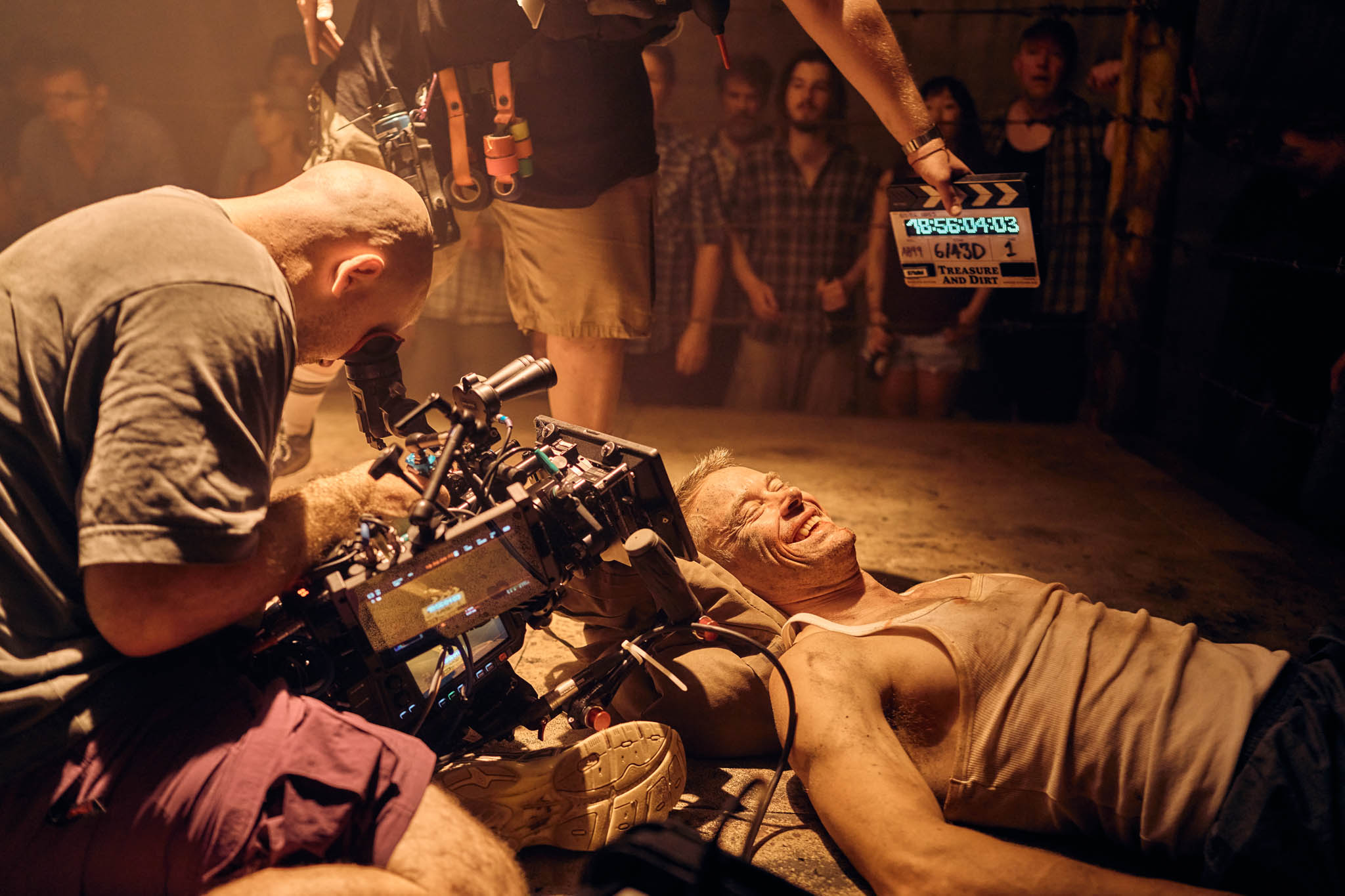
Edward Goldner ACS and Michael Dorman as detective Ivan Lucic in TREASURE & DIRT. Photo: Ian Routledge.
This is the first major long-form Australian production shot with the new Blackmagic URSA Cine 17K 65 cameras. With cinematography by Edward Goldner, ACS and equipment rentals from Lemac Film and Digital, TREASURE & DIRT starts streaming today in Australia.
TREASURE & DIRT is a six-episode crime series. Homicide detective Ivan Lucic and partner Nell Buchanan investigate the mysterious and grisly murder in an Outback opal mining town called Nulla. Filmed in the real town of Coober Pedy, the main location for this series (and also for MAD MAX BEYOND THUNDERDOME), it is known as the opal capital of the world. Many of the locals live in underground homes called “dugouts” to escape the intense heat as they chase a dream of striking it rich.
An Easy Tiger Production for the Australian Broadcasting Company (ABC) in association with the BBC and the South Australian Film Corporation, with worldwide distribution by Sphere Abacus, TREASURE & DIRT was produced by Rebecca Summerton, directed by Madeleine (Mads) Gottlieb and cinematography by Edward Goldner, ACS. Edward studied film and TV at Swinburne University of Melbourne. He initially started his career shooting commercials and music videos before expanding to feature and series projects.
Let’s cut to the chase with Edward using some of the first Blackmagic URSA Cine 17K 65 cameras — on this drama of greed, corruption, action and intrigue.
Edward Goldner, ACS on TREASURE & DIRT

Director of Photography Edward Goldner ACS at left, Steadicam / B Camera Operator Matt Dobson SOC at right. Photo: Ian Routledge.
Jon: Why did you use a brand-new 65 Format camera for a major series? That’s quite daring. And how did you manage to get the first Blackmagic URSA Cine 17K 65 cameras on this show?
Edward: It was one of those jobs that timed nicely with the camera having just been released. It became available right at the beginning pre-production. I generally default to using gear that’s already familiar to me. Going with this new system was a leap of faith but I had heard great things from a couple of other DPs who had done early testing with the camera.
We were fortunate to have the support of Tim Schumann, Product Manager at Blackmagic Design and Tim Jordin, Rental Manager at Lemac Film and Digital Rentals as well as our producers. The 65 Format sensor offered something that felt like it’d be a great complement to the expansive desert environments we’d be shooting in along with creating a sense of immediacy and proximity for our tighter, more intimate coverage.
Almost like LAWRENCE OF ARABIA with wide desert vistas and close-ups on the characters?
Exactly. While the show is contemporary, Mads and I very much wanted to shoot something that felt classic and old world. We were incredibly minimal and structured with show’s imagery. A lot of people are drawn to larger format sensors for their shallow depth of field. However on this, I generally sat around T11-16 to hold backgrounds. The camera setup was generally quite rigid: we’d default to locked-off frames unless there was a clear motivation for movement.
When did you start working on TREASURE & DIRT?
We started pre-production around August 2025, which ran for six or seven weeks. The shoot itself went for around 10 weeks finishing up in December 2025.
What were your URSA Cine 17K 65 aspect ratio and format settings?
Early on, we opted to go wide screen. It allowed us to really hero our landscapes. Mads and I also wanted to hold as much action as possible in wider frames, almost like theatre. The ratio really worked for this. I shot 17K, open gate, full width, cropped slightly top and bottom in post to the release format of 2.39:1. We chose Q3 compression. For our output, I found very little discernible difference between uncompressed and Q3. This compression option was also incredibly data efficient. It is so efficient that a week into shooting I got a phone call asking if something was wrong given the data rate was so much lower than expected. The 17K files and 65 sensor might create an expectation of gigantic files but this really isn’t the case.
Let’s talk about the camera’s color space?
Whenever I approach a camera system, two very important things are color space and latitude. After taking some initial tests into a grading suite, I was blown away with what came straight out of the camera. I liked the preexisting Blackmagic Gen 5 Film to Extended Video LUT. From there, I worked our colorist Matt Fezz to create a show LUT. We didn’t actually deviate a great deal from the camera’s existing LUT—I tended to just soften the highlight rolloff and blacks.
Speaking of exposure and geographic latitude, this was a very high contrast location with bright desert sun and deep shadows?
This was probably the toughest place in Australia that I could imagine taking any camera. The URSA 17K 65’s exposure latitude held up incredibly well. For reference, we were shooting in an environment where locals mostly live in underground dugouts because conditions are so harsh. We were working between full sun outside to low light cave environments and I was consistently impressed with how the camera held up. I’d usually sit around 1600 ISO, which performed very well with highlight retention and the noise level was minimal in the shadows.
Why did you go to such a high ISO instead of 200 or 400?
I found the highlight retention performed well around this zone. For night work, I’ll often go the other way to preserve shadow detail. However, on this job, I was stretched with our resources so I often shot night scenes around the same 1600 ISO . I took the camera all the way up to 2500 ISO a couple times and it performed well with usable noise levels.
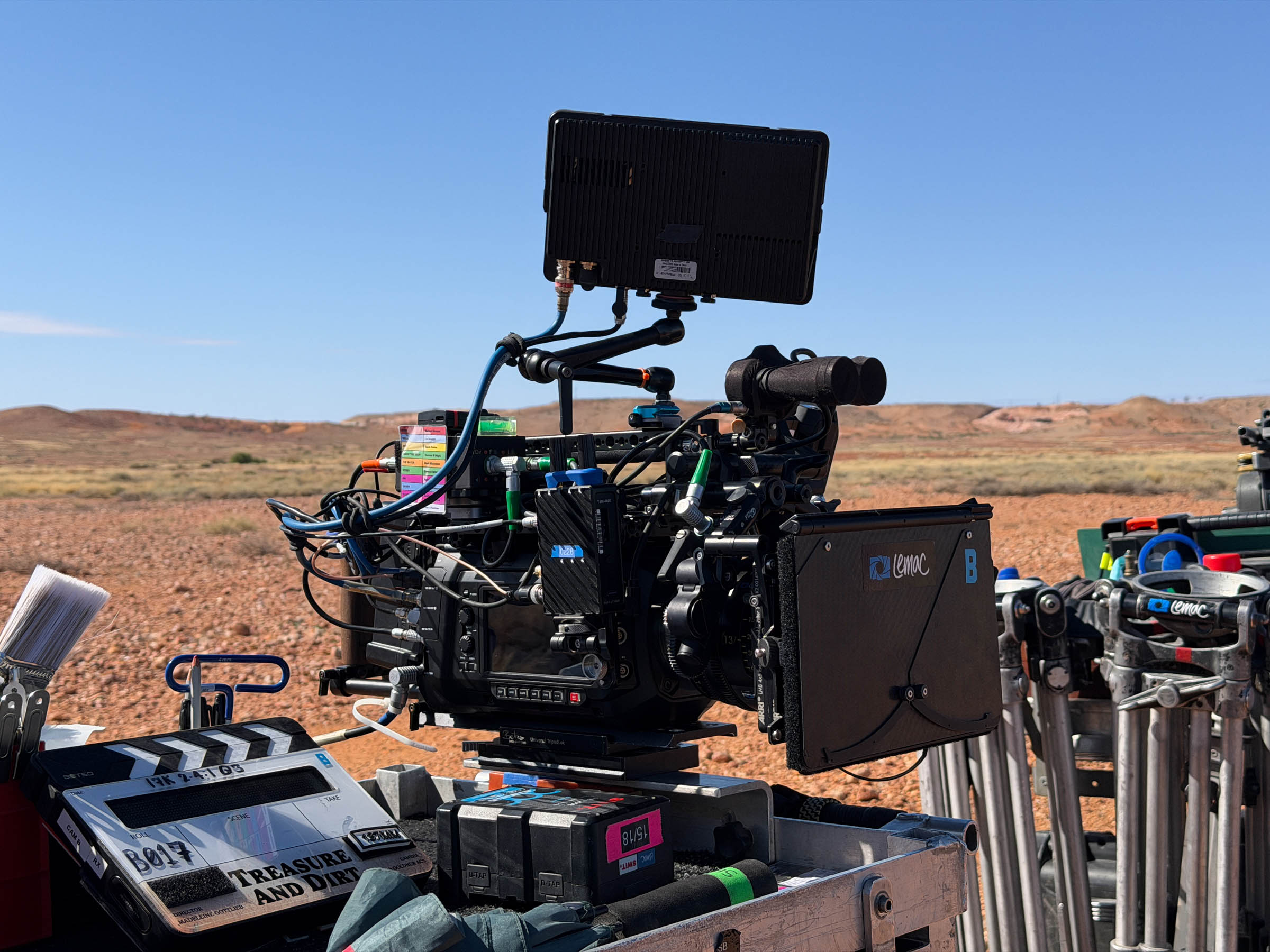
You rented the camera package from Lemac Film and Digital?
I’d previously worked with Lemac on both long form and commercial projects. I’ve found both their equipment and support to be fantastic. Both of the Tims—Tim Jordin (Lemac) and Tim Schumann (Blackmagic Design) came out to visit and were regularly checking in to ensure things ran smoothly.
Did you tell them where the camera was going before you rented it? That it was going to be subjected to sand, dust, heat and miserable conditions? They must have been horrified.
They’re masochists, haha. Actually, they were both quite excited about it. It was a great way to put the camera through its paces. And I think they had a good time coming out to the Coober Pedy pub.
How did your crew clean the equipment at the end of each day?
The assistants used compressed air and gave the cameras a good wipe-down at the end of every day. They were fastidious about bagging when possible. Aside from red dirt, we had to deal with a lot of fine talcum-like powder in the caves and particularly when roads had to be graded to get our vehicles into locations.
Were repairs necessary on location?
Considering the locations we were working in, the equipment came out fairly unscathed.
Did you operate the camera yourself?
Operating the camera is very important to me. Our leading actors—Michael Dorman and Liv Hewson—were very adept at creating interesting opportunities for composition and camera movement through their blocking. With our approach to movement, the cameras almost had an invisible string anchored to them at all times so this was a really close collaboration.
How did you move the cameras?
I had OConnor fluid heads on the job along with a DJI Ronin 2 for a couple of crane and tracking vehicle setups. It was a very small grip department for such a big undertaking— usually a crew of 4 grips (Matt Richardson, Matan Tatarko, Isabelle Senior and Shane Thompson) with 2 cameras going the whole time and a third body occasionally going out for splinter work. We used a ridiculous amount of dolly track out there and the grips were very obliging. Aside from this, we skipped the usual drone package that gets used on most jobs shooting around these locations. I wanted to stick to our classical visual language. Drones are a great tool but I feel like we sometimes underestimate the imagery people created before this technology became available. I also wanted to restrict the camera to perspectives that the characters were able to experience.
Did you shoot with multiple cameras?
Yes, two cameras. Matt Dobson was on the other camera, who is an incredible operator. Matt also operated Steadicam.
Did you shoot those 2 camera simultaneously?
Yes, generally speaking. We usually ran the cameras side-by-side for different sizes or Matt and I would leapfrog setups to get ahead. We also had a third URSA 65 for the splinter crew.
Please talk about the ergonomics of the URSA 17K 65 cameras.
I was very happy with the cameras. Everything was straightforward in terms of layout, menus, etc. Ergonomics were all good for the very rare instances of handheld work we did. Lemac and our camera team set everything up really well in terms of builds. Lemac bought cages for the cameras before the job. They had the Mid 49 top plate, top handle and power distro on the back. Batteries were Swit 24-volt B Mount.

L-R: Edward Goldner ACS, Tim Schumann, Sian Bates; Tim Jordin, Hamish T, Matt Dobson, SOC; Rebecca D, Amelia, Murray.
How big a camera crew did you have?
I was fortunate to have amazing camera team for this job. Aside from me as DP, Matt as second operator, we had 2 focus pullers: Murray Johnson and Sian Bates. Amelia Morgan-de Laine and Rebecca Duncker were our 2nd camera assistants. Hamish Tamlin was the video assist operator. Michael Tessari operated the third URSA 65 camera on the splinter unit.
Did you have a DIT?
No we didn’t. We had great support from Blue Post throughout the job so that gave me a lot of confidence.
What did you do about ND filters in this land of high contrast?
Unlike the URSA Cine 12K LF camera which has internal NDs, the URSA Cine 17K 65 doesn’t have them. Aside from NDs, I tend to run Polarizers most of the time—not only for sky and reflections but also as a bit of a micro-relighting tool for skin. I initially shot tests with Mitchell diffusion filters but didn’t feel like the lenses need anything added to them for this show.
Let’s address some rhetorical questions that producers and others may ask. Why have a 17K camera? How does a producer benefit? And why do you as a DP enjoy a 17K camera?
My interest in this system probably had less to do with resolution and more to do with the sensor size. I tested at 17K, 8K and 4K, which all retain the same sensor size. But because the data management on the camera is so efficient, 17K fell well within what post could handle. In terms of convincing producers, I shot some initial tests that we screened for everyone. The moment they saw images off the camera, they nodded and said, “Let’s do it.”
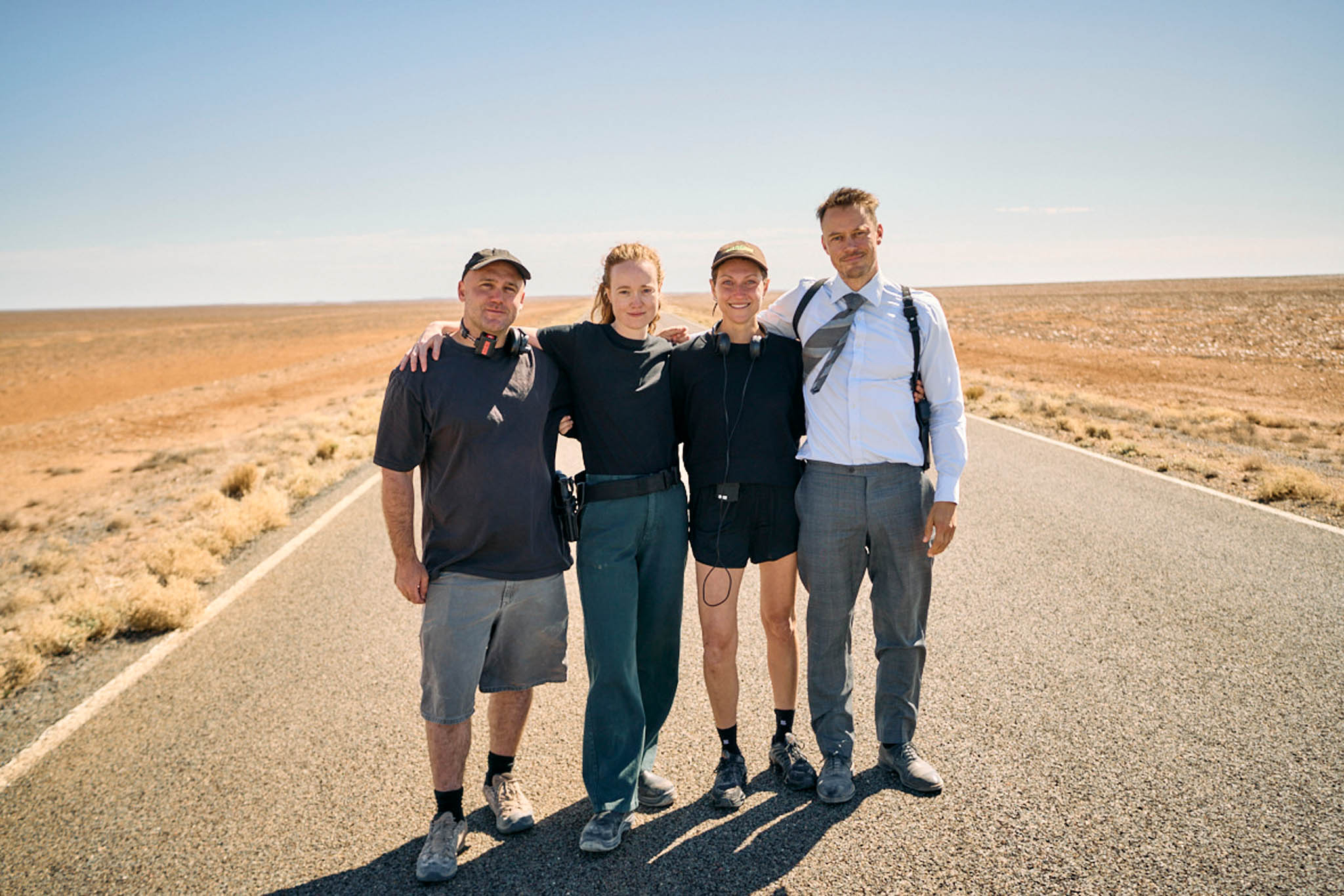
L-R: Edward Goldner ACS, Liv Hewson, Madeleine Gottlieb, Michael Dorman. Photo: Ian Routledge.
What references did you and the director discuss in prep?
NO COUNTRY FOR OLD MEN was a big one in terms of its minimalism. Also ‘THE PROPOSITION’, which is up there with my favorite Australian films. A whole catalogue of films from Hirokazu Koreeda and Andrey Zvyagintsev, who have a spartan quality to their imagery without too many unnecessary flourishes or excesses. It feels like they pick the simplest way to communicate visually.
What lenses did you use on TREASURE & DIRT?
We tested a number of lenses and ended up with the Tribe7 Blackwing7 T-Tuned spherical prime lenses. They sit in the middle (Straight-Transient-Expressive) in terms of aberrations.
Did these Blackwing7 primes cover the URSA’s full 65 sensor?
On paper—no. But in practice—yes. The camera is incredibly sharp, so I wanted to pair it with lenses that were a little bit gentler and had character. The Blackwings combined with the URSA 65 sensor were a really great combination. In terms of texture and rendering, they felt neither too clinical nor distractingly quirky. The other factor was that we were out in the middle of nowhere. It takes about 10 hours to get to Coober Pedy from Adelaide by car. We had a lot of night exterior work along with a number of sequences in large cave systems that were difficult to service. Getting larger machines and lamps out there was limited due to our budget and the remoteness of our locations. The Blackwings generally open to around T1.9, which provided security for low-light work.
What were your widest lenses?
I’d occasionally run the 27mm, which is quite wide on 65 Format. Usually I used the 37, 47 and 57 mm for the bulk of our work.
You said that the lenses didn’t cover the full sensor on paper, but they worked for you. Why is that?
Occasionally, you’d see a little bit of light vignetting on wider lenses, but I found it quite pleasant and easily reduced in the grade if needed. This was an interesting job in that we had a few different visual languages. We had the normal world with our detectives, which had quite rigid, structured frames and deeper focus. Alongside this, the show features a storyline around a cult. For this, I wanted to create a softer aesthetic – almost as if the viewer was being drawn in and indoctrinated by cult leader David. This worked well with the Blackwings, where I was able to run them wide open and push aberration and texture to help create a different look.
Did you have any zooms or long lenses?
We carried a zoom throughout the show—for flexibility along with my fondness for slow, in-shot zooms. We had a Fujinon Premista 80-250mm T2.9-3.5. It covered the URSA 65 sensor amazingly well. There’s a little bit of light vignette if you stop down on the wider end but nothing too severe.
It’s interesting how so many Full Frame lenses are popping up and they just happen to cover the sensor.
There was a fairly limited number of lens options available in Australia when I chose to use the camera. Once I started testing, I was pleasantly surprised that quite a lot of the Full Frame lenses out there could perform well beyond the coverage they were designed for. Since finishing T&D, there has been a heap of announcements for Large Format lenses. I think it’ll be a really exciting time to use these cameras as optics catch up.
Another rhetorical question. If you had zooms on the entire show, would they have saved you time and aggravation by not having to change lenses so often? Not to mention avoiding dust blowing onto the sensor?
I tend to prefer primes. The weight and ergonomics are big factors.
Did the camera assistants use the URSA Cine 17K 65’s right-side focus-puller monitor?
Both assistants worked off their own focus monitors. It did come in handy from time-to-time when Mads (director) would be close-by and could quickly glance over at the screen.
That’s quite an adventure: a new camera with a bigger format going to such a tough environment.
Having finished grading a couple of weeks ago, it was so gratifying to see how beautifully the show came together. I’m really proud of what we all created.
It sounds like this new camera system gave you new perspectives and unique looks at a price even producers appreciated.
For a 65 Format camera, it is incredibly affordable. We tend to work on fairly nimble budgets in Australia so its a real asset having a Larger Format option like this for domestic productions.
I was blown away by the camera and I’m typically not someone who will jump at using a new camera for long form work. I tend to like the familiarity of gear that I’ve used before. Having a system that just feels familiar and becomes an extension of your body is so important when you’re working at a fast pace and this camera certainly did feel that way very quickly.
The fact that we had the camera manufacturer fly out to spend a week just observing how it was working in these environments and speaking to me, the camera assistants and crew was amazing. It really felt like they were invested in making great equipment.
The combination of both Blackmagic Design and Lemac was pretty special. A lot of staff have worked between both companies and it felt like a concerted effort to make the camera’s debut long-form shoot in Australia incredibly smooth.
Production Notes by Tim Schumann

Tim Schumann, Product Manager at Blackmagic Design
It was fantastic to be a part of TREASURE & DIRT. We’re proud that Edward and the Easy Tiger team, along with the Lemac Rentals team, have embraced the URSA Cine 17K 65 so thoroughly. This was first major long-form Australian shoot with our new 65mm sensor. After Blake McClure ASC’s success with it in the US on ROOSTER for HBO, we were confident the TREASURE & DIRT team would be delighted with the images. Also, this shoot provided a great opportunity for us to get out and see the camera being used in some really challenging environments.
Coober Pedy is an amazing and odd place. It is a bit like being on the moon. We knew that there was going to be a lot of sand, dust and dirt blowing through everything. It was important to see how the gear was being used and how it held up in those conditions. When it’s 100 degrees or more outside, you obviously always try to shade the camera and keep it cool. But then you also have setups where it goes into a hot car and is in even hotter conditions—so you are really pushing things beyond the brink. This tests the camera thermally, but also tests how it works for the camera crew in terms of the physical drain when working in that kind of heat.
It was impressive to see Edward, Matt, Murray, Sian and the team doing their thing in such a harsh and unforgiving place. The crew welcomed us with open arms. Watching them work and chatting with them in depth after their first couple of weeks on the show was truly special. They were in a groove by then and gave us great feedback on things that they loved and what they felt could be improved.
To follow up on the question about 17K:
Even if you’re distributing in HD, 2K or 4K, down-rezzing from 17K can give you better results than if you just shot in 4K.
It’s similar to what we loved about shooting on film. You always want to shoot on something that has the most information possible—whether that’s pixels, color or dynamic range. When it comes to grading, manipulating, enlarging, repositioning and working with that image further down the track, you’ve always got somewhere to go rather than having just the bare minimum for what you’re going to deliver.
There’s a richness you get from this URSA 17K 65mm image sensor that is hard to describe. We are very proud of it and glad that it’s now finding its way into more and more productions and rental houses around the world. The images that Edward and his team created are really striking. I can’t wait to see the final show.
Production Notes by Tim Jordin
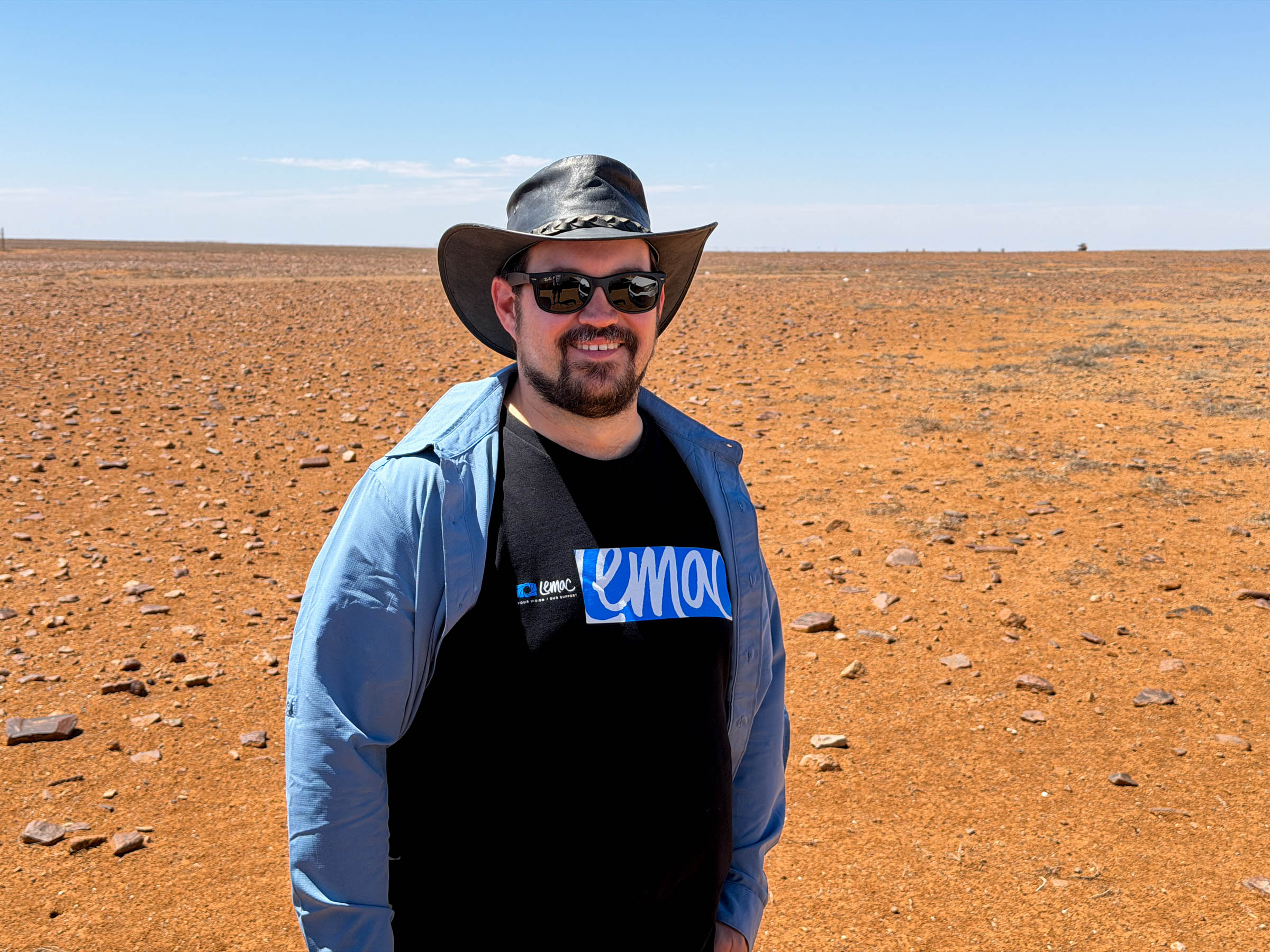
Tim Jordin, Rental Manager at Lemac Film and Digital
The URSA Cine 17K 65 is a camera that has been on the Lemac radar for quite some time. Our first project with it had unusual requirements for which the sensor size and resolution were an excellent fit. That project also needed the camera to be used in underwater housings, on heavy lift drones and strapped to cars drifting through salt plains in the outback as the crew flew all over Australia. With the success of that project behind us, when Ed first contacted me about TREASURE & DIRT, I thought it would be a fantastic match for the show. We did extensive testing of the URSA Cine 17K 65 with a vast range of lenses and against other camera formats. As Ed mentioned, there are a lot of lenses that “almost” cover, and in truth if you had a 17:9 or 16:9 deliverable they would cover, but with the Tribe7 Transient range, you have a great mix of old and new world lens design philosophy to lean into—and they cover the full 2.2:1 Open Gate.
The conditions that the crew were heading into weren’t a first for us, so there were a few things we knew to go over with the crew to help it all go smoothly. I made the trip to the South Australian Film Corporation studios in Adelaide for the gear check, which I think gave the crew confidence in that they had access to quick answers. When the other Tim (Schumann of Blackmagic) and I decided to visit the crew in Coober Pedy, we really wanted to show our commitment to service and ensure that the crew, Ed, Mads and the whole production team knew that we understood they had put their faith in us to deliver. On wrap, I was pleasantly surprised by the condition of the kit. While we had provided sensor cleaning kits to crew, they did not need them, and red dirt, which is known for getting in everywhere, was not really an issue at all.
It really was sight to see: the Outback as far as you could see in all directions and a local Australian series with a remarkable 65mm camera system. With Blackmagic Design being an Australian company, here leading the charge into democratized 65mm capture, and with us at Lemac celebrating our 50th birthday last September while TREASURE & DIRT was shooting, it was something I’m very proud to have been a part of.
Equipment & Dirt. BTS Stills & Comments by Tim Schumann & Tim Jordin
-

- Edward Goldner ACS and 2nd AC Amelia Morgan-de Laine.
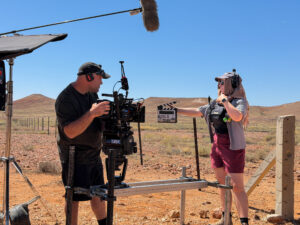
-
- Edward (at left) and Matt Dobson SOC.
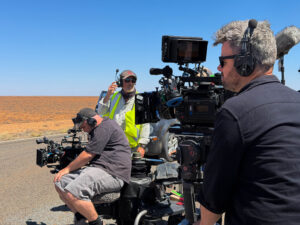
-
- A Camera build: URSA Cine 17K 65 with T-Tuned Blackwing7, Cine RT FocusBug, ARRI ECS, Teradek and SmallHD high-bright monitor.
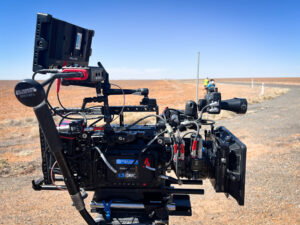
-
- URSA Cine 17K 65 camera left side with MID49 “Hollywood” handle.
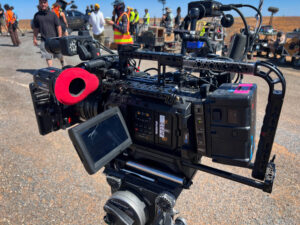
-
- Matt Dobson SOC with Fujinon Premista 80-250mm
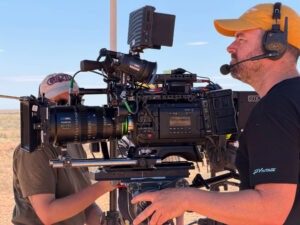
-
- A-Cam 1st AC Murray Johnson changing lenses.

-
- B-Cam 2nd AC Rebecca Duncker slating.

-
- Rigging camera on Ronin R2 Remote Head.
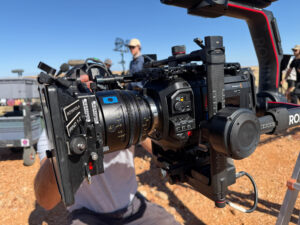
-
- URSA Cine 17K 65 underslung with DJI Ronin R2 as Remote Head.
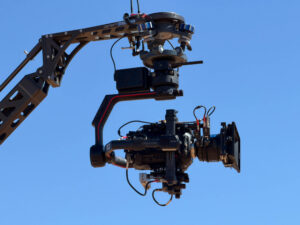
-
- Edward operating R2 Remote Head with Master Wheels.
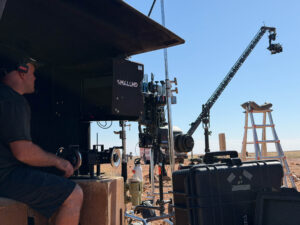
-
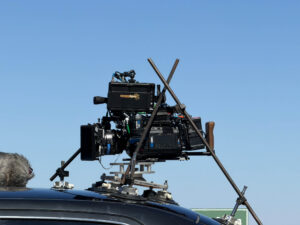
- Car mount.
-
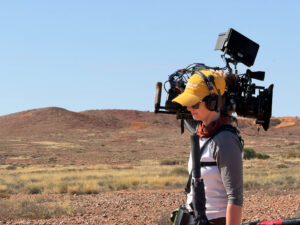
- B-Cam 1st AC Sian Bates moving to the next setup.
More Equipment & Dirt BTS Stills & Comments from the Two Tims
-

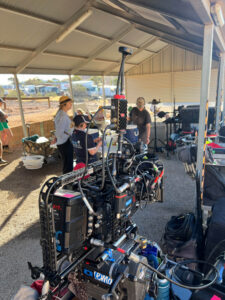
- Rear view with MID49 cage in shaded prep area.
-
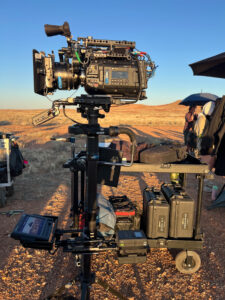
- Rigging Steadicam — racing the sun.
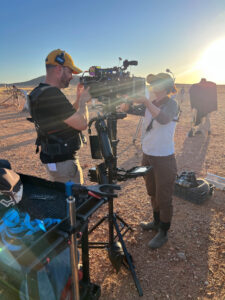
-
- B-Cam 1st AC Sian Bates.
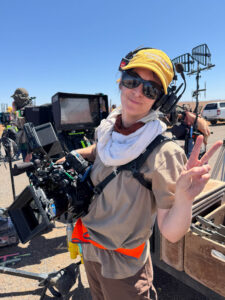
-
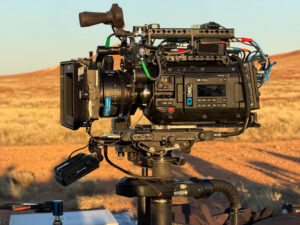
- The Cruz Handle at the rear of this URSA 65 was designed by Matt Dobson SOC.

-
- URSA Cine 17K 65 on Steadicam M-2 with VOLT stabilizer.
-
- The view from Coober Pedy’s finest: The Big Winch 360 Pub & Cafe.
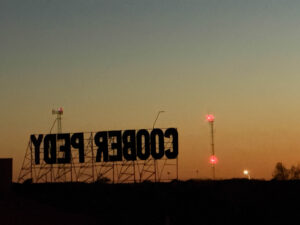
-
- Slate, TREASURE AND DIRT.

-
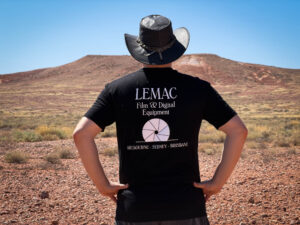
- Tim Jordin in vintage Lemac T-shirt.
-

- Lemac, since 1975.