

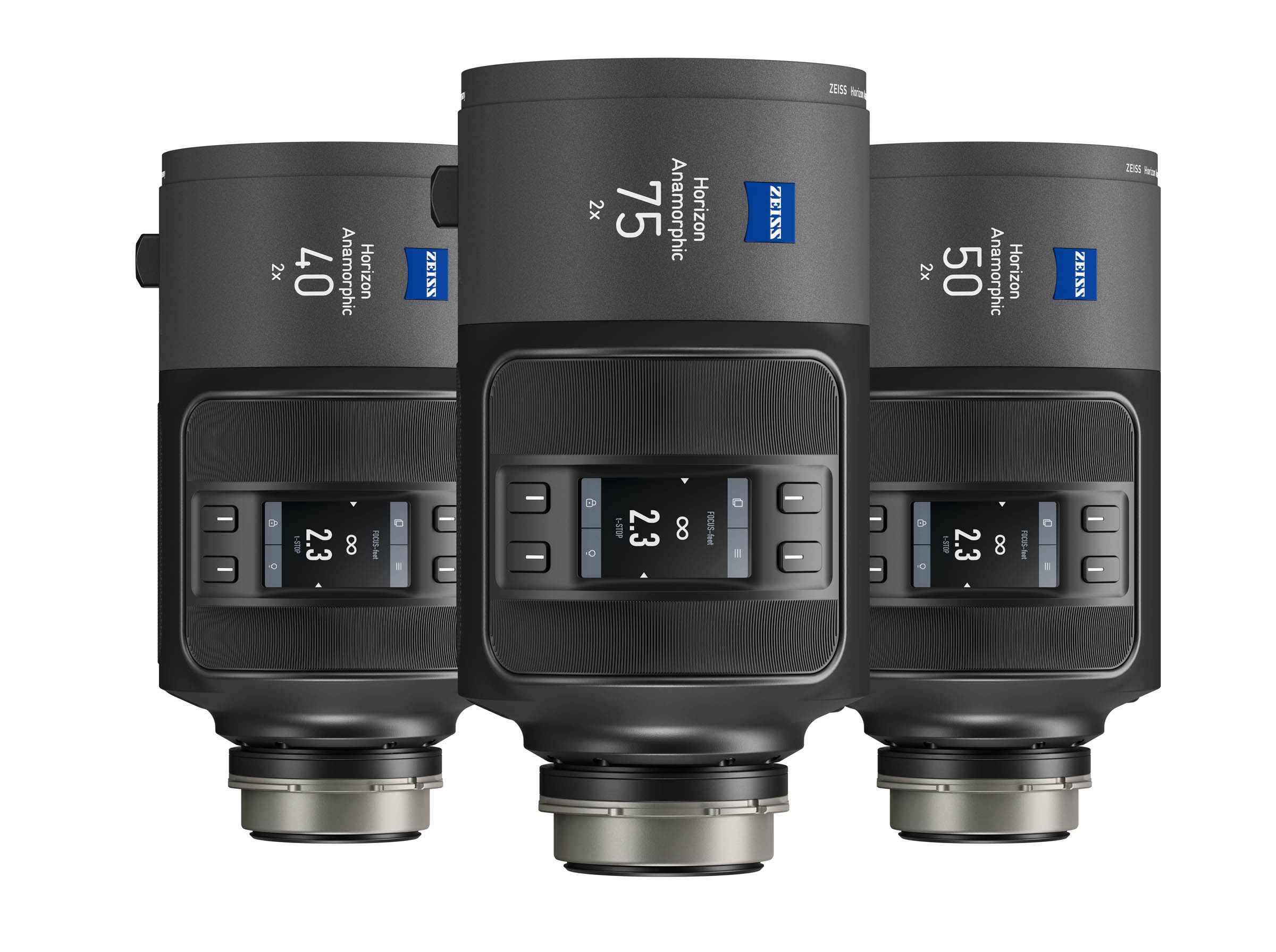
ZEISS Horizon Anamorphic Primes are “smart” cine lenses with the capability of direct wireless lens control and no external motors. We’ve seen lenses that require a camera to receive remote control capabilities. But these camera-agnostic smart lenses are new. Read the full report in the FDTimes June edition – going online June 3rd around 2pm EDT.
ZEISS Horizon 2x Anamorphic lenses look different on the outside. There are no external geared rings. Lens motors are inside. They are lightweight, with seven focal lengths: 35, 40, 50, 75, 100, 150 and 200mm, all T2.3 (except the 200mm which is T2.9). They cover Full Frame (>44.71 mm Ø), have good close focus and come in LPL mount.
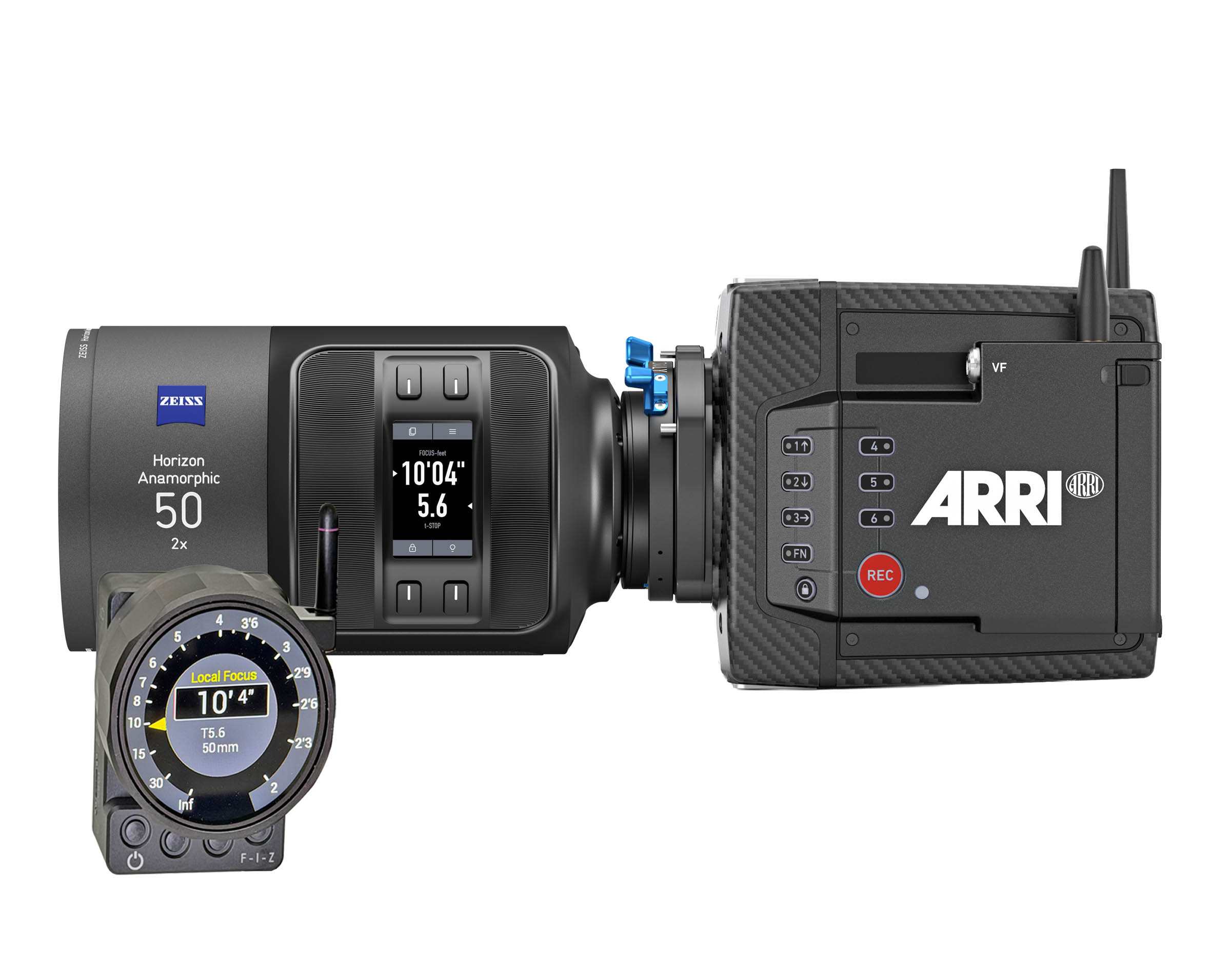
The Preston ALC (Anywhere Lens Control), shown above, provides an “analog dial style” readout of the ZEISS Horizon Anamorphic Lens settings. It connects quickly and simply with a cable from the ALC serial port to the Horizon’s 7-pin Lemo.
Jon: Why and how will the Horizon “smart lenses” help production?
Howard Preston: Their big advantage is eliminating the need for external motors — making the package that much smaller and lighter. Another advantage is calibration accuracy. For high-end lenses from ZEISS, focus mark calibration has never been an issue. But for some other lenses, especially older ones, it’s been a nagging problem for focus pullers.
Having external lens motors adds more current consumption. Many smaller cameras have less current available from their accessory ports, if they have them at all. Crews wind up having to devise ways of providing power from a D-TAP or other external power source. So, internal motors simplify things, and that’s a big deal for crews everywhere.
Coming from Howard Preston who makes lens motors, your enthusiasm for smart lenses is a bit surprising.
Instead of looking in the rear-view mirror, I prefer to anticipate what’s coming next. We already see smart lenses with internal motors (being able to switch from internal to external geared ring control) from SIGMA, FUJINON, NIKON and others.
How much time will a crew save in changing lenses?
For an experienced crew member, calibration is really very quick: about a minute between accessing their lens library on the Hand Unit, watching the lens calibrate and you’re pretty much done. And what if a lens suddenly arrives on set that they didn’t have it in prep? Are they going to calibrate it on site? That can take a bit more time, especially for vintage lenses.
While eliminating calibration time is an important advantage, even more important is calibration accuracy. DPs are often using lenses wide open, hence whisker-thin, shallow depth of field. If you need really high focus accuracy, smart lenses offer high confidence, the factory calibrations that we tested on the Horizon lenses have been absolutely accurate.
Furthermore, with smart lenses, you won’t have problems with cam mechanisms becoming worn and causing focus backlash
If it takes a minute to calibrate each time there’s a lens change and you have 30 setups in a day, that could save half an hour. I see tears of joy in the producer’s eyes at the thought of saving 30 minutes.
If you don’t have to rebuild the setup, it could be a minute, but if you do have to rebuild it, for example, you have lenses with different barrel diameters or different motor positions, that is a bit more time-consuming. It could be a few minutes: getting lens motors from the case, attaching new brackets, et cetera. Over a day, the time savings could be significant.
Do Horizon lenses work with the Preston Light Ranger?
Yes. The ZEISS team have tuned the Horizon lenses to respond as quickly as you need. The internal motors are very quiet for having such a fast response.
You said that errors in engraved focus mark positions have been eliminated. Please explain.
Different manufacturers have different processes to determine where focus is. There’s room for error in the process unless you have an MTF machine that’s very repeatable. A person looking at the image can introduce a certain amount of inaccuracy depending on whether they get the depth of field right in the middle or whether it’s a little off. We’ve seen some engraved marks that are simply off. Horizon smart lenses really eliminate those errors.








Can one adjust focus manually, but turning the barrel or is all focusing done by pushing the buttons or by remote?
Chris, you can adjust focus and iris manually on the lens by moving your fingers across the touch strips on the barrel. Or by using a Preston ALC or a wireless FIZ hand unit.