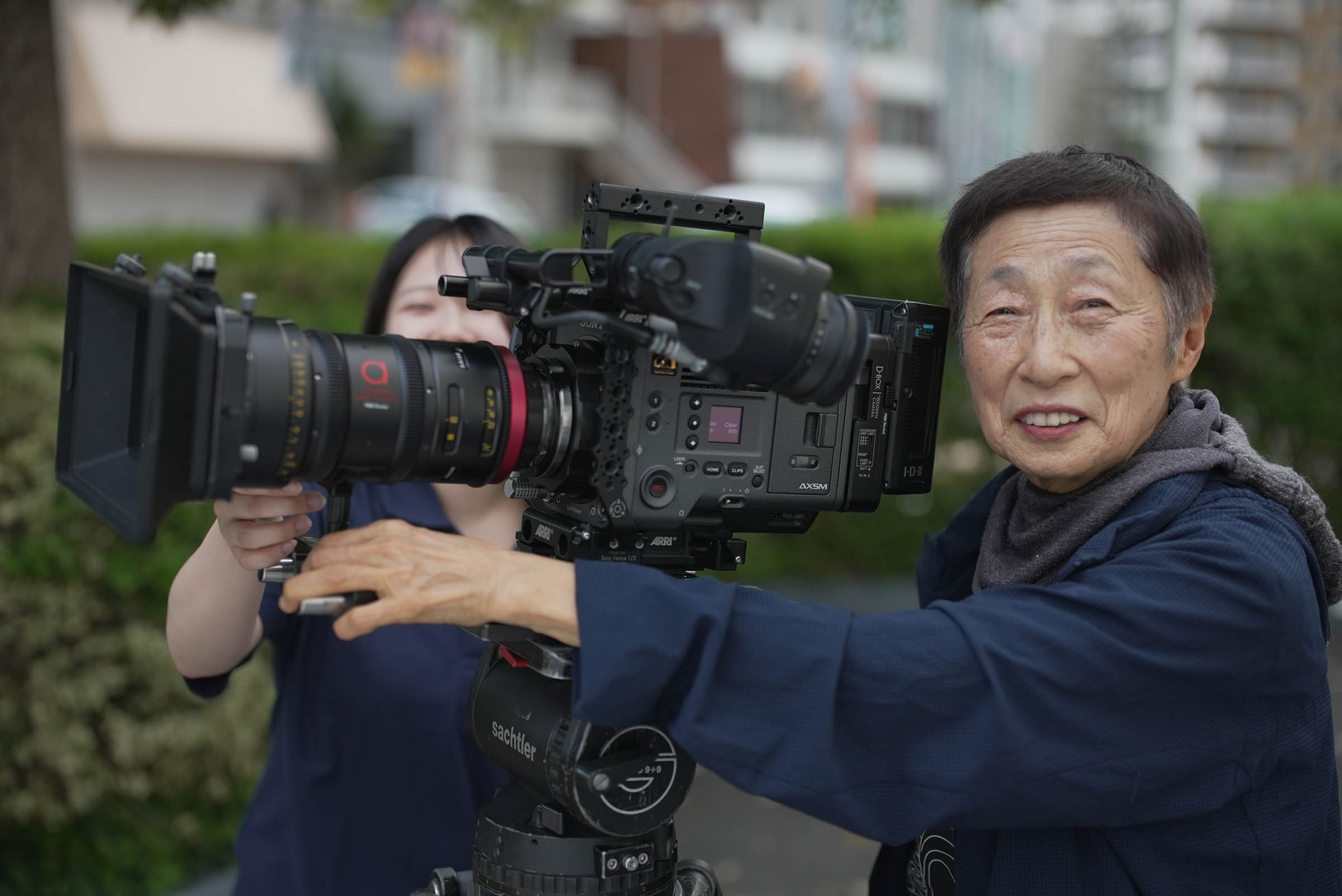
Akiko Ashizawa, JSC. Photo by Tomohito Kanamaru, NAC Image Technology.
Akiko Ashizawa, JSC is a legend in Japanese cinema. She is known for her work with director Kiyoshi Kurosawa, including Tokyo Sonata, Jury Prize at Un Certain Regard, Cannes (2008) and director Kôji Fukada on The Man From the Sea (2018). With more than 70 feature film credits, she won the Mainichi Film Award for Best Cinematography for her work on Chronicle of My Mother (2021), directed by Masato Harada.
Akiko Ashizawa, JSC will be the recipient of the 2026 Pierre Angénieux lifetime achievement award at the 79th Cannes Film Festival on May 22, 2026 in the Buñuel Theatre of the Palais des Festivals.
We met at NAC Image Technology in Tokyo on April 30. Yasuaki Mitsuwa translated.
Jon Fauer: How did you become a cinematographer?
Akiko Ashizawa, JSC: I didn’t attend film school or study cinema at university. I came up through the more traditional Japanese apprenticeship system, learning directly under a master cinematographer.
When did you first become interested in cinematography?
In the early 1970s, there was a boom in making films on 8mm. While I was in the university, I started making films with friends, and that’s when I became fascinated with images. Among those friends was Yoshimitsu Morita. He was the first true genius I encountered in the film industry. I felt he should become a director, so I decided to pursue filmmaking in a different role, as a cinematographer.
How did you enter the film industry after that?
Even while I was still in university studying business administratioin, I had already lost interest in academics and was working part-time in film. At a small production company, I did all kinds of entry-level work. At that point I decided I wanted to become a cinematographer, so I asked several DPs if I could work as an assistant. Everyone turned me down, probably because I am a woman—except one.
Who was that?
Hideo Itô, known for Nagisa Oshima’s In the Realm of the Senses. [Hideo Itô has more than 297 additional film credits.] He was the only one who said, “You seem interesting—sure.” If he hadn’t accepted me, I wouldn’t be working as a cinematographer today.
What was Hideo Itô like?
He had a very hard life. I learned a great deal from him—especially on a deeper, almost spiritual level. He had been on an elite track to be a cinematographer at an affiliate company of Toho, but he left the studio because of various circumstances, and moved into independent and pink films. His life was full of struggle.
Did you start as a focus puller?
No, on those productions there were only two assistants, so I did everything—loading film, pulling focus…everything. My first boss at the time was Kenji Takama, who later became one of the first Japanese DPs to study filmmaking in the United States.
How did you move from assistant to cinematographer?
It took about ten years. In film and television there was a long-standing perception about whether women could handle the job, but the commercial world was newer and more open. After working as an assistant on commercials, I eventually got work as a cinematographer.
What did you learn from shooting commercials?
People often think commercials are mainly about making money, but I learned a tremendous amount from directors.
I agree—the difference between two hours of continuity and the risk-taking experimentation on commercials.
Exactly. Because the budgets were larger, we could use new equipment, and since we had to shoot busy actors in a short period of time, I learned a lot about efficiency and technique. A commercial director named Toru Kawasaki gave me my first opportunity as a cinematographer. He was incredibly talented, and I learned how to shoot a large volume of material in a very short time.
What cameras and lenses were you using then?
Akiko: Mitchell Mark II and Arriflex 35BL. At the time we had to cover the Mitchell or put it into a blimp to reduce noise. For zooms, I used the Angénieux HR 25–250, and sometimes the Cooke Varotal depending on the situation.
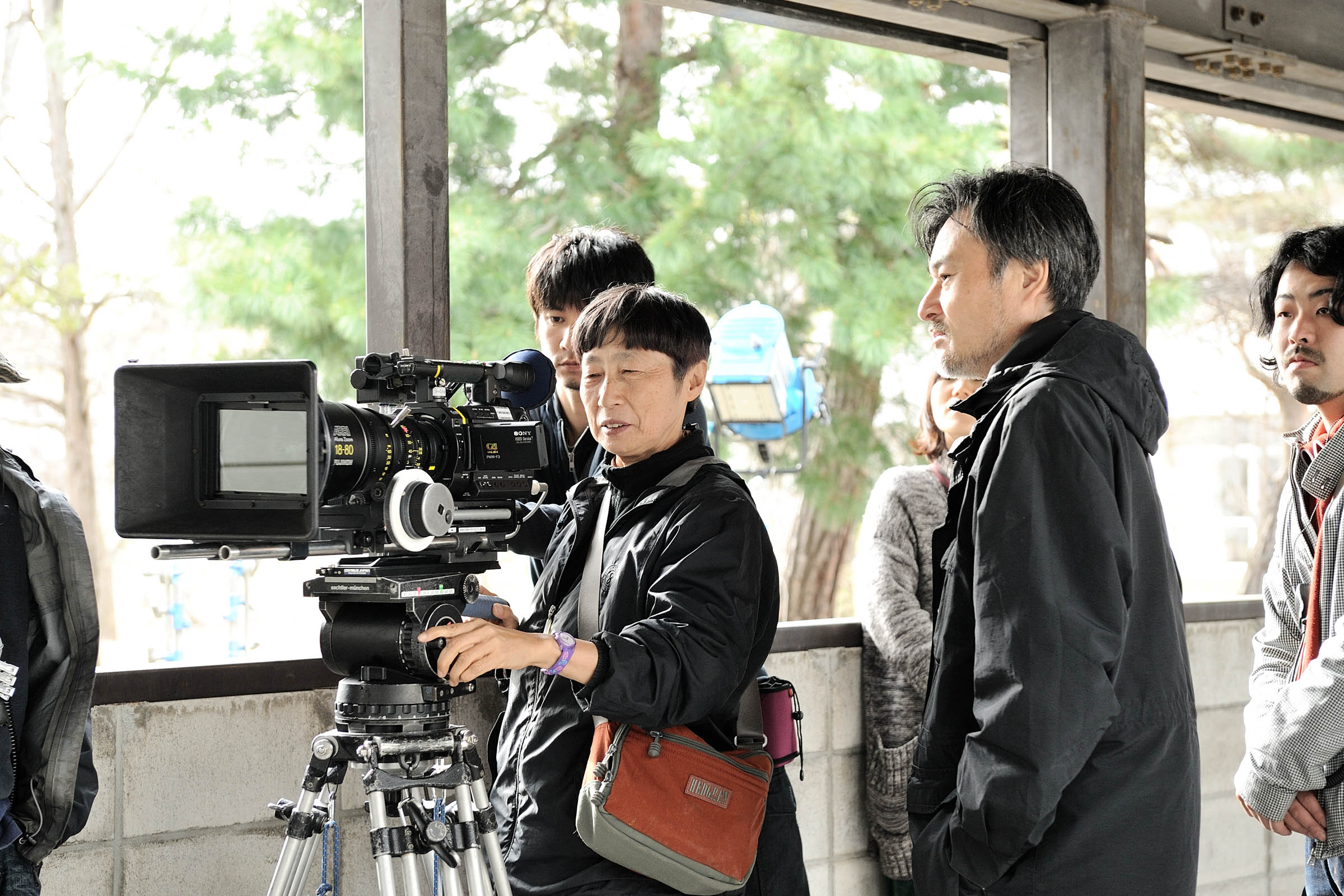
Akiko Ashizawa, JSC and director Kiyoshi Kurosawa on PENANCE © 2012 WOWOW / Tomonari Nishinaga.
And now, what lenses are you using?
I use a Zoom lens when we need to be ready for situations that can happen unexpectedly. Prime lenses represent a commitment. Zooms can introduce hesitation. A prime lens restricts you—in a good way—and clarifies your intention. It’s like painting within a fixed frame.
What about primes?
Cooke. I still love the vintage Panchros. I even asked the rental house not to recoat them—but recently they did, which made me a little sad. Because the coating has a unique character, rental houses tend to prefer newer coatings. So there’s always a bit of push and pull between us.
Rental houses are important partners who take newly developed equipment from manufacturers in the world and put in extra effort to make it easier to use on set. Not only that, they also help train young people who aspire to work in the camera department, which plays a vital role in securing a strong pool of talent.
Do you own any equipment yourself?
I have an Arriflex 16SR3, and recently I bought a DJI Ronin 4D. I usually rent from Masa Yasumoto at Sanwa Cine Equipment.
How do you work with the Ronin 4D?
It’s great for handheld camera operating; it’s very lightweight. The camera body goes in a backpack carried by my assistant. I even used it this past winter in the snowy mountains near Asahikawa in Hokkaido. We shot in deep snow. It was the first time I wore snow boots. It’s a co-production with a company from China.
What lenses did you use on the Ronin 4D?
The DJI lens set of primes. I created LUTs in advance to match them with other lenses.
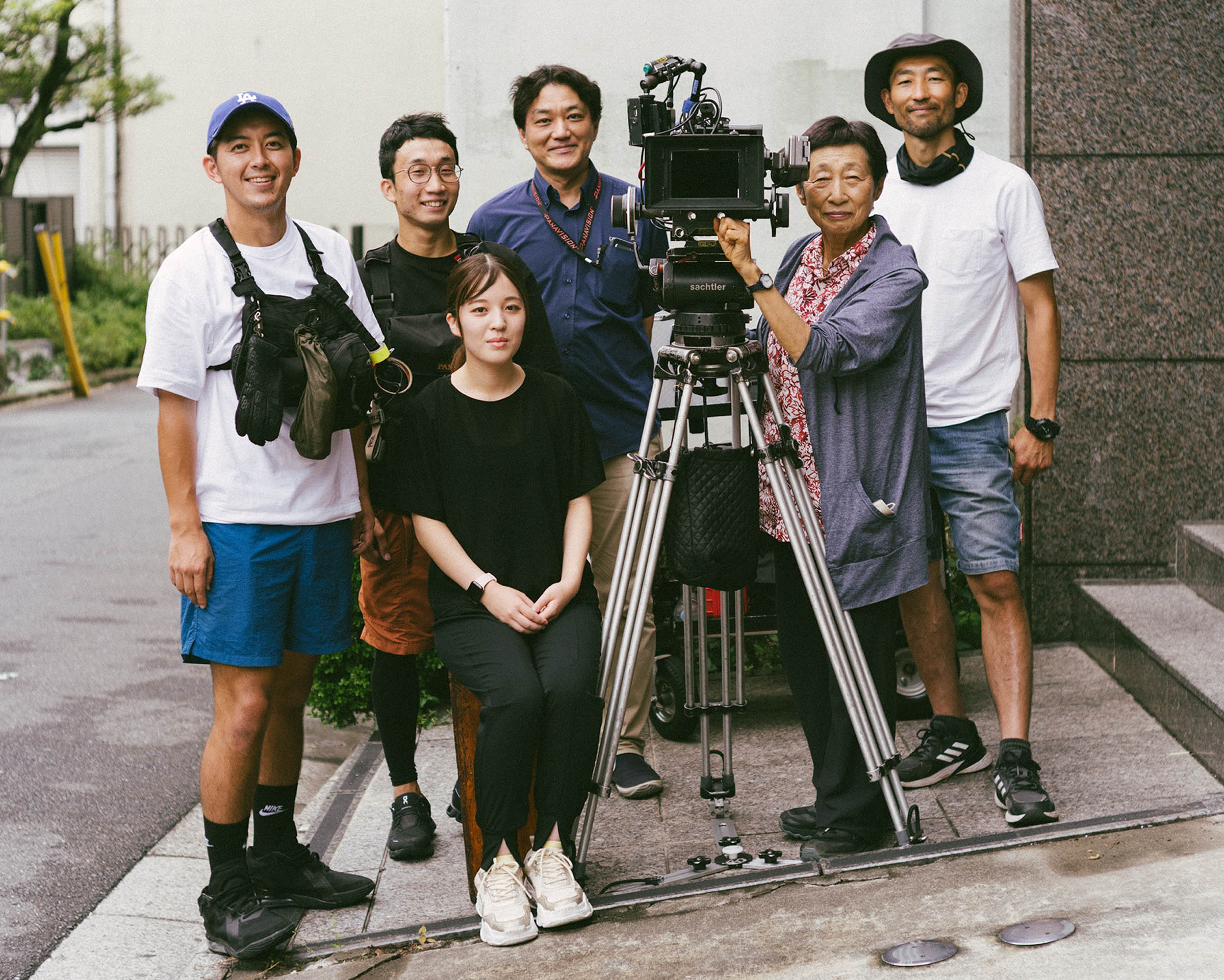
Akiko Ashizawa, JSC and crew at Sanwa Cine Equipment Rental. Photo by Arato Ogura.
I enjoyed your film The Legend & Butterfly. Your cinematography is wonderful and the lighting is beautiful. (The Legend & Butterfly (2023) is an epic period drama about daimyo Oda Nobunaga and his wife Nohime from 1549 to 1582. Takuya Kimura plays Nobunaga. He played chef Natsuki Obana in La Grande Maison Tokyo and La Grande Maison Paris.)
I’m very proud of that film. I think it turned out well—and honestly, I think it deserves more recognition.
It has been reaching a wide audience recently on Amazon Prime Video.
Yes, it has performed well there.
How did you shoot that opening macro shot of a grasshopper?
We used a real grasshopper with a ZEISS Supreme 25mm Prime.
How did you choose lenses for The Legend & Butterfly?
I tested many lenses, but I needed light weight and close focus capability. So I chose ZEISS Supreme Primes.
Oh, I would have expected you to say vintage lenses because this was a feature film about 16th century Japan.
Yes, but The Legend & Butterfly was shot in Large Format, so I wanted a different look. On Blue Boy Incident, I used Cooke Panchros—true vintage ones—being careful with halation and flare. Modern lenses can be too sharp with 4K and beyond. They can feel almost too perfect compared to human vision.
Too much detail?
Exactly. If you’re going to soften modern lenses with filters anyway, I think you might as well use vintage lenses. Lenses that I used to feel were a bit lacking in sharpness during the film era actually feel just right in the digital age. Some time ago, when I shot the film Journey to the Shore, I used Kowa Anamorphic lenses. Back in the film days, they were often said to be too soft, and they had a reputation for not achieving precise focus. However, when I used those lenses with a digital camera, they turned out to be excellent.
What cameras did you have for The Legend & Butterfly?
Sony VENICE 2. It had just been released at the time. Our A-camera was VENICE 2. Our B-camera was VENICE 1. Both worked flawlessly.
The close-ups of Haruka Ayase as Nohime were stunning. Please tell us about your lighting techniques?
That’s a great question—I was hoping you’d ask. Her character spans her teens to her forties, so we did extensive makeup tests before shooting. The same with Takuya Kimura. They were both very busy, so we had limited time. I created different key light color tones and about five LUTs to reflect their different ages. For Ayase-san, I focused not just on beauty lighting but also on shaping shadows. The lighting department and I worked closely together on that.
The light was beautiful, with lovely shadow detail and subtle fall-off on the close-ups.
She said it was one of her favorite performances.
I also liked your warm lighting in the temple scenes.
I used amber gels on the key light.
LED or tungsten?
HMI. Neither my lighting director nor I are very fond of LEDs—we prefer working with gels. Nowadays many sets feel “clean” without them, but I don’t like that.
But rather than making everything amber, I might make one side amber, another slightly cyan—painting with color inside the frame. It creates shifts in color depending on the actors’ movements, which I find very interesting.
Your job as a cinematographer is to translate the script into feelings?
Yes. The other film I would like to mention is Chronicle of My Mother which I shot with director Masato Harada. The beautiful autumn scenes with the yellow and red leaf colors, were done with the Angénieux HR 25-250 zoom lens. It is a great lens that can be used for almost any scene in any setup. The lens provides good images. I chose this lens because, from my documentary experience, anything can happen when you’re on location.
I used the Angénieux HR 25-250 zoom on The Chef of South Polar. [Based of Jun Nishimura’s stories about working as a cook in Antarctica where all kinds of things happen, including the time they ran out of ramen.] There are many scenes in the snow and the zoom lens was very helpful.
In the film era we often thought that zoom lenses were a bit soft. But now, in the digital era, the images from zoom lenses look much better. In fact, after I return from Cannes, I will be prepping for a new project and I will use zoom lenses.
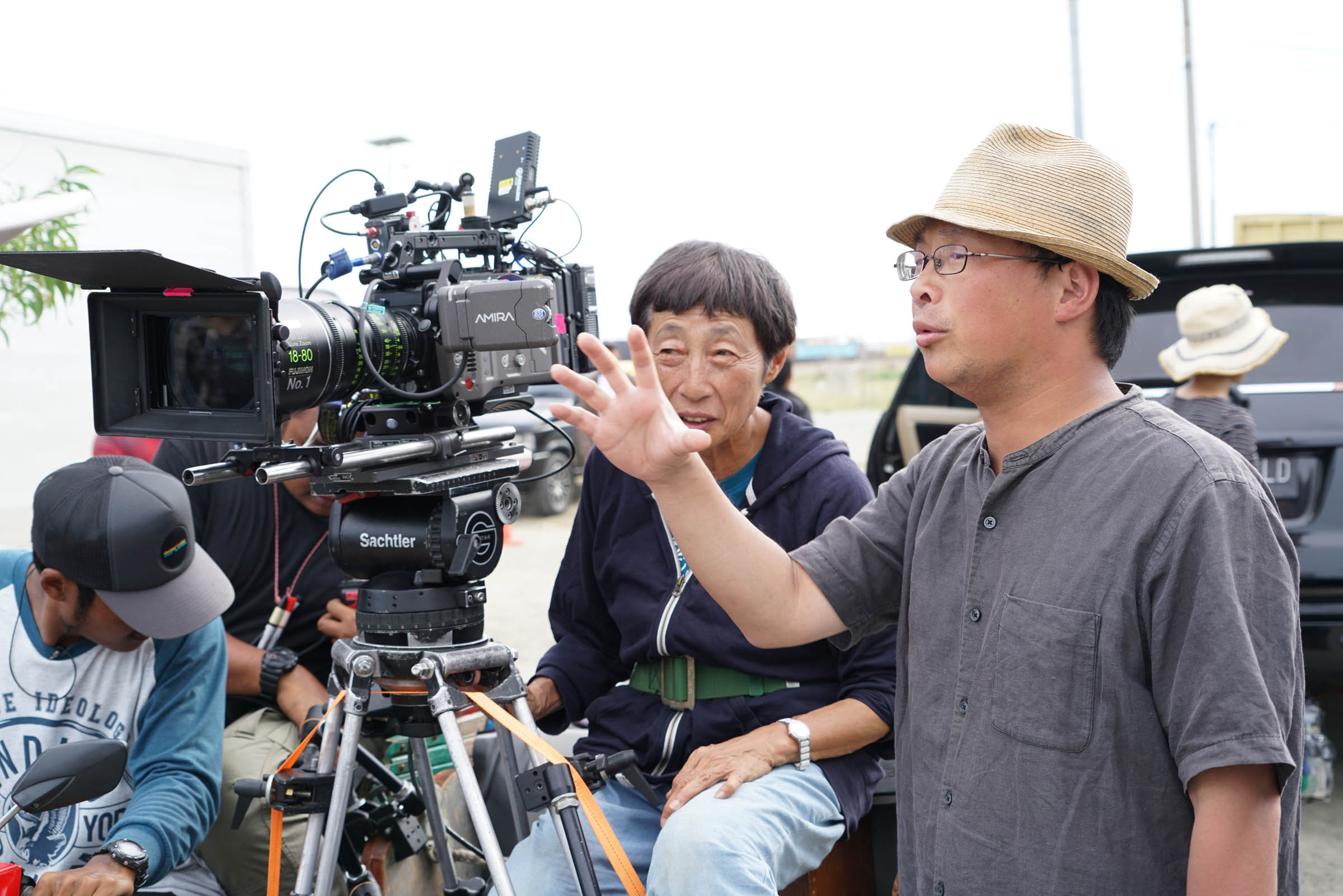
Akiko Ashizawa, JSC and director Kôji Fukada on THE MAN FROM THE SEA. Photo © Akiko Ashizawa.
Do you operate camera yourself?
Yes—I love operating. I use Sachtler tripods.
Do you discuss the film’s look in advance with the director?
Always. I prepare LUTs and test extensively before shooting. Post can do anything—but if everything is possible, nothing is defined. I value the energy created on set above all.
The energy on set?
The atmosphere—something that only exists on set. That’s why I always create LUTs beforehand and align the team on a shared vision. There is an approach where you don’t focus too much with the look on the set and instead refine it in post. However, I prefer to create the image as much as possible during the shoot. That’s why I create multiple LUTs.
You’ve worked on many international films. What are the differences?
There are many differences. In Indonesia, for example, people collaborate fluidly rather than forcing a single conclusion. It becomes something built together.
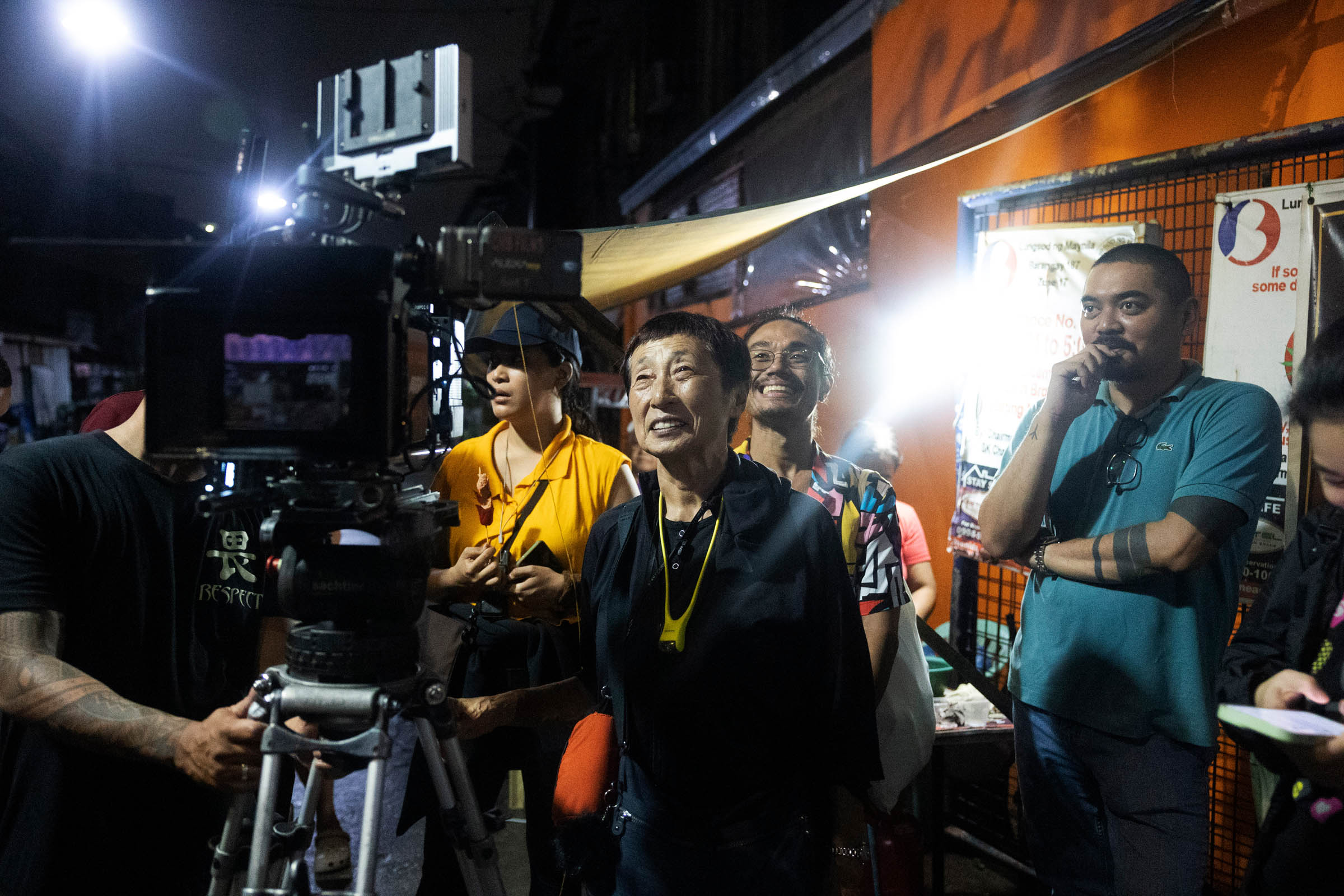
Akiko Ashizawa, JSC on DIAMONDS IN THE SAND, directed by Janus Victoria. Photo: Chari Villegas © Project 8 Projects.
Are there challenges on international productions?
Yes, my English isn’t perfect, so I communicate very carefully with the director. That actually improves the process. Let me also talk about the tea attendant. There was a tea setup on set, with plenty of snacks available. There even was someone in charge, a tea attendant, who would go around offering tea, sweets and fruits. The timing was always perfect, and it helped create a relaxed and pleasant atmosphere on set.
Please tell us about your crew.
We have a minimum of four people including me. There are three camera assistants: chief, second, third. Chief takes care of the camera logistics and takes light readings when I operate. Communication across the crew is also a very important part of the chief’s job. I also think the role of the chief assistant will continue to evolve alongside the advancement of digital cinematography. The second assistant is the focus puller. That’s different from overseas, where many specialize as focus-pullers long-term. In Japan, it’s often a stepping stone. But with higher resolution, focus is becoming more critical—both technically and creatively.
Our lighting department usually has three to four people. I use a light meter myself as well. When I work overseas, I often handle it on my own. There have been cases where I traveled alone and worked with a local camera crew in that country, sometimes without any Japanese staff. But I’ve found that the crews I’ve worked with in Asia are all very talented, so it’s never been an issue.
I was especially impressed by the focus pullers I met in Indonesia and the Philippines—they were outstanding.
As camera resolution moves into 4K and beyond, pulling focus becomes more difficult and increasingly important. It’s not just a technical skill; it also becomes part of the storytelling—how you capture the performance within the frame. I think it’s extremely significant.
Have things improved for women in the industry?
Yes. There are quite a few women working in the camera department in Japan. Many of them are very talented and I feel that they have a distinctive visual style. Some are very well-known; female DPs are not so special anymore. There are also many energetic and talented female team members at rental companies and I believe the number of women in the industry will continue to grow in the future.
What films influenced you?
Pierrot le Fou, The Conformist, and the Japanese film This Transient Life. The camera movement in that film—especially with moving vehicles—was incredibly powerful. That’s where my desire to become a DP really began.
Please talk about your work with director Kiyoshi Kurosawa?
He has been a very strong influence. We have worked on many films together. One idea I value deeply is “cinematic catharsis.” It’s not about logic—it’s about creating moments that move people beyond reason. Catharsis is the most import thing for filmmaking.
Providing feelings that are not necessarily logical?
Exactly. I want to create images that express the darkness and depth of the human heart. It’s not about logic. It’s about feelings. I want to express human feelings.
Do you have a signature style?
You might find my style involves mixing light. Human vision is automatic—autofocus, auto iris—but if you remove that, each light source has its own color. I decide whether to keep that natural balance or exaggerate it. It’s like painting on a canvas and having a palette. I try to learn not only from film, but from television, art, and different cultures. Especially Japanese art.
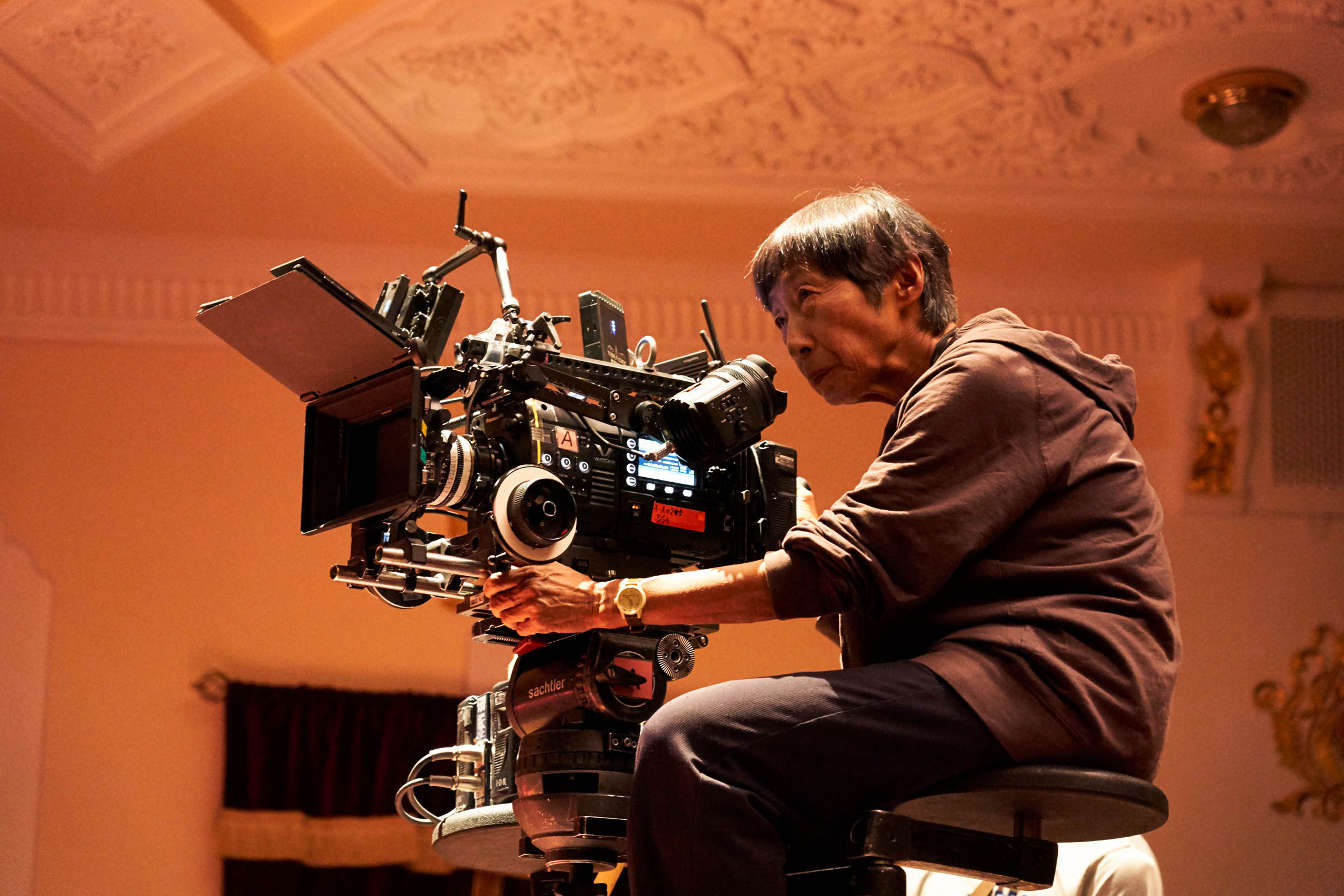
Akiko Ashizawa, JSC on TO THE ENDS OF THE WORLD, directed by Kiyoshi Kurosawa ©2019 Uzbekkino.