Photo: Savannah Cummins
EVEREST: THE OTHER SIDE is the feature-length National Geographic, Disney and Little Monster Films documentary by Elizabeth Chai Vasarhelyi and Jimmy Chin about a ski mountaineer who overcomes incredible personal losses to fulfill a dream of being the first person to ski down the treacherous north face of Mt. Everest. It’s in IMAX and other theaters now.
Clair Popkin, award-winning cinematographer, discusses his work on the film over several years, with cameras that became lighter and provided images that couldn’t have been done before, along with an eclectic selection of lenses, some breathless, all breathtaking.
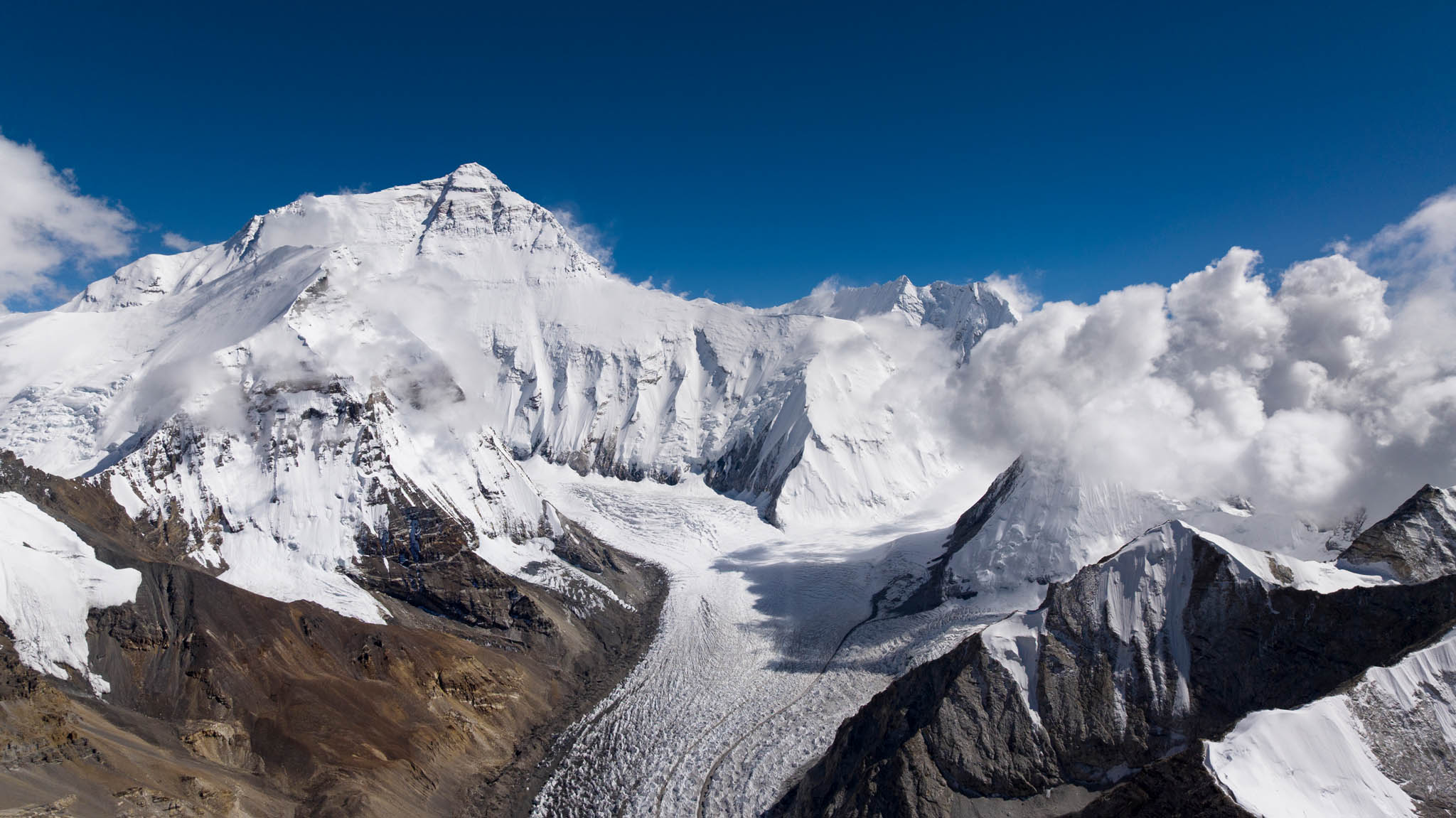
The north face of Mount Everest. (National Geographic/Savannah Cummins)
Jon: How did this project begin for you?
Clair: I was one of the DPs. We had been talking about this film before it started, but unfortunately, when it started, I had just gone through a pretty catastrophic climbing accident, which put me in the hospital for two months. They started without me, working with other DPs. I watched from the sidelines while I was recovering.
Shannon Dill, the producer, who also produced FREE SOLO and is a good friend, stayed in touch. The moment I was physically able to hold a verité camera, shoot, and move without a limp, she wanted to get me onto the project. I think she, Chai, and Jimmy trust the way I shoot.
Please describe that style.
It’s emotionally informed, with a sensitivity toward people. On FREE SOLO, I was shooting Alex Honnold in a tight van, getting real moments just by being there. As soon as I was able, they pulled me back in to join, Chris Murphy, the other DP. He’s from Bozeman, Montana, a really lovely guy and his contribution to the film is awesome.
We did several expeditions of several years. When we were shooting stateside, I’d be lighting and shooting, making sure we had the right package, and keeping track of things during the interviews—very much classic documentary DP duties.
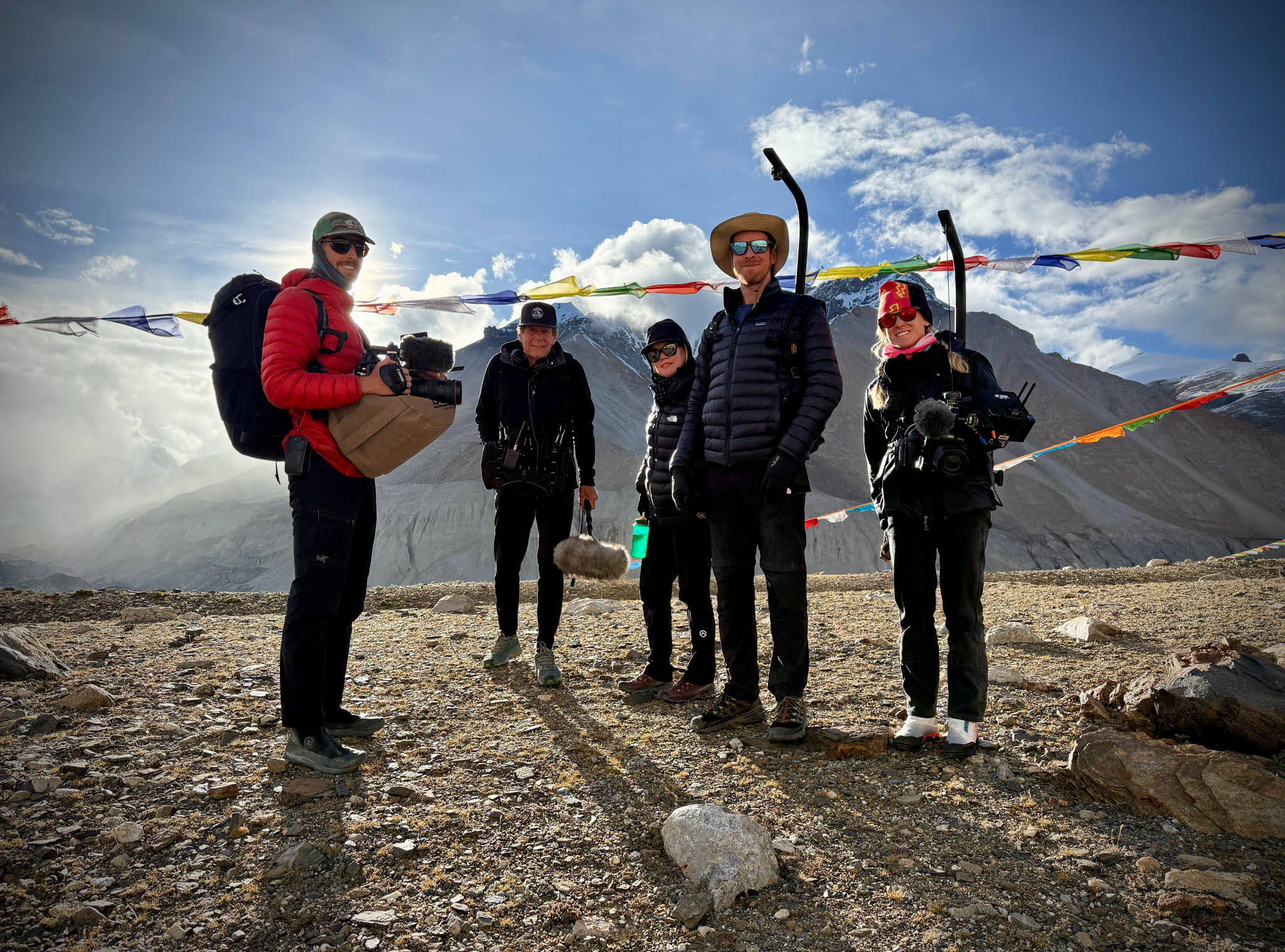
L-R: Graham Deneen (AC), Jim Hurst (Sound Mixer), Shannon Dill (Producer), Clair Popkin (DP), Savannah Cummins (Camera Operator / additional cinematography). Photo by Jimmy Chin.
How did you train for Everest?
This was a very unique project in its sheer physicality: trying to record a cinematic film that feels like a film at 18,000-plus feet for months at a time. We’d be up there for maybe two months at that altitude, where you lose two pounds a week or more. Your body starts to break down, and you’re not thinking clearly. It required a lot of prep and training.
Before we went, the whole team slept in altitude simulation tents, where we could simulate the altitudes we’d be going to, so we could make an aggressive ascent to high altitude in a week or so. For months in advance, we were all cycling, hiking and training to get our cardio fitness up so we could do our jobs, because even at 18,000 feet there’s less than half the oxygen we have at sea level. It was incredibly physical.
But we also knew it was going to be shown in IMAX, on big, big screens, so it needed to feel cinematic, it needed to be stable, and it needed to capture the whole story. This was by far the most technically and physically challenging thing I’ve done.
Shooting a cinematic, human-centered story at that altitude for that long is very hard. It was very much a team effort. At its core, we tried to make a film that people who aren’t climbers will appreciate. It’s about chasing what’s possible. It’s about processing grief, about humanity, all There are personalities we tap into. We wanted to capture the real thing, but in the most cinematic way we could. Thankfully, the technology enabled us to do that: to record for long periods at that altitude, in a very physical way, without being too worn down.
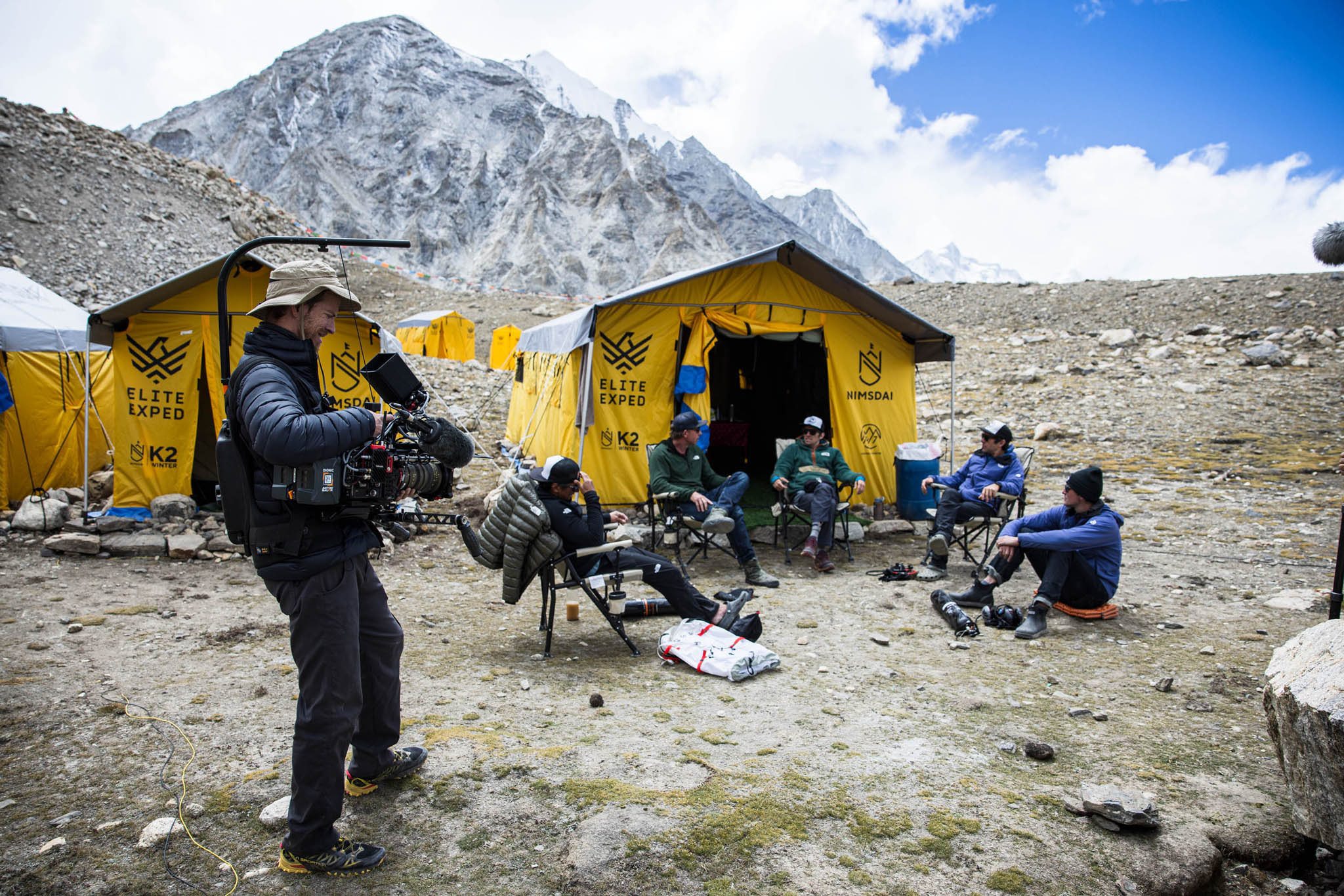
Photo: Savannah Cummins
How high up were you on Everest?
On our expeditions, I went up to Advanced Base Camp, which was as far as my role was going to take me—about 18,000 feet. This was all on the north side, in China, so there’s none of the tourist circus of the other side in Nepal.
How do you get there with all the gear?
We cargo-shipped pallets of equipment to Kathmandu. We took a lot of gear, especially the first time. By our final trip, we had really narrowed down the number of people and the amount of gear; it got smaller and smaller each time. We weren’t really budgeted to go more than once. The gear was shipped on pallets from New York, where it was prepped by my amazing AC, Graham Deneen.
Doing a documentary, he’s half my brain. We’ve worked together since about 2018. I’ve been able to set aside a lot of the technical things I used to think about, because when I worked as a focus puller I was very technical, and now I can concentrate on the more artistic side.
Graham prepped all the gear and had it shipped. He’s amazing—I’ll go into that later. I would fly into China with a producer, a couple of crew members, and our talent Jim Morrison. We’d fly into Chengdu, and from Chengdu we’d fly to Shigatse. The first year, we had to fly into Lhasa, the capital of the Tibet Autonomous Region, and then go overland, because it was earlier in the pandemic. They hadn’t allowed foreign film crews in for years, and we had to have minders with us to make sure we were following a strict itinerary. We spent a couple of days in Lhasa to acclimate at 12,000 feet, then drove to Shigatse and then to Tingri, which is the jumping-off point for Everest Base Camp and going farther up.
How did the equipment get to base camp?
It was driven overland with much of the Sherpa team and some of the technical team, like camera assistants and a few operators. It came through the border crossing that just got washed away in that huge, devastating flood a few weeks back.
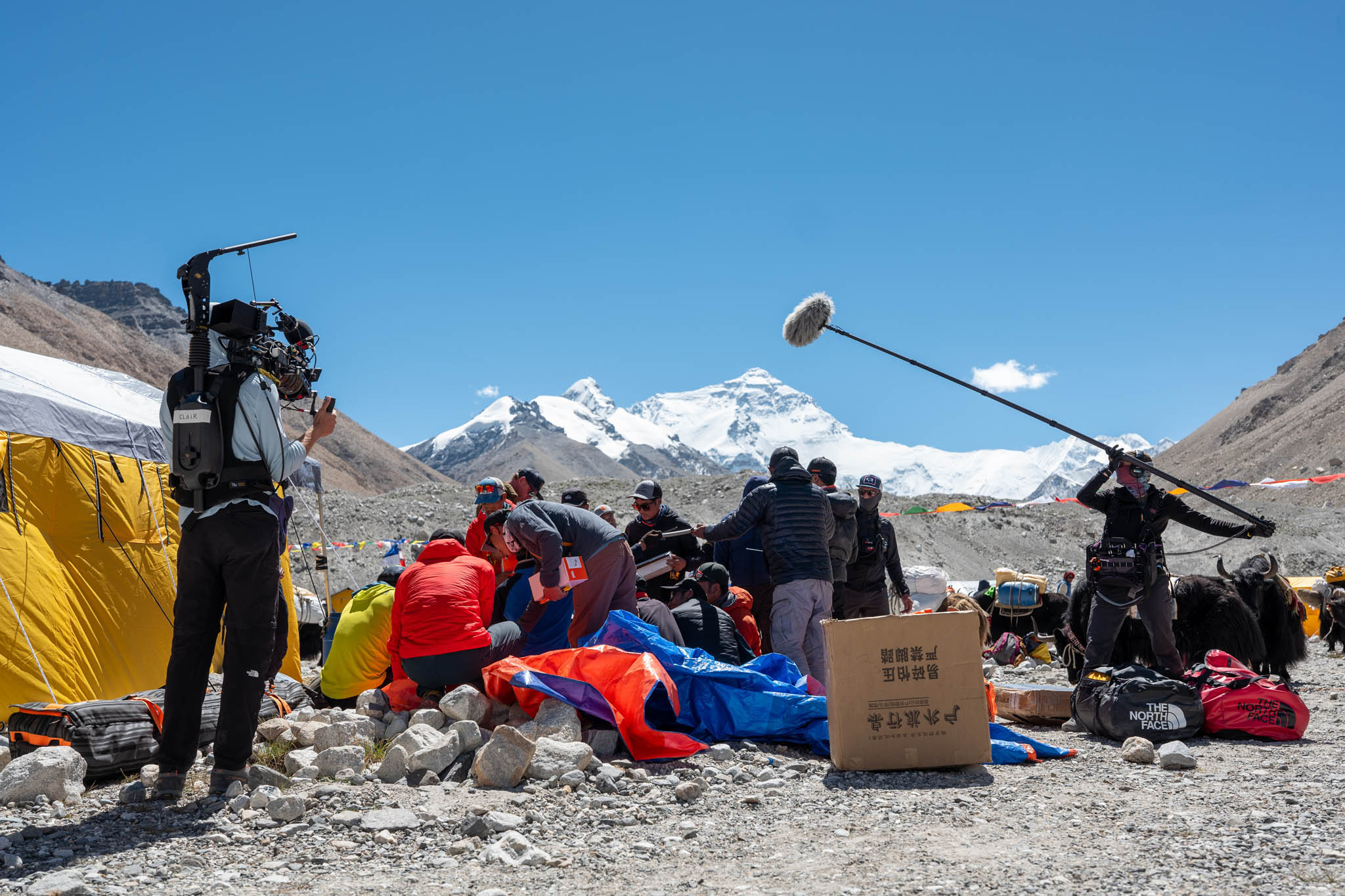
The first year, we didn’t get much done. We showed up late because of some administrative issues around getting access. The next year, I flew straight from Chengdu to Shigatse, and then we drove six hours to Tingri. You go over some huge mountain passes at 17,000 feet and drop down into Tingri, which is about 14,000 feet. We’d spend a few days there acclimating, then go up to Base Camp, which is just under 17,000 feet, and spend a few days there. Then the whole team would go up to Advanced Base Camp once it was set up. That was about a half-day trek, and the yaks would take most of the gear up.
Jon: That was a great shot with the yaks carrying supplies.
Clair: There were 50 yaks making five trips. We called it the yak rodeo. Porters would carry some of the more sensitive camera gear, because the yaks have a tendency to just chuck things off.
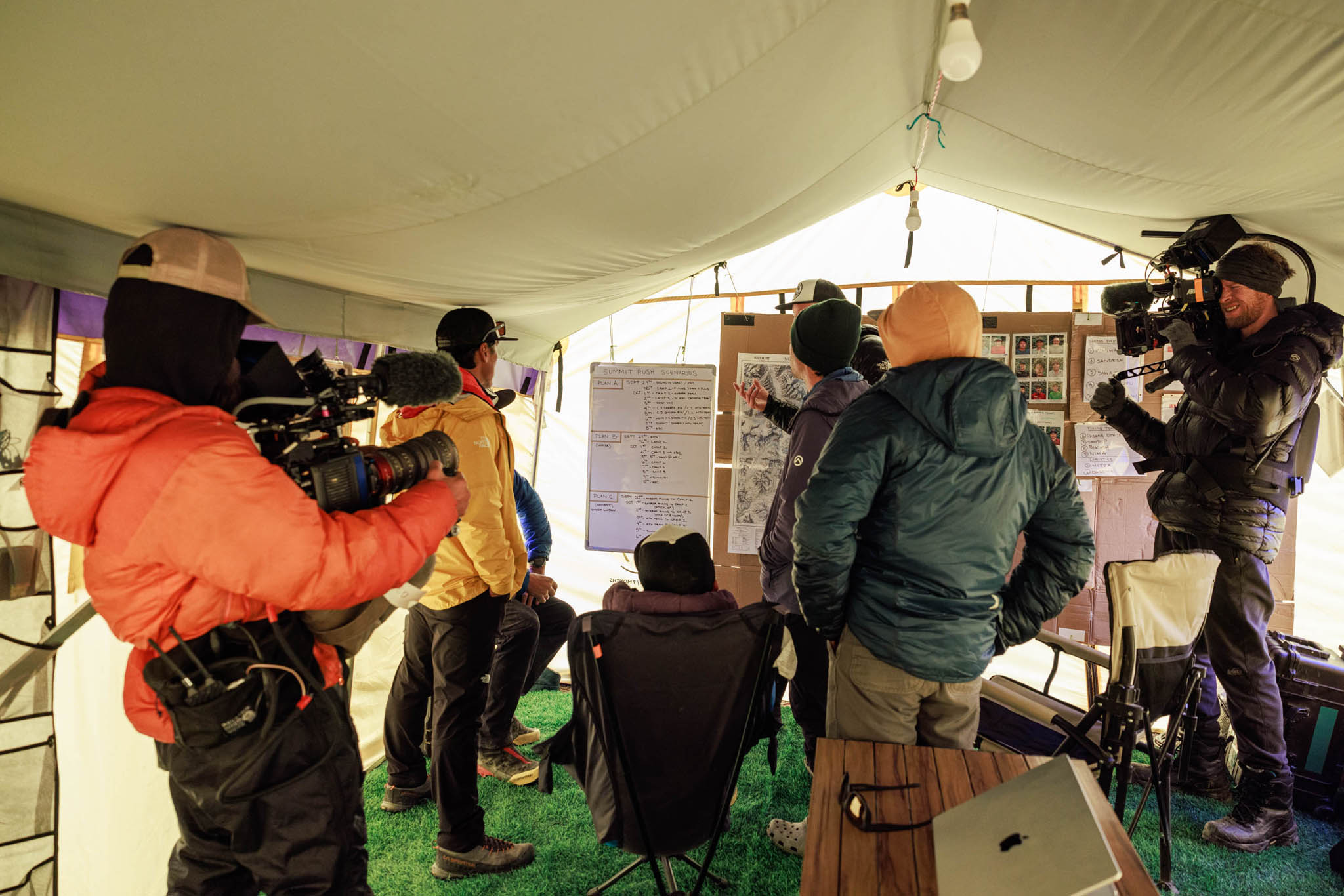
Photo: Savannah Cummins
Jon: How many cameras did you have?
Clair: We had a lot. I had an ALEXA 35 and an ALEXA Mini LF on the first trips. I own an ALEXA 35, and I think its dynamic range is amazing for that kind of mountain environment. As we’ll talk about in a few minutes, each time we returned to Everest, I went with smaller and lighter camera packages. Canon was very kind. They gave us every lens and every camera system we could ask for, including things they were still developing. When the Canon EOS C400 was a prototype, they had two and sent us one. It wasn’t fully functional in some of the settings, but I wanted something suited to the way I shoot.
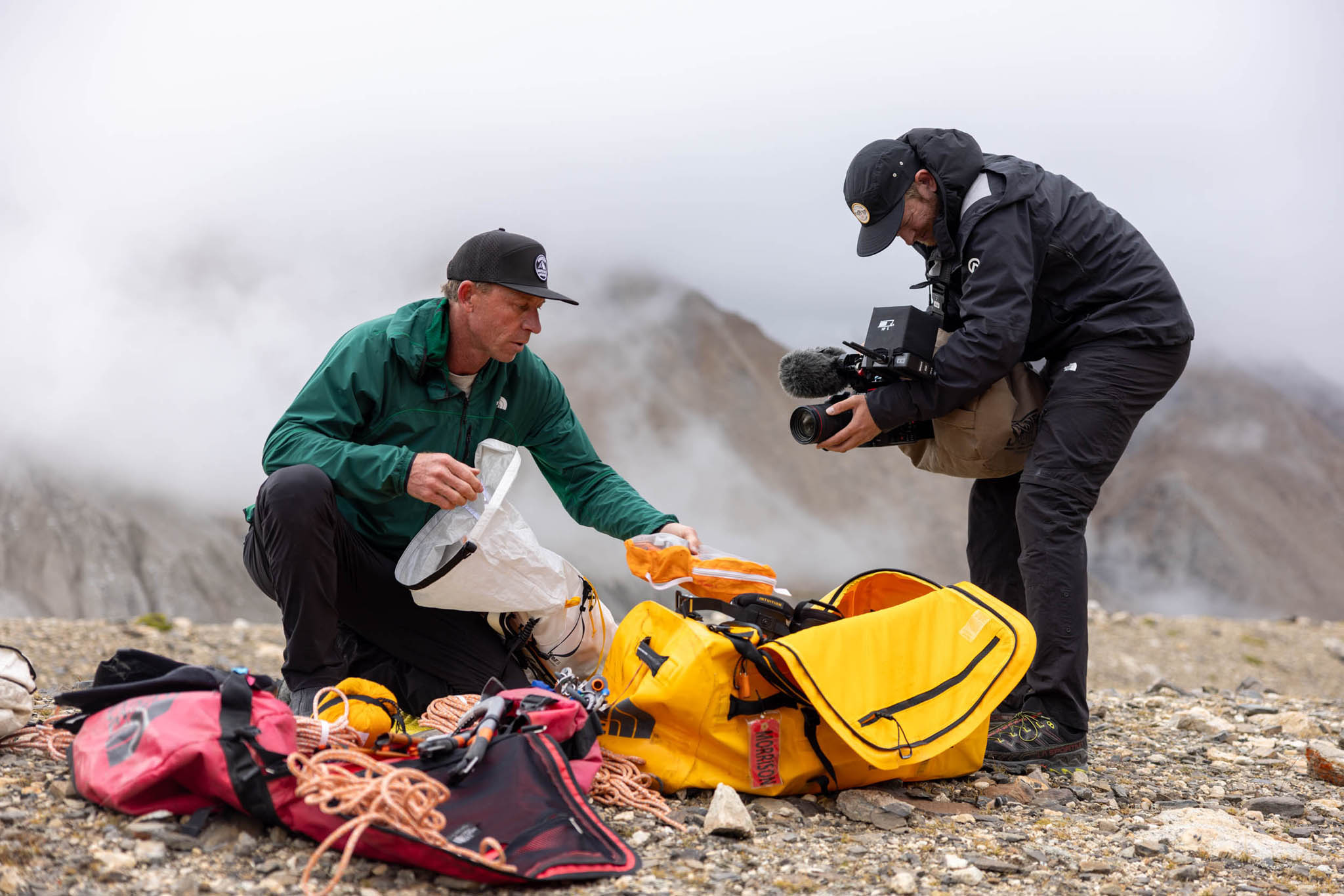
Photo: Savannah Cummins
So, they’d given us Canon EOS R5 C, EOS C80 and EOS C70 cameras. They worked really well for the team going up the mountain. The R5 C was the main camera above Advanced Base Camp because of its size, weight, and quality. I want to emphasize that the Canon R5 C was amazing and allowed us to shoot this in a way that otherwise wouldn’t have been possible. Canon was super helpful getting them to us early so we could prep and make custom battery cables. That camera was our workhorse up high. We manufactured special cables so batteries could go inside people’s jackets to stay warm, running out to the camera on reinforced, extra-heavy-duty cables so they could run for a long time at minus 20 degrees.
Describe the prep work.
Clair: It took a year or two. We had so many camera systems, and this was shot over six-plus years, so camera technology developed and changed along the way. Most of the sit-down interviews were shot on my ALEXA 35 or the Mini LF.
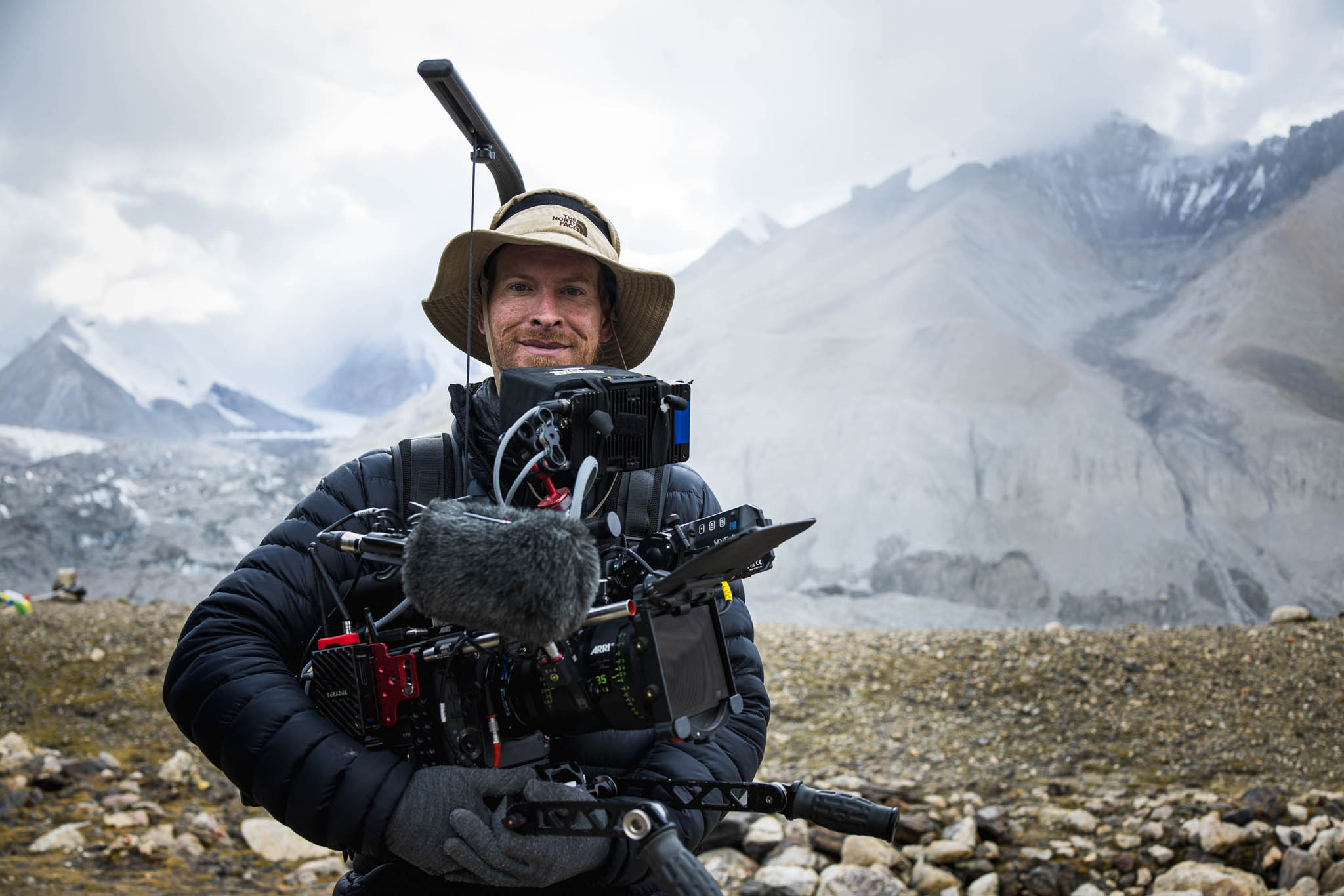
Photo: Savannah Cummins
What lenses did you use with the ARRI?
Clair: Signature Primes, because I think they’re so beautiful. [and breathless.] They’re not overly clinical or sharp, but they resolve well for 4K and 6K, and since this was going to IMAX, I wanted that. Also, the falloff and bokeh are beautiful, and so is the way they treat faces. I also had Angénieux EZ Zooms.
Jon: Where did you rent the equipment?
Clair: Cinema Vision in New York. I’ve been working with them for over a decade. Derrick Zimmerman, the owner, is great. They used to do a lot of the Photosonics work in New York back in the day. That’s how they first got on my radar. Production keeps their owned cameras lenses there, so we’ve worked with them for a long time. And Canon gave us probably eight or nine R5 Cs and a couple of R5s. Jimmy Chin is an Explorer of Light photographer with Canon, so that helped.
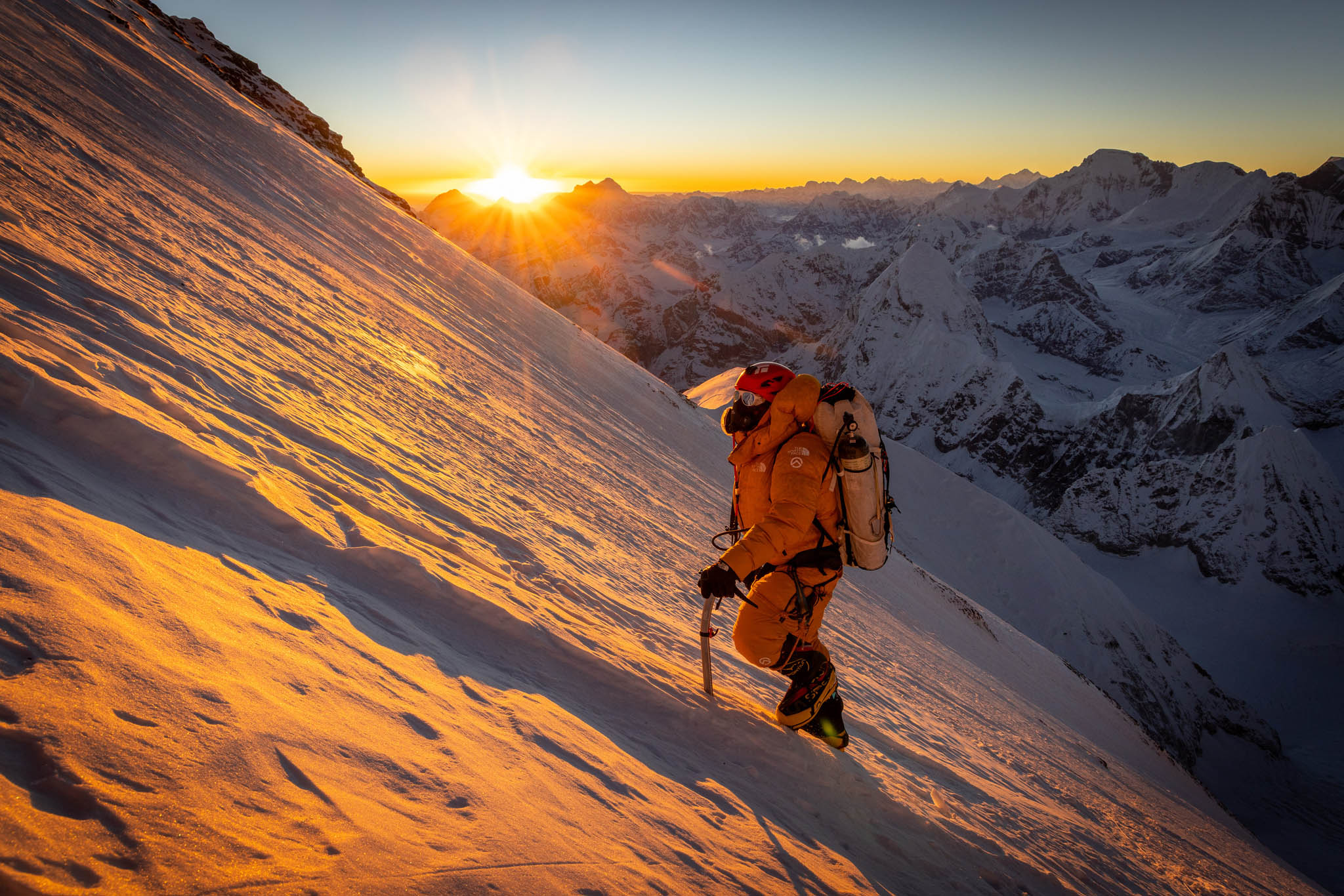
Jimmy Chin climbing the north side of Mount Everest. (National Geographic/Erich Roepke)
Jon: What camera gear do you own?
Clair: I have an ARRI ALEXA 35, an ALEXA Mini, and a Canon EOS C80 that’s set up really nicely on a DJI RS 4 gimbal. The C80 shoots 6K RAW. I have a number of monitors, including 4K OLEDs and smaller ones. I’ve had gimbals for years, and I have a beautiful 11-lens set of ZeroOptik Olympus lenses.
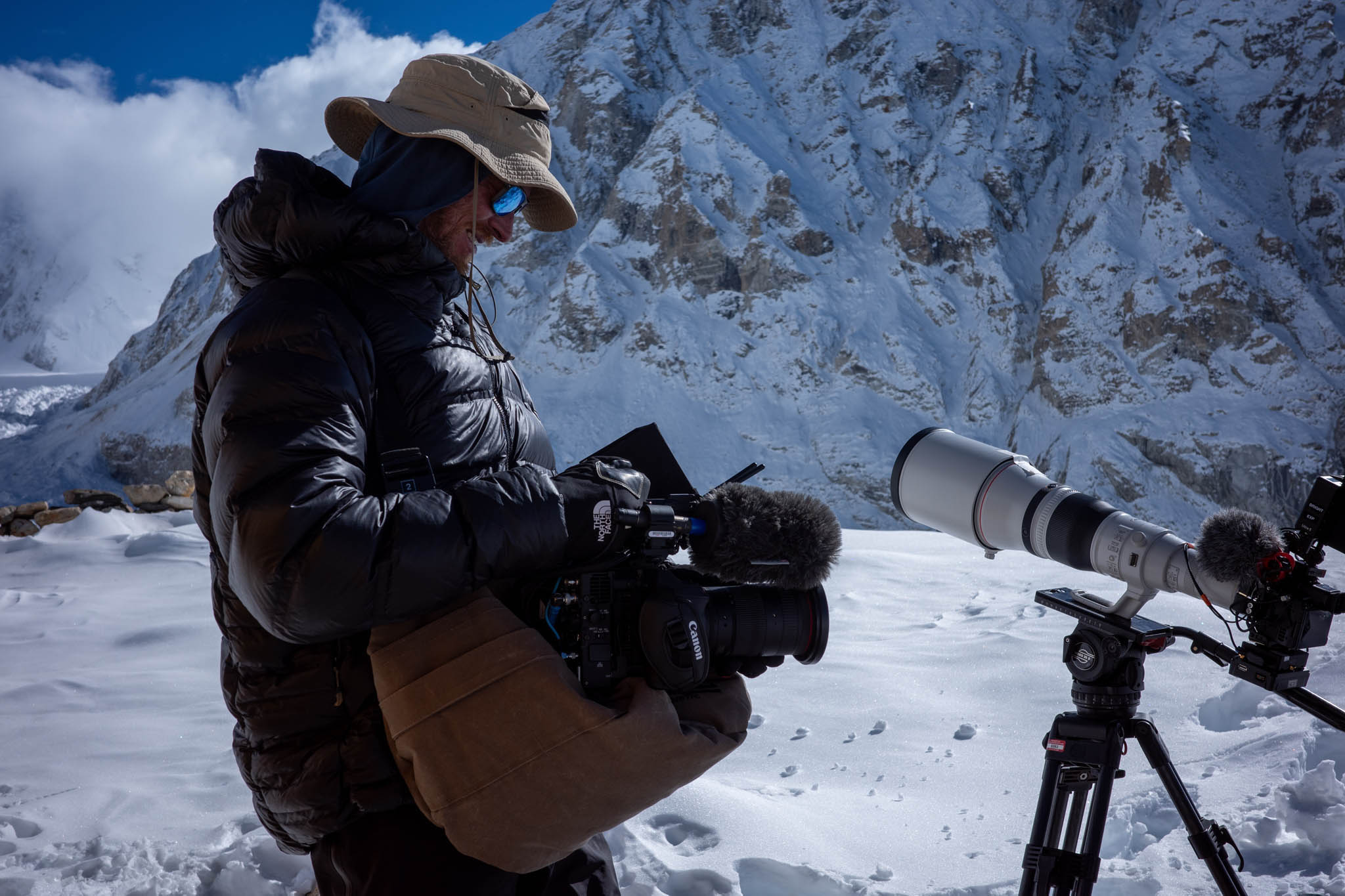
Photo: Savannah Cummins
Jon: How did you usually operate with the Canon C80?
Clair: I wasn’t using the C80 on my shoulder. It’s more that I can get in and out of the car shooting with it, use it for smaller setups, or put it on the gimbal really easily. It’s my gimbal camera. Even on the mountain, I would have a DJI RS 4 camera stabilizer with a ring grip and a C80 on it. If I needed to do tracking shots with people on that really rocky talus terrain, having my eye in a viewfinder would make me much slower, and we’re filming professional athletes. So if we were going on a hike of any real length, I’d either hold the camera with a monitor in front of me or use the gimbal camera, so I could see where my feet were going. It’s very treacherous terrain, even at Advanced Base Camp.
Jon: What is the RS 4 ring?
Clair: Tilta makes it. It’s really good. I used it a lot. Graham would set it up, we’d use an RF lens so it could autofocus, and I could grab it and run at a moment’s notice. All the cameras were ready at all times, 24 hours a day on the mountain, because something might happen in the middle of the night, and I’d have a small camera ready to go. It was a huge job. Graham was the only camera assistant up there with us, and some of the time we had several operators, so he was overseeing a lot of cameras. Thankfully, we had a dedicated DIT most of the time, so he didn’t have to handle that too.
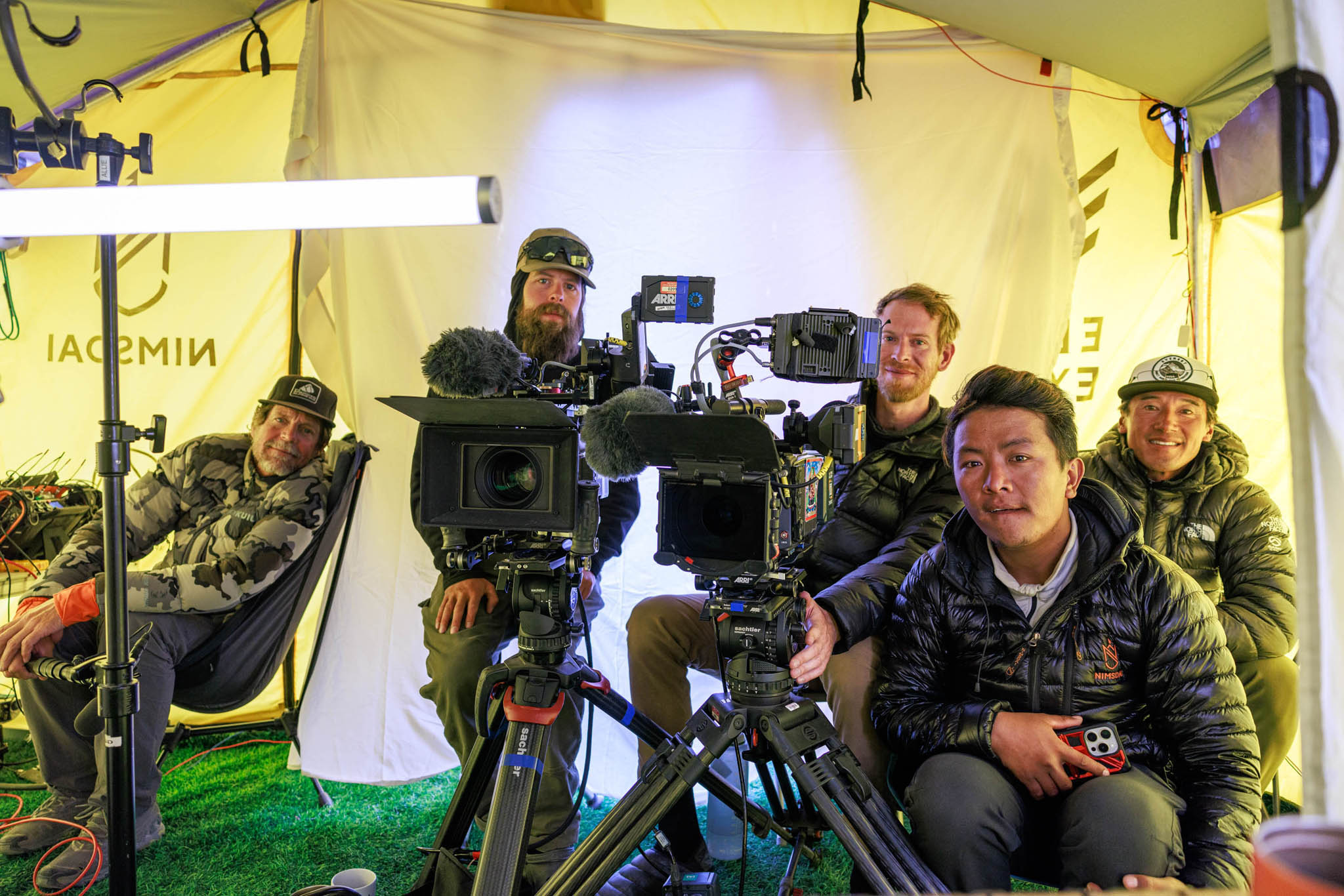
Photo: Savannah Cummins
Jon: Just one camera assistant for everybody?
Clair: Yes. Graham is absolutely incredible. On the second trip, he was even pulling focus for me some of the time when I was shooting verité with ALEXA 35 and Mini LF. I had the Angénieux Optimo EZ short zooms. I controlled the zoom with a Master Grip while Graham had the focus. If he had to step away, I’d use the other Master Grip, set the focus on it, and pull focus myself.
But on the final trip, we only took Canon cameras. I really liked the Canon C400. I could run around with it for hours: long battery life, long card record times, and light weight. Graham built it so it was amazing on my shoulder—balanced and super light.
Jon: What did you use for the shoulder rig?
Clair: It had handles and a standard shoulder plate. Graham built an EVF onto it for me, and I used Canon’s RF 24–105mm f/2.8, the newer model [RF24-105mm F2.8 L IS USM Z]. It’s incredible, has a bit of character and it’s a good size, so your hand isn’t at your face; it’s a little bit out in front. It even has an iris ring.
Jon: Do you pull your own focus?
Clair: Yes, in those situations. From earlier in my career, I’m used to pulling my own focus most of the time. It’s a luxury to have Graham do it, I find I operate better when both hands are on the handles.
Jon: The color grading was really good. Stefan Sonnenfeld at Company 3? All your cameras matched beautifully.
Clair: That was five or six years of footage from different camera systems, all matched. Before we went on any of the trips, a few of us went to Telluride to film in the mountains, where some of the film takes place, and we brought all of the camera systems with us. I did a test where we bracketed exposure, slating each stop from three stops over to three stops under on each camera. We looked at snow and at darkness, finding frames that had tree detail, shadow, rock, snow, and bright snow, to see where things started to clip. Then we took that to Company 3 to see how far we could pull things back and push things up for each camera without the image falling apart. We projected it all in IMAX too, because most of these cameras were not on the IMAX-approved list, so we were required to test them all.
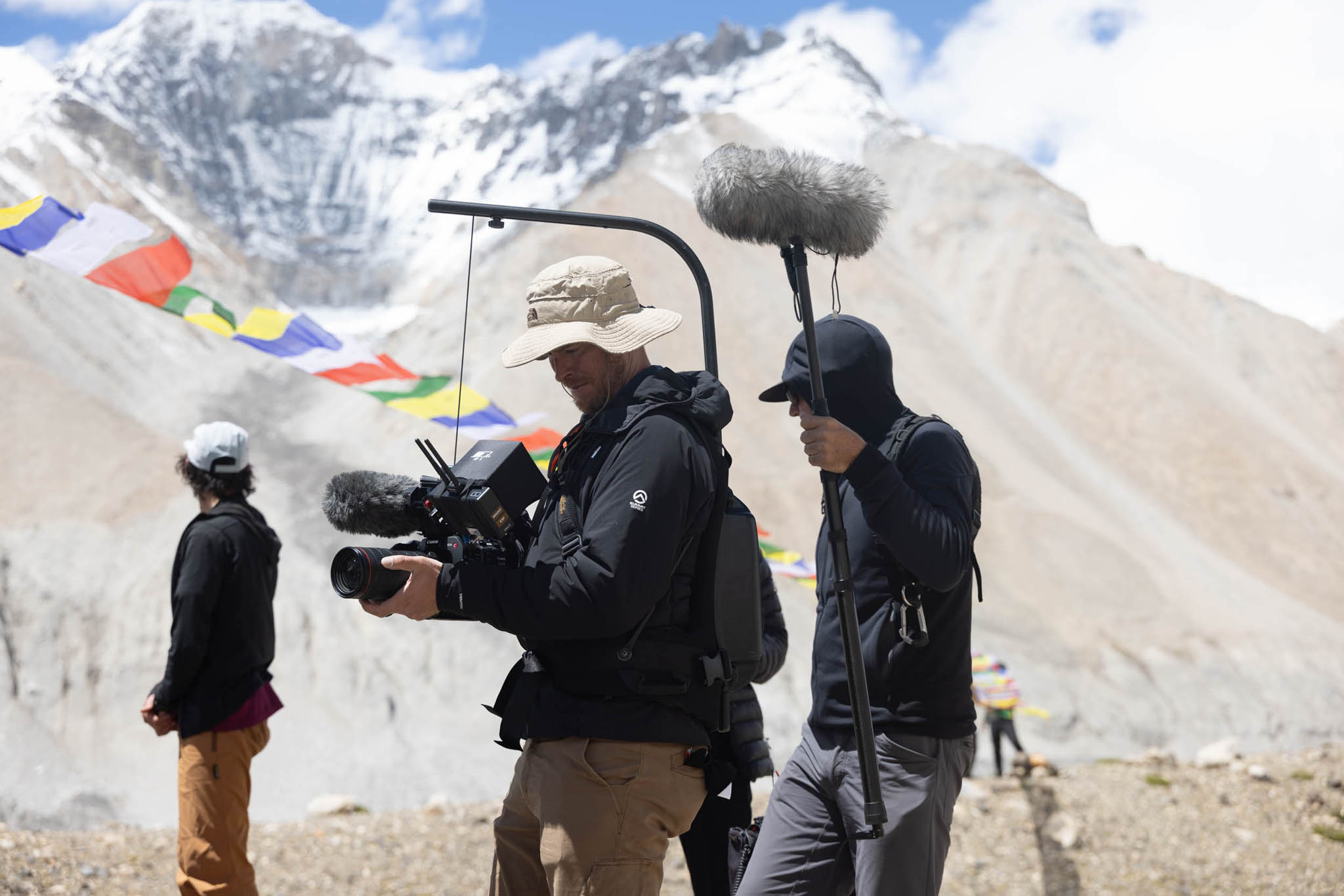
Photo: Savannah Cummins
Jon: IMAX qualified all the cameras?
Clair: IMAX was an awesome partner. They were very supportive of the concept: “We’ve got to be up on a mountain; we need to bring a smaller camera.” They were very collaborative.
Jon: Were you shooting 1.90:1?
Clair: No, for this film we shot most of it at 1.85:1, but there were certain sequences, especially on the cameras with full-frame sensors, that I made sure we framed for 1.90:1. FREE SOLO was similar; it was 1.85:1 as well.
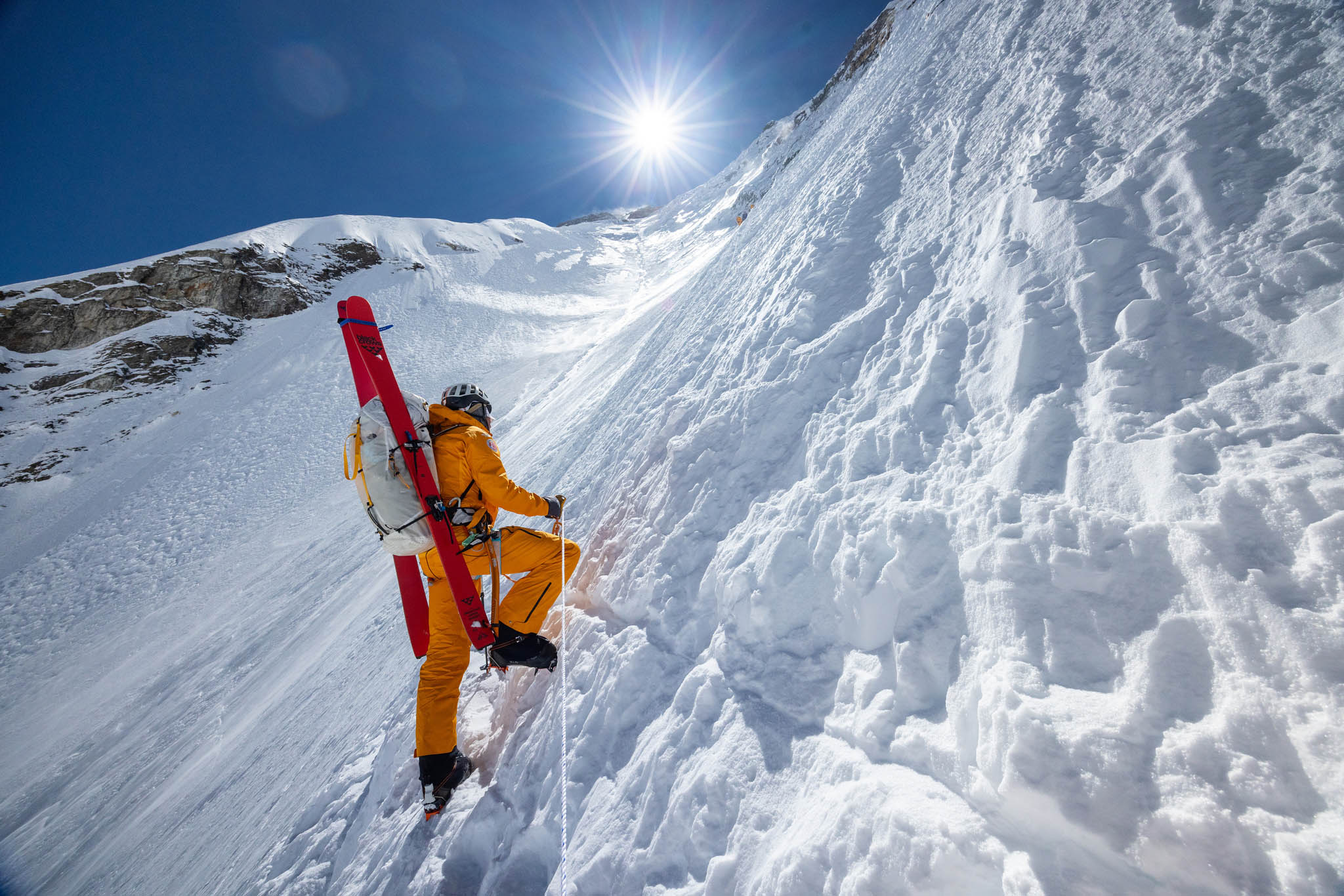
Jim Morrison climbing Everest. (image: Jimmy Chin)
It will definitely be worth seeing this film in IMAX. Knowing that IMAX was ultimately a partner, we really had to project everything. We projected all our exposure tests and ruled out a few cameras and lenses we had been thinking of using. I was able to see for myself where we needed to nail our exposure on certain cameras, so I could tell the operators and everyone else working on the film, including the high-altitude cinematographers, “This camera isn’t going to do well here. Make sure you underexpose.” We also tested various variable ND filters to see what they did, because a lot of them create an X pattern. They’re basically a combination of a circular and a linear polarizer, and they end up creating strange dark areas in different parts of the frame.
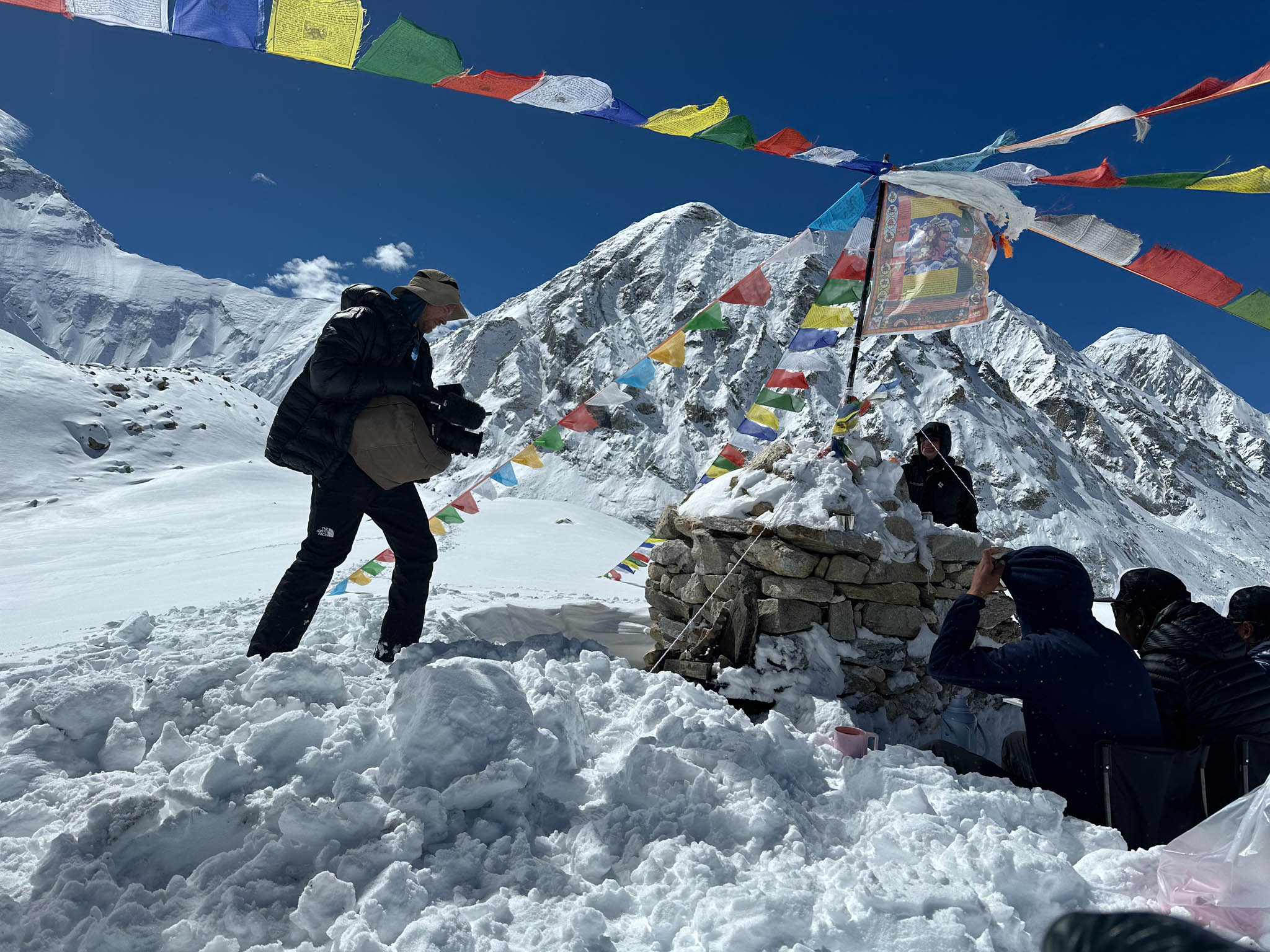
Photo: Savannah Cummins
Jon: How did you view dailies on location?
Clair: When we were on the mountain, Shannon Dill, the producer, and I would watch dailies for every day that was shot.
The first year, we had a full DIT setup, brought up by yak, with a Flanders Scientific monitor and an amazing DIT. On the final two trips, we used MacBook Pros and Apple Pro Display XDRs, and we’d watch when we had time. Once the high-altitude team went up the mountain, there was less to shoot, so I could find a few hours here and there to watch it all. I’d watch everything coming down off the mountain, and then we’d communicate with the team up there: “Hey, pay attention to this. Those headlamps are flickering. Maybe add a lamp to this tent. Make sure you cover this side of the conversation. Get these cutaways.” A lot of notes on what was missing, what was good, and what wasn’t working—basically working in more of a narrative sense as a DP, overseeing it. We kept tabs on how the story was evolving and what was happening. Is there a weather system coming in? On our side, I’d be filming everything happening at Advanced Base Camp: the team checking the weather and communicating, our response if something happened up high, and then covering everything when the team came back.
But the rest of the time, I treated it much more like a DP on a narrative series: overseeing everything, making sure the quality was there, that all the cameras were matching, that nothing was wrong, and that the story was coming together.
Jon: How did you download the media?
Clair: We downloaded onto SSDs. Maybe once a week, sometimes more often, they’d be shuttled down to Base Camp and then taken to town, where we had an assistant editor at the hotel. She would download everything, get it synced, make sure it was all fine, and keep the masters. Then the drives would come back out and go where they needed to go.
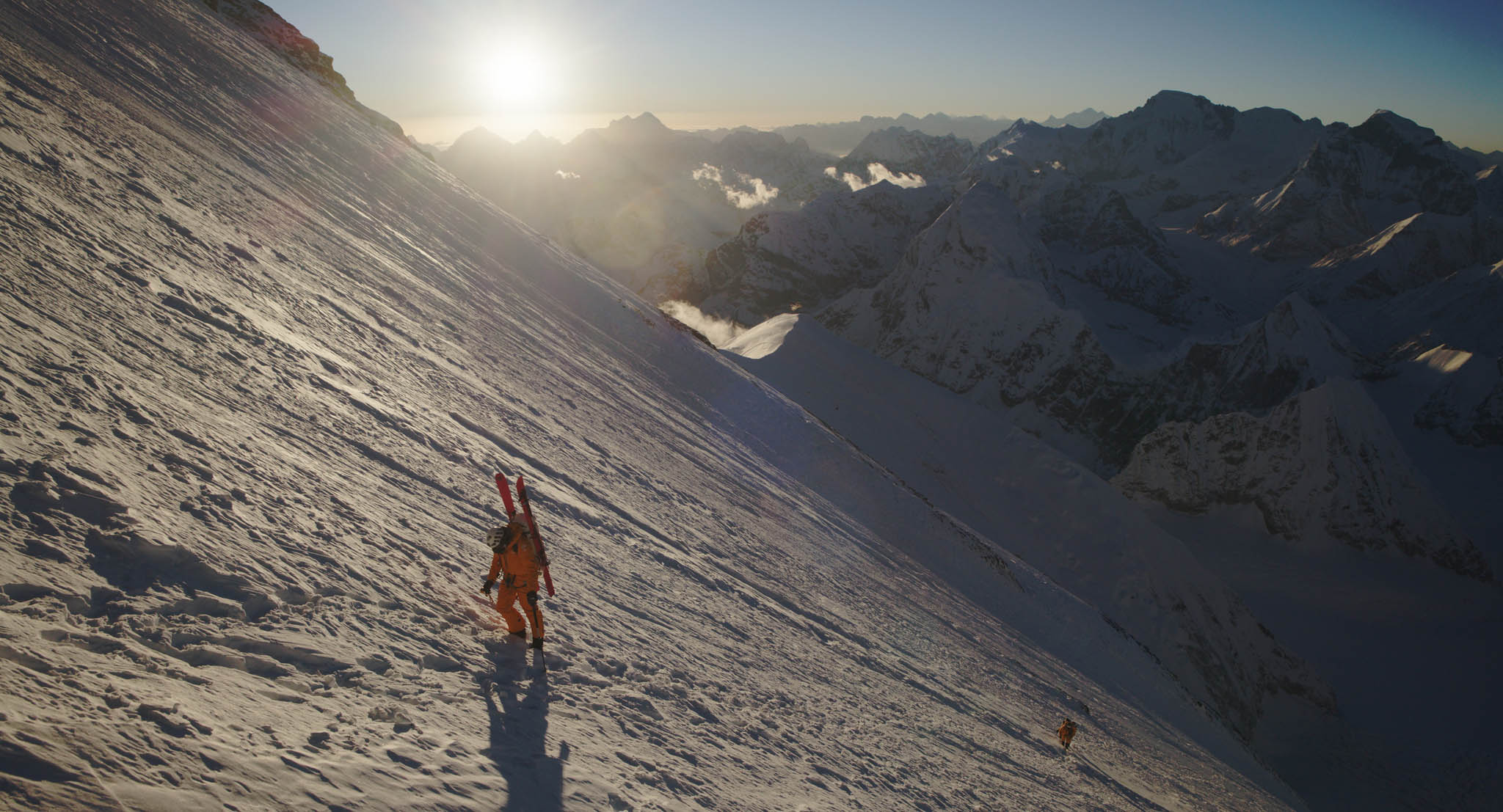
Jim Morrison climbing Everest North Face. (photo: National Geographic/Leo Hoorn)
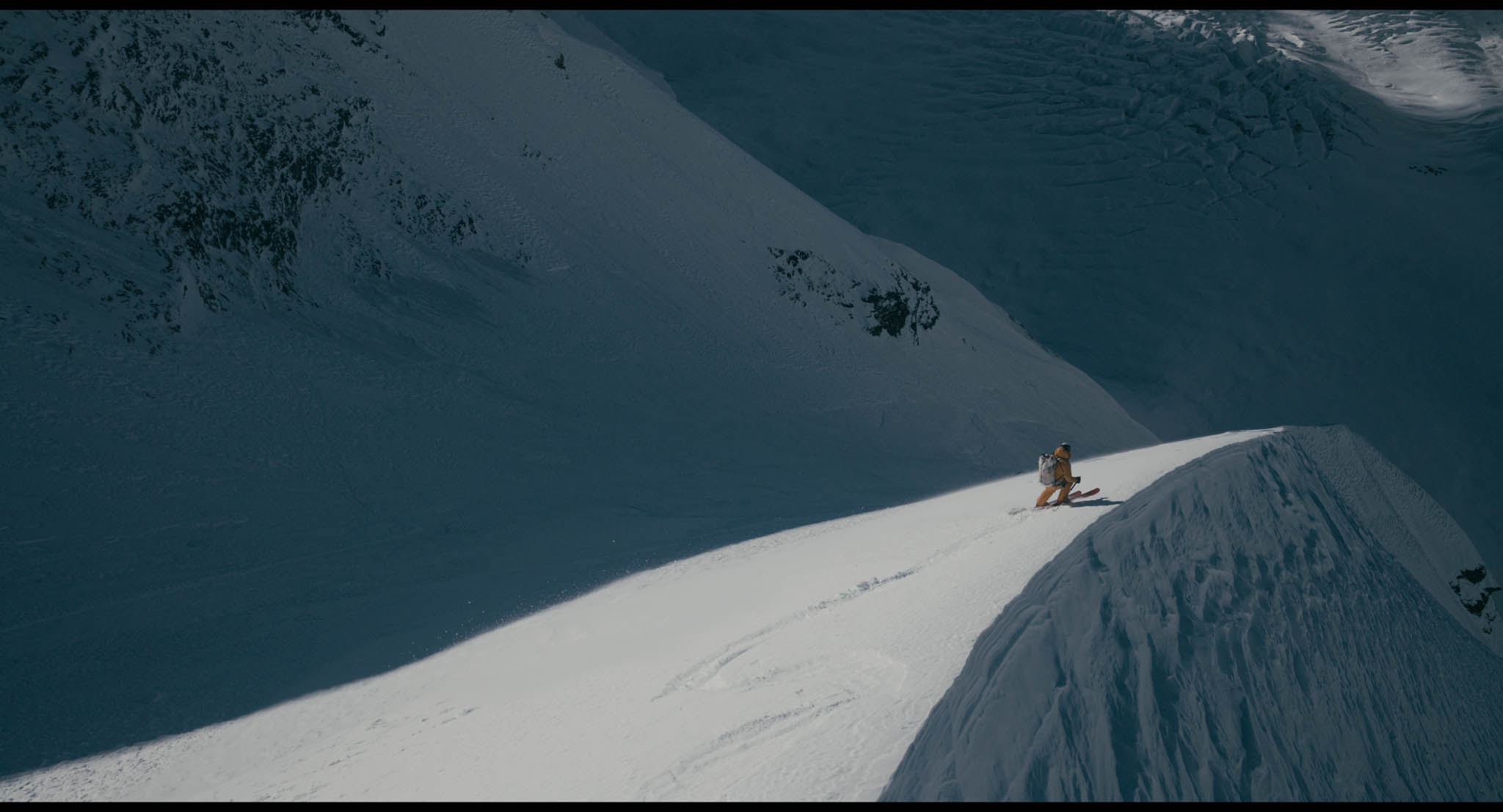
Jim Morrison skiing the Japanese Couloir on the North Face of Mount Everest. (National Geographic/Leo Hoorn)
Jon: You had some really good high-altitude aerials.
Clair: Those were mostly DJI drones, mostly the Inspire 3. We also used the newest Mavic Pro on the final expedition. Leo Hoorn, who did our drone work, is just incredible. He’s from British Columbia, Canada. Lovely guy, so nice and so collaborative, and he has the most amazing eye for this. Jimmy, Leo, and I would talk about what we wanted, and then I’d see what he shot, and it would be better than we’d imagined.
Jon: Let’s talk about lighting.
Clair: Up on the mountain, we often had to shoot at night, in tents and out of tents. Even during the day, the exposure differential between inside and outside is massive. You’ve got snow, you’re at high altitude, and you’re getting direct sun blasting down with less atmosphere above you. It’s pretty brutal. I thought a lot about how to balance exposure inside with low power draw. I’d open doors and windows when the weather permitted. I brought some Astera Titan Tubes. We had various small lights powered off batteries, including foldable LED mats to rig in the ceilings of the tents and leave there. They also worked as practical lights.
My friend Danny Durr, a well-known LA Gaffer who also owns Light Force Rentals with his father and brother, modified some inflatable camping lanterns. They were about 6 inches by 6 inches. He pulled out the original LEDs that flickered and replaced them with LiteGear LiteRibbon cards powered off a battery. That gave us daylight or tungsten, high CRI and dimmability, but they looked just like traditional camping lanterns. We had eight of those and because they’re inflatable, they pack down very small. I put them in the tents for various setups. That way the light wasn’t just coming from above people. I could put the lanterns on the table at eye level, they’re picture-ready, and I could adjust the color temperature and brightness for different times of day so it’s much more flattering. And we could balance them with the light coming in the door.
For the interviews stateside, I used ARRI SkyPanels or a Creamsource Vortex as a key through a nice diffusion like an 8×8 Magic Cloth, then add a LiteGear LiteMat 4 or something similar, and maybe put an Aputure 1200 through the windows in the background, depending on where we were.
Jon: How big a crew did you have for the interviews in the US?
Clair: Usually we kept it small and intimate without a lot of people around. We were generally talking about emotionally intense subjects, so you want a very minimal footprint. I try to be very dialed in to people’s emotions on set. For documentaries, and even for commercial and narrative work, it helps to keep things low-stress and calm, without a ton of people. We usually had two cameras. I was on a tripod. Graham pulled focus and assisted, a Camera Operator worked the second camera, and there was a sound recordist. Sometimes, we’d have a Gaffer and maybe a Grip, often just a Gaffer with the van.
Jon: On the interviews, are you mostly on a tripod, a slider, or handheld?
Clair: Tripod. We have two cameras. If we were shooting full frame, I’d usually put the 47mm Signature Prime on the A camera. If it was the ALEXA 35, I’d put on a 35mm to account for the full frame versus Super 35 factor. The B camera would have a 58mm, or maybe a 75mm or 85mm, depending on the space. I like to be on a slightly wider lens, closer. I think that feels better than being super compressed, but I let the space dictate the lensing.
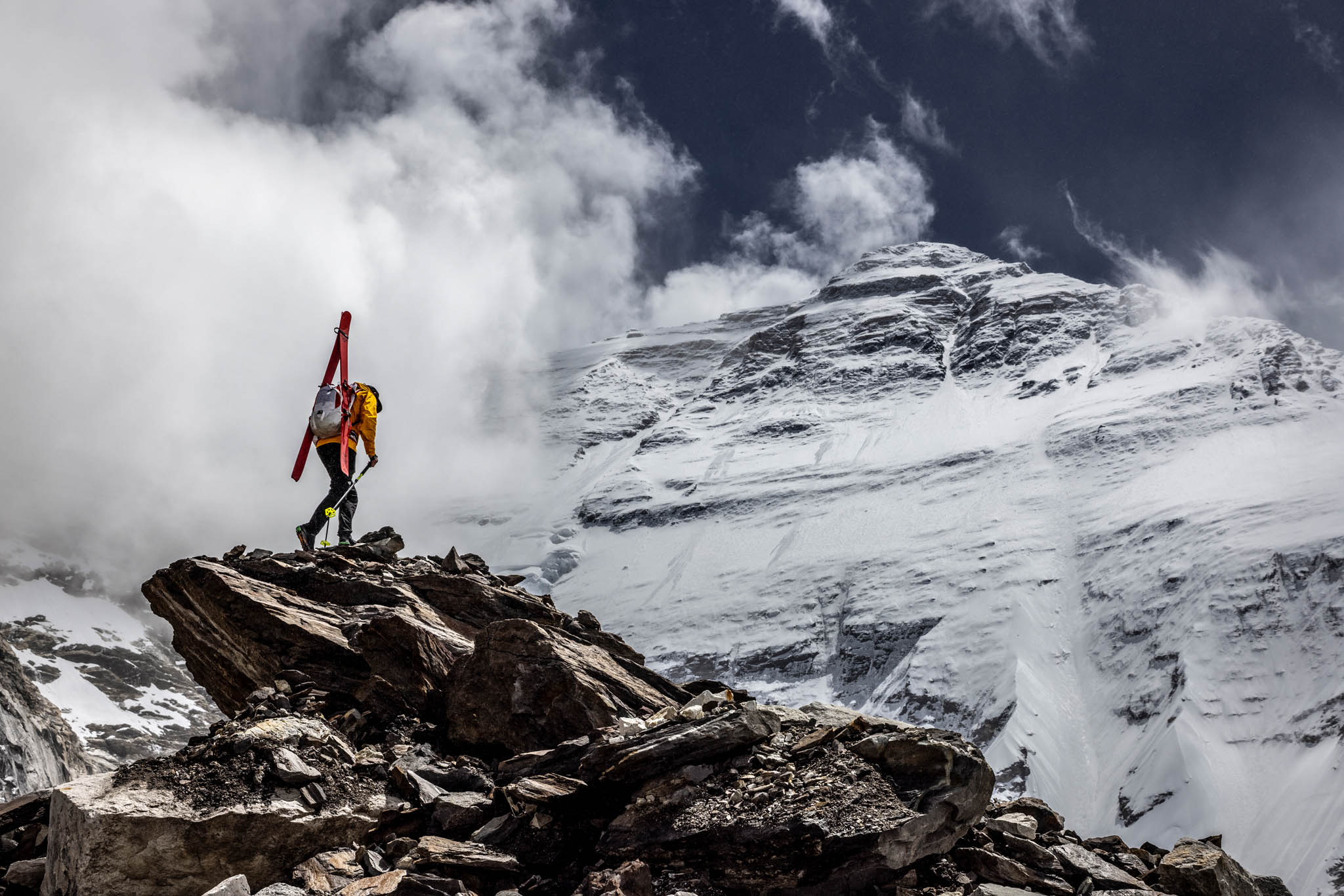
Image:t: Jimmy Chin
Jon: What influences your camera choices?
Clair: For me, form factor is a big thing. The camera needs to fit well on the shoulder without having to be rigged out too much. I also want a camera that can take some abuse when you’re throwing it around on a documentary. I love the weight of the Canons. Their imagers blow me away now. With the Canon C400’s dual ISO modes, I would happily shoot a documentary with it as my A camera. The quality of so many cameras these days is so close that, to me, the lensing matters most.
Jon: Did you use an RF to PL adapter on the Canon C400?
Clair: I usually had RF lenses to be able to swap between the R5 C and the C80 cameras — to keep it really simple. And, once Canon came out with the RF 24–105mm f/2.8 zoom, I put that on the C400, and it was an awesome pairing. I’m good at pulling my own focus.
I’ve been very impressed with the Canon equipment they gave us. It really enabled us to do things we couldn’t have done otherwise. I can’t imagine trying to shoot with the team high up on the mountain with heavier cameras. The quality of the R5 C—being able to shoot internal 8K RAW, with a battery in your jacket to keep it warm, lets you shoot for hours. You couldn’t get some of those shots otherwise, and sometimes it’s about getting the shot. Getting the shot is what matters: being there, being close, intimate, real and getting it in real time. It allowed us to do things no other camera probably would have.
Jon: In the scene in the tent at 20-something thousand feet and 30 below zero, how did the cameras keep running?
Clair: They ran pretty well. Before we went, as a test, we left some of these cameras running overnight in an industrial freezer at minus 20, with a battery kept warm. They came out covered in ice, with icicles, and the cameras still functioned. So we had a pretty good understanding that they were robust in those conditions, which was very impressive.
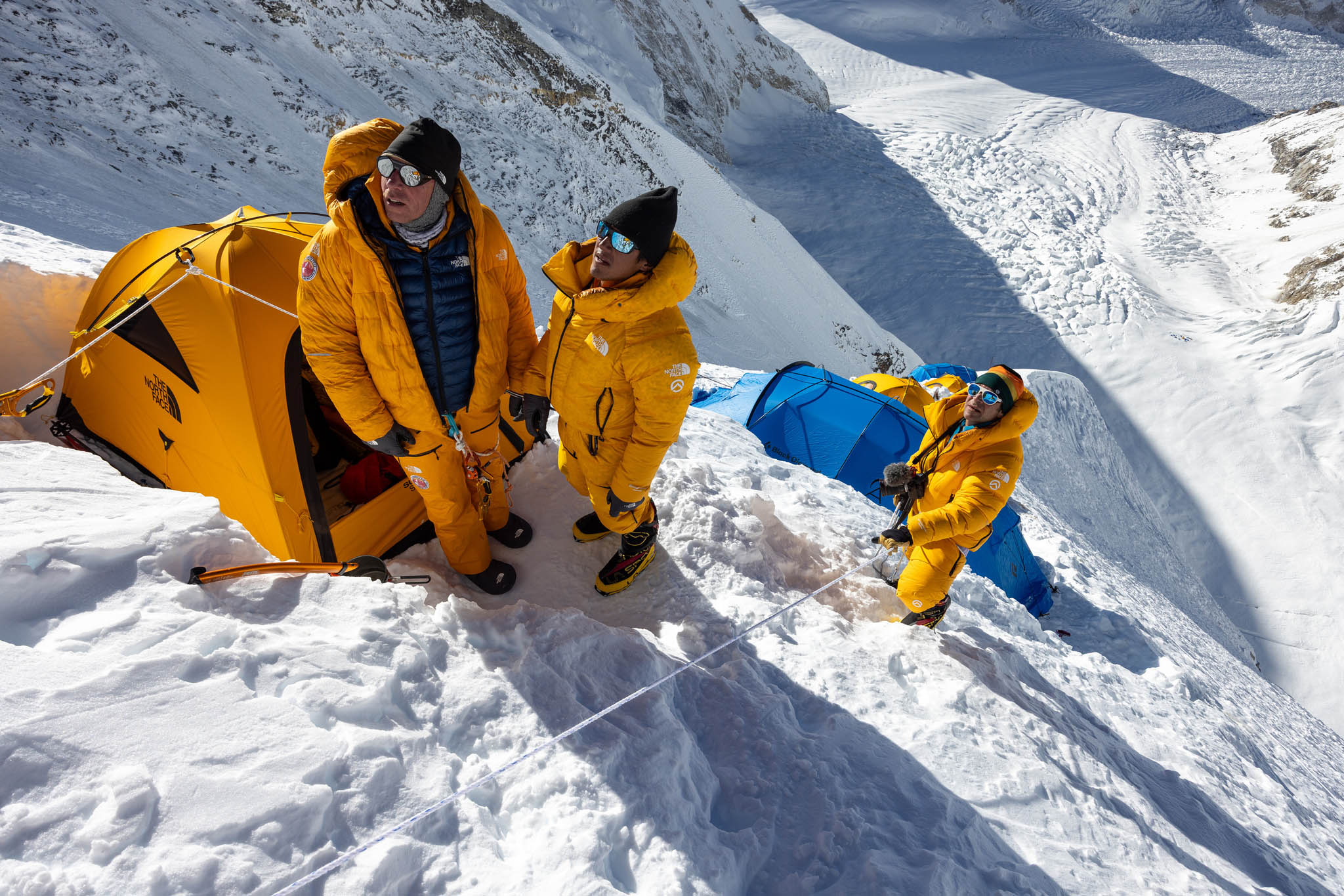
Jim Morrison, Jimmy Chin, and Mark Fisher looking toward the summit from Camp Two. (National Geographic/Erich Roepke)
Jon: You recorded to CFexpress cards? And what about LUTs?
Clair: Yes, CFexpress. For monitoring LUTs, I used standard Rec. 709. The first year, when we had a full DIT setup, we’d look at some things and maybe adjust. But in the two main years, when we shot the bulk of the movie, I didn’t have time for that. There was so much footage coming in, I was trying to keep track of the story. Watching the early cuts, I’d think, “Well, it’s all over the place.” But when we got into the grade, they did an amazing job.
Jon: Did you use the C400’s internal NDs?
Clair: Yes, it has increments of 2 stops and expands to 10 stops of ND. For that environment, with the amount of light we had during the day, it was helpufl. The ISO modes are great for night shots. That whole sequence where Yukta breaks his leg was shot entirely on the C400. You had the sea of headlamps and a couple of little tents. I felt that told the story. It’s amazing to see the people adjusting their lamps. Then I was able to go right into the tent without changing the ISO and treat the whole scene that way. I had some lens fogging issues going from cold exterior to warm interior, but the buttons are where you want them on that body, unlike the smaller bodies where the buttons are scattered around the back. The C400 worked really well for me as a verité camera.
Jon: What ISO did you mostly work at for exteriors?
Clair: Mostly 800. I tried to keep the same base, but I’d go up to 1600, 3200, or even 6400 for some night material. The nights there are beautiful. We had a shot with all the stars where we had to go to a really high ISO and then clean it up in post. We also did a lot of time-lapse. Trying to make this film five or ten years ago would have been very different. We were very lucky. The DJI drones had advanced to the point where we could fly the Inspire 3 to Camp 3 high up on Everest. Above that, the runtime would be very short because the propellers spin so fast in the thin air; you’d end up with two minutes. So above that, we’d take the Mavic Pro up—you could fly over the summit of Everest [8,849 m / 29,039 feet] because it’s so light. We underexposed it slightly, but the quality was good and it works in the film. But I was blown away by the Inspire 3, which shot everything below Camp 3. We had multiple drones flying on the day Jim skied down the north face of Everest.
Jon: Where were the drone operators stationed?
Clair: At Camp 1. Our drone operator, Leo, was piloting and operating a drone. He’s incredible. Savannah Cummins, one of our additional cinematographers and a verité specialist, would be landing one drone or flying another one up so they could trade off, since they had to be flying all the time, charging the batteries, making it work. She was also filming Leo with a camera as he discussed what was happening.
Jon: Did they have line of sight to the drones?
Clair: If you looked out of the tent, you certainly could—there’s nothing in the way—but it’s probably 9,000 feet up the face. The distance wasn’t a problem.
Jon: They recorded locally to the drone, not the controller?
Clair: Yes, video was recorded on the drone. We also had the DJI transmission system to get a feed of what they were seeing.
Jon: What lenses were on the drones?
Clair: We went up to a 90mm lens sometimes and he’d just tap on the controller screen to focus. With the Mavic Pro, they didn’t have to worry much about focus, but on the Inspire, with 90mm or longer lenses, we had to pay attention to it.
Jon: Did you use the DJI prime lenses on the Inspire 3?
Clair: Yes. The DJI DL-mount lenses. I think the 90mm was an aftermarket 90mm lens and it worked really well—nice for getting in close. On some of the shots, it almost feels like a Technocrane.
Jon: With the Canon C80 on a DJI Ronin RS 4 gimbal with the Tilta ring, how were you pulling focus?
Clair: I generally set it to autofocus and I was usually shooting with a wide lens, tracking people and tapping to focus if I needed to. Graham also brought his focus unit and little zip gears for the lenses in case we needed them, but almost always I just used autofocus on the gimbal.
Jon: Does the C80 need any counterbalancing?
Clair: No, it’s pretty easy. Even though it is a compact gimbal, it didn’t require any offset weights. It worked perfectly for a camera that size with the smaller RF lenses. One year we brought Canon CN-E primes, which have gears, but I found I didn’t really need them.
Jon: How are you viewing with the C80/RS 4/Tilta Ring system?
Clair: I use SmallHD Cine 7 or 5-inch monitors. I like their color science. I use their monitors almost exclusively, so I’m used to the exposure tools. It’s easy for me to judge exposure with the various false color and waveform tools, and the touchscreen is good.
Jon: How do you feed the video output from the C80 to the SmallHD monitor?
Clair: Just a really thin SDI cable because it’s only two feet away on the ring. Super easy.
Jon: How was audio recorded at Base Camp and high up?
Clair: We had onboard shotgun mics on the cameras, but we also had amazing sound mixers. I think they used the Tentacle system because timecode was a big thing. We had teams everywhere and had to find a way to match it all. Jim Hurst, who did FREE SOLO with us, came up with a way for people at the different camps to match timecode throughout, so everything would be on the same time. We told the camera crews who went up, “Part of your job is to make sure these cameras are all jam-synced. Otherwise, this footage can be hard to use.” So the people at Camp 1 and above had a lot of responsibility. We’d send multiple units up so if they couldn’t charge batteries for days, they’d have something they could just turn on, as long as it was kept warm.
On climbing days, we put on lav mics that recorded internally and were also timecode-synced. We really worked hard on the placement: Will it record sound when someone’s wearing a face mask? Where do we place it? Do we run it to the helmet? We tested all that pretty extensively, because audio is so important on a documentary. You’re not going to get another take. Sometimes we had to cut holes in backpacks or jackets and wire the mics unseen, so they’d be close enough to the mouth to get the sound we needed, even with a face mask.
Jon: These recording lavalier mics ran all the time?
Clair: Yes, recording everything you say.
Jon: The story evolved in unexpected ways.
Clair: Clearly, that’s the thing with documentary, especially over that amount of time: there’s so much change and tragedy, and the film would be very different if things had turned out differently at different times.
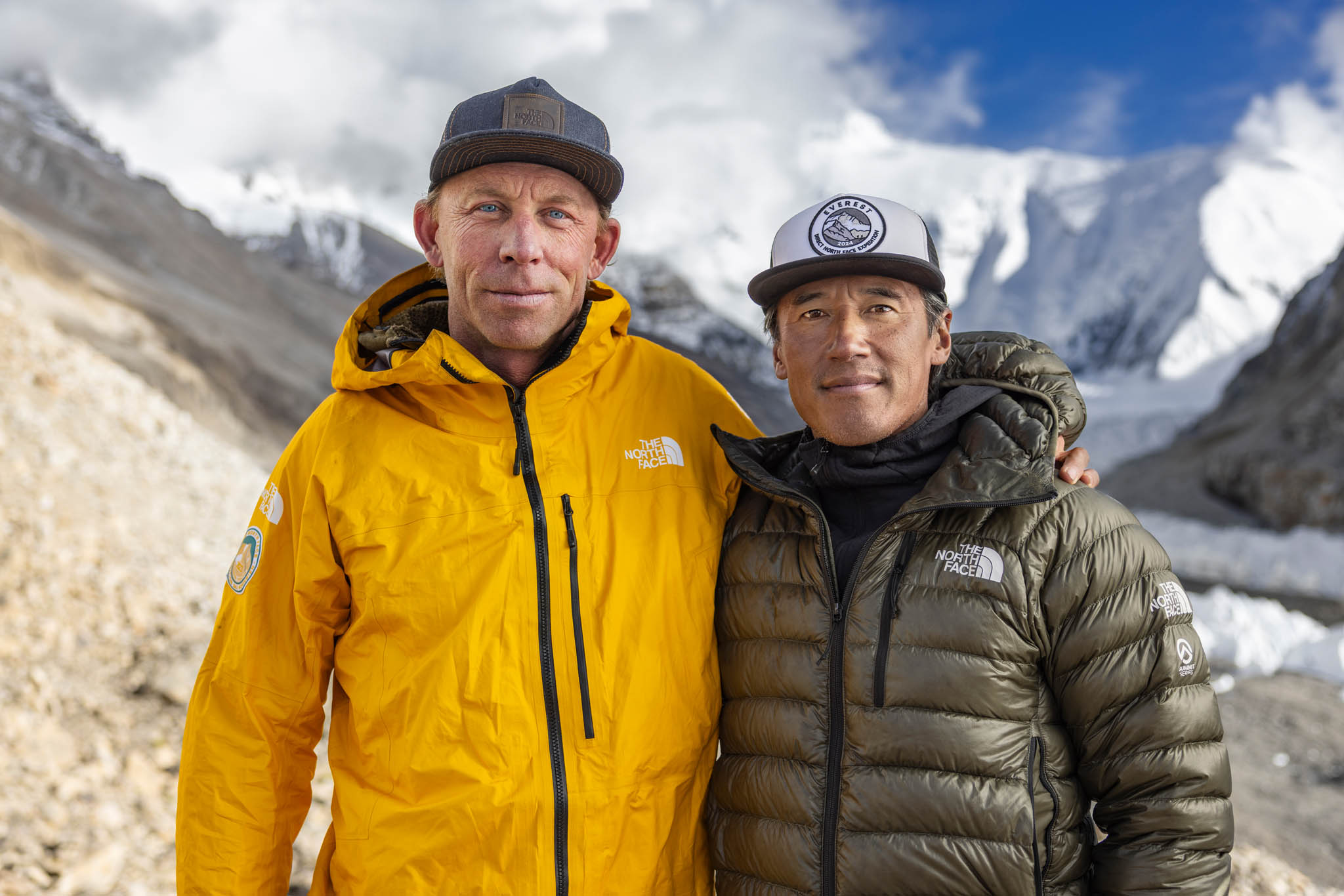
Extreme ski mountaineer Jim Morrison, left, and Jimmy Chin, director/photographer/cinematographer/climber. (National Geographic/Savannah Cummins)
Jon: Jimmy and Chai were co-directors?
Clair: Yes, co-directors. They divided up the responsibilities and it worked very well. She was editing with Bob Eisenhardt and Simona Ferrari. We had a lot of conversations and downloads before each expedition and then checked in throughout about how things were going. I’d get notes like, “Hey, we’re hoping to capture some more visuals of this; it would be nice if that happened.” Jimmy was on the mountain.
When the production began, it was probably one trip. But then it wound up being three trips to Everest. We ended up slimming things down. Each time we went, we brought fewer people and less gear, and everyone wore more hats. But in some ways, I think that gave the project its intimacy.
Jon: How did you get into film?
Clair: I wanted to be a cinematographer since I was a kid, I was born in Brunswick, Maine and grew up all along the mid-coast. We moved to four or five different towns. I watched a lot of Nat Geo documentaries and I got into still photography in seventh grade at a school that had a darkroom program.
I ended up in Portland for high school. My brother and I built our own darkroom at home. We did a lot of adventure stuff: hiking the hardest parts of the Appalachian Trail, cross-country ski camping trips, climbing at summer camp.
I went to Ithaca College and ended up with a degree in political science. During my freshman or sophomore year, I sublet an apartment in New York and got an internship on a film that summer. I met some ACs and much of the camera team. I spent the rest of the summer as a camera PA: learning how to load, loading film for free, doing swing days, any freebies I could get, and PAing to make money.
I started my career in New York, from 2004 until 2014. I had a knack for focus pulling and had a great career as a focus puller in New York. In 2010, I was working as a First AC in New York City, on the road a lot. I started climbing the Shawangunks in upstate New York on weekends.
So I worked my way up through the camera department, and I was lucky enough to work with some amazing DPs. Maryse Alberti was very helpful. She said, “I’m doing a documentary show. Why don’t you come and operate and shoot some additional photography?” Then I started shooting documentaries, more or less by chance. The second one I shot won the Audience Award at Sundance that year, and suddenly people were willing to hire me as a documentary DP.
Jon: How did you get on FREE SOLO?
Clair: I was working on a Netflix series called ABSTRACT: THE ART OF DESIGN. Each episode profiled a different designer. I did an episode with my good friend, Director Brian Oakes. We had just shot a documentary called JIM: THE JAMES FOLEY STORY, about the conflict journalist James Foley, which had won the Audience Award at Sundance that year.
The next thing we did together was ABSTRACT. Chai Vasarhelyi was also directing an episode. She had the same producer, who showed her the episode I’d just shot with Brian. After about three days it was going really well. We had the same aesthetics. I mentioned that I was doing a lot of skydiving and climbing at the time, because I had just tweaked my neck skydiving.
Chai said, “Oh, you do that stuff? You might be crazy enough to work on this film we’re about to do.” I said, “Tell me more.” We had lunch with Jimmy Chin, her co-director and husband. I mentioned that I’d just shot the film that won the Audience Award at Sundance, and their film MERU had won it the year before. They liked that I had feature documentary experience. They knew how to cover the climbing well, and they’re both talented filmmakers, but they wanted someone to handle the verité and bring a cinematic level of filmmaking to it. We’ve been off to the races since then. I’ve done five or six projects with them by now.
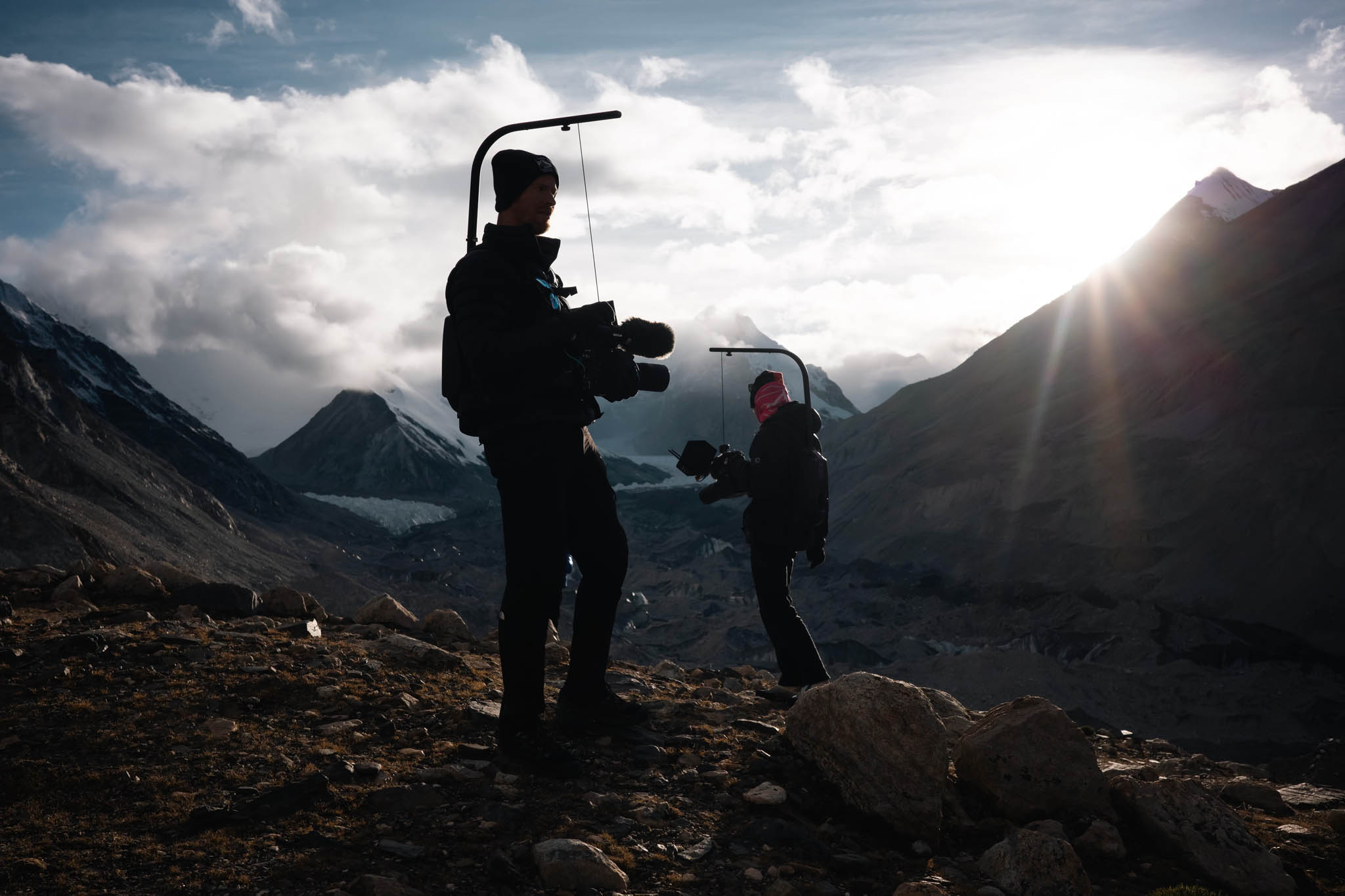
Photo: Savannah Cummins