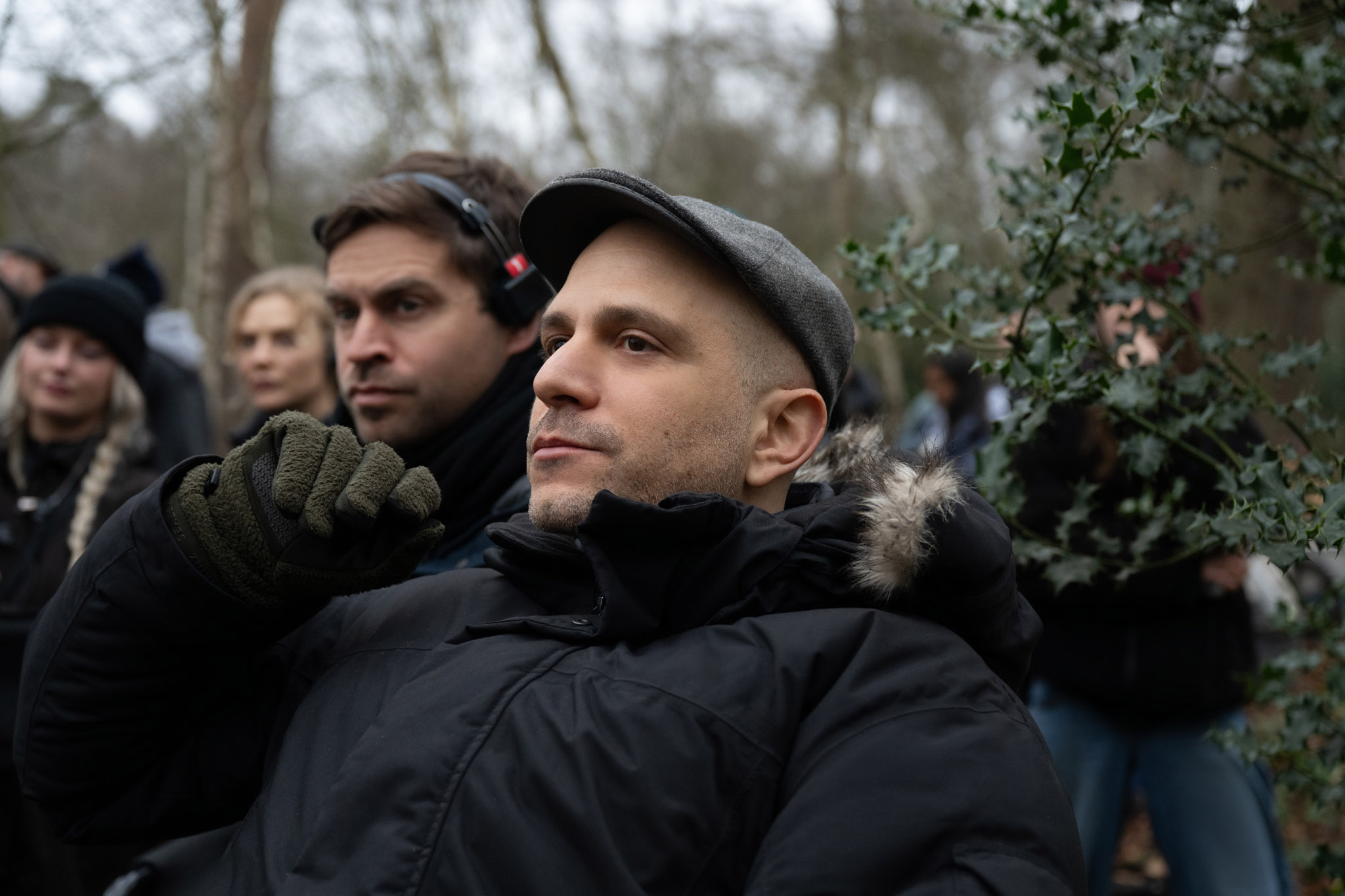
Eben Bolter, ASC, BSC (center) and Adam Randall, Director (at right).
SLOW HORSES ranks number 1 on Apple TV in 68 countries including the US and UK. In case you’ve missed the previous 6 seasons, it’s a no-pause-button episodic drama about a dysfunctional but sometimes effective team of MI5 agents and their disreputable but brilliant boss. Eben Bolter, ASC, BSC discussed SLOW HORSES while still working on seasons 7 and 8, which just wrapped.
Jon: How did you get started working as Cinematographer on SLOW HORSES?
Eben Bolter, ASC, BSC: In 2014 or 2015, I received a feature film script that I wasn’t sure about. There was something interesting about it though, and I thought I’d meet the Director as I’d seen two of his shorts and they were excellent. In the meeting, I took a risk and said, “I’m not sure about the script. But there’s a version of this that could be really interesting.” The Director was Adam Randall and he said, “Thank you. You’re the first person who’s been honest. I don’t think it’s a great script either, but we could actually do something interesting.” I got the job, we made the movie, and then made another movie together. We became very good friends. Adam then went and did SLOW HORSES season four with Danny Cohen, BSC, who had shot all of SLOW HORSES to that point. But in the final two weeks of the shoot, I came in to cover for Danny who wasn’t available.
Adam ended up winning the Best Director Emmy for that season and was asked back to do season six. At that point, SLOW HORSES hadn’t quite caught fire yet with the press and stuff. It was a great show, but not many people were really watching it or some people loved it. It was on Apple TV, but not everyone really knew about it. It was originally a 2020, 2021 production that came out 2022, 23. People who knew it loved it. People who had seen it loved it. The question was how could I take what Danny Cohen had done with the series visually, but start again and give it a new chapter, a fresh approach. Adam suggested a South Korean dark police thriller sensibility which I thought suited the material nicely and luckily the producer encouraged us to do what we thought was best.
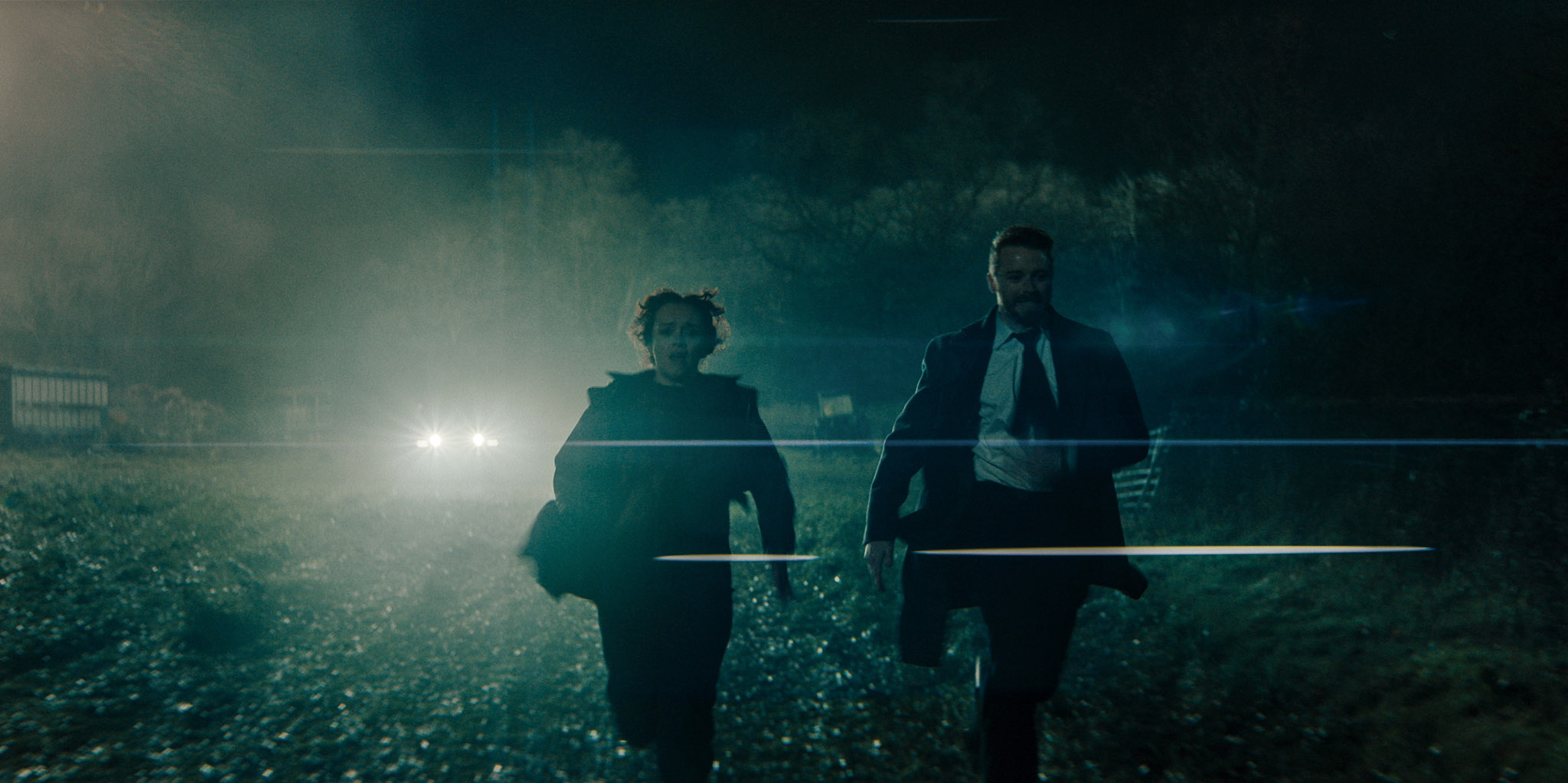
Courtesy of Apple TV
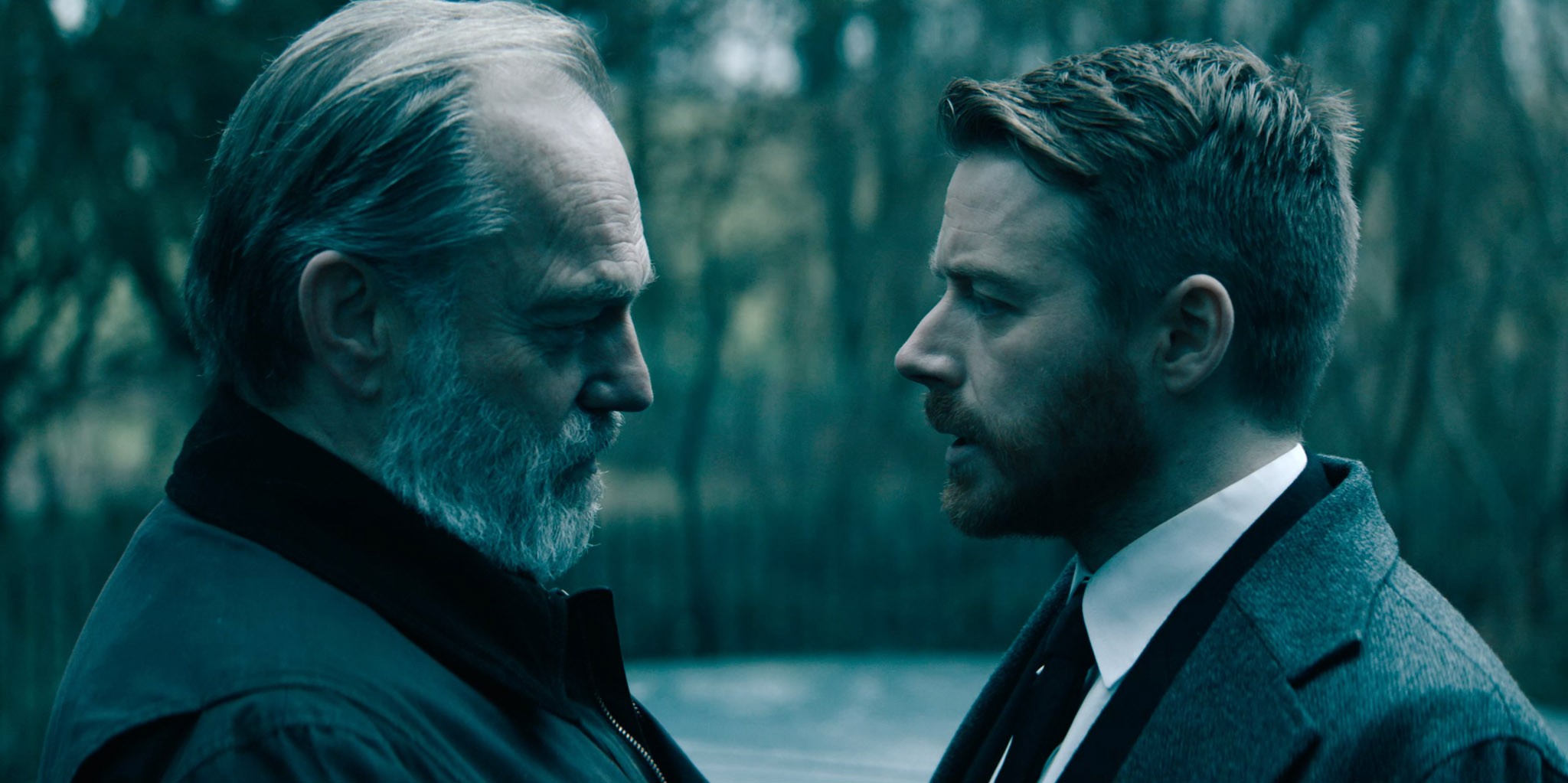
It looks very South Korean noir, cool neon blue, lots of rain, grunge and garbage cans. Like EXTRACURRICULAR, D.P. (Deserter Pursuit), VINCENZO…
Exactly. SLOW HORSES is a spy thriller. It has a sprinkling of comedy and it’s set in London where winters are rainy, grim and it feels black and white at times in real life. We leaned into that aesthetic. We looked at Bong Jun Ho’s films, MEMORIES OF MURDER and MOTHER. Park Chan-wook’s film, and Na Hong-Jin’s THE WAILING was a big reference for us, us, particularly with the persistent rain and gloomy atmosphere. We decided to really give this season of SLOW HORSES a freezing cold, dark, raining, dark, dangerous look.
This season kicks off with a nighttime chase. They’re being hunted and they’re in genuine danger. I pitched going to anamorphic lenses. We had a strong bleach bypass film emulation.
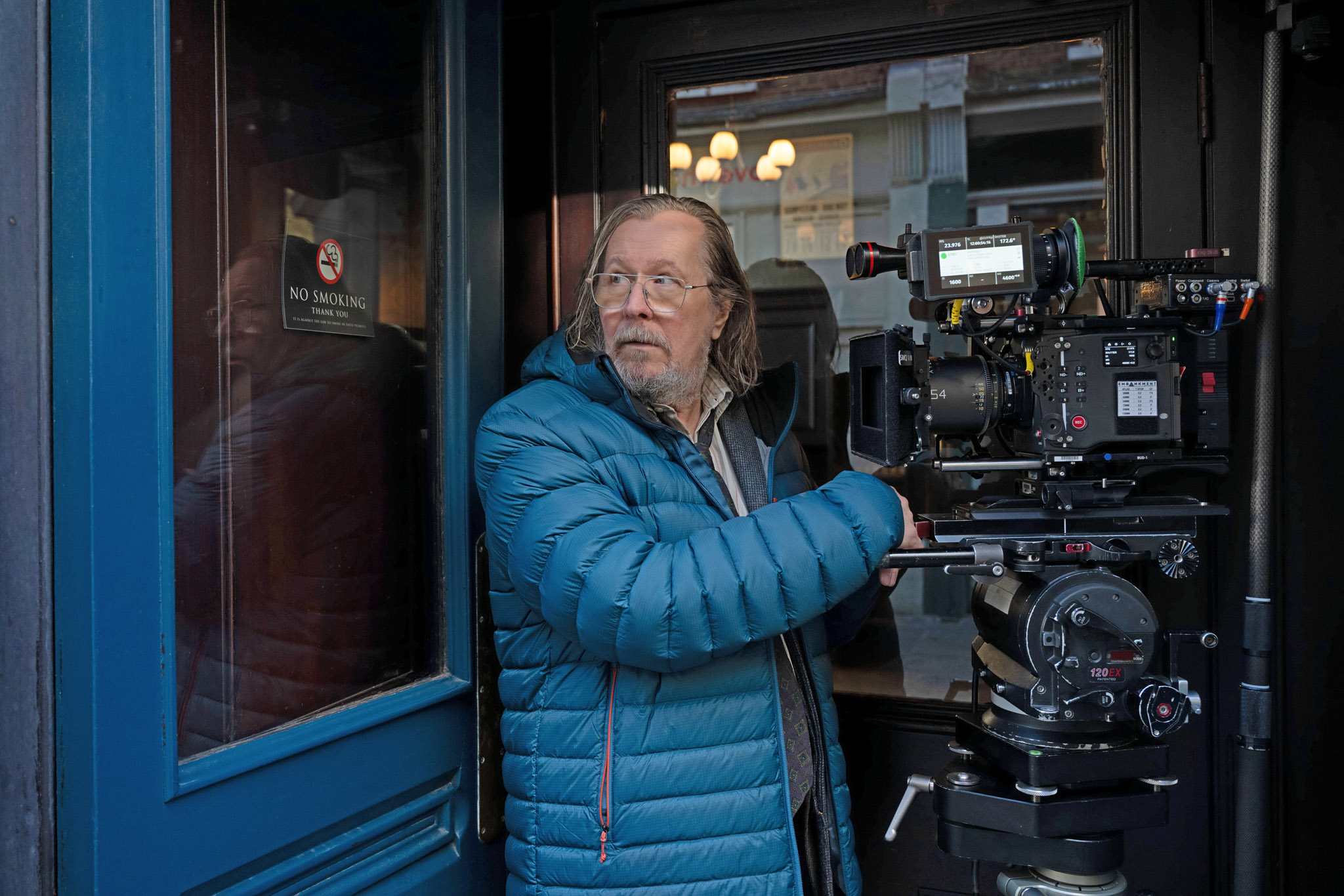
Gary Oldman as Jackson Lamb at camera. Photo: Jack English.
What equipment are you using?
I’m a big proponent on ARRI cameras. I have used ARRI cameras for the past 12 years or more. For SLOW HORSES, I had ALEXA 35 cameras and Atlas Mercury 1.5x squeeze anamorphic lenses for a 2:1 aspect ratio release.
How are you rating your ALEXA 35s for the night scenes and in the studio?
My philosophy, right or wrong, is that I don’t really mess around with ISO. I treat it like a film stock, and I rate it at 1600 for day and night. I’m trying to gain a stop of highlight protection and lose a stop of shadow. I like the shift up in dynamic range at 1600 ISO. It’s not really about brightness; it’s more about dynamic range. I actually find the ever-so-slightly higher noise floor on the ALEXA a bit more satisfying than at 800. Obviously, 800 is great. If I’m in a room where I really want to see into the shadows, I might drop to 800 or below. But I’d say 99.9% of the shots are at 1600 ISO. I don’t touch the shutter; it stays at 172.8 degrees. I don’t touch ISO.
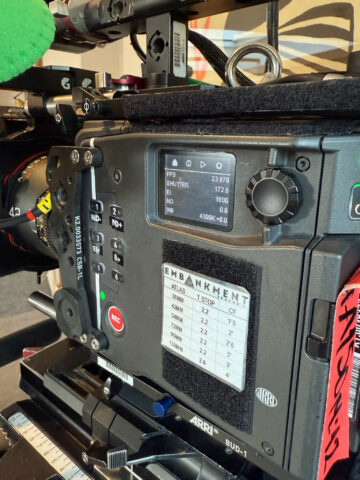
And your aspect ratio on Apple TV is 2:1?
Yes. We did talk about going wider because of anamorphic, but the whole series to this point has been 2:1. I do think 2:1 is a nice aspect ratio to compose for wide shots and close-up portraits.
Are you shooting Open Gate on the ALEXA 35?
Yes, Open Gate 4.6K with a 1.5x desqueeze. We’re using the full sensor height (4608 x 3164 photosites, 27.99 x 19.22 mm sensor area), so we’re close to the maximum 2:1 format with just a little bit of left-and-right wiggle room for reframing or stabilization.
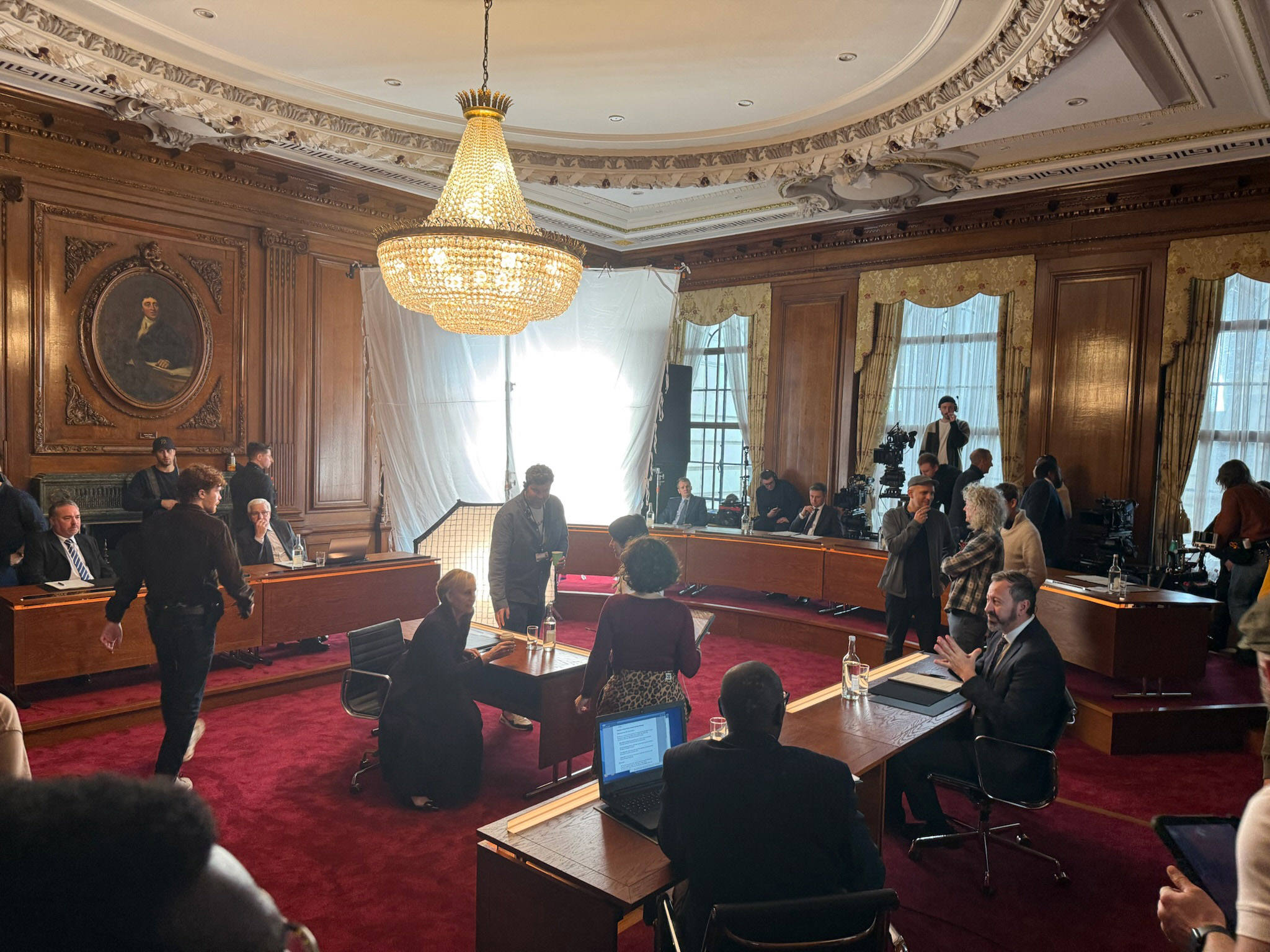
Were you shooting multiple cameras?
Always two. Adam is a very visual Director. He loves visual storytelling and developing shots. Because he’s so good at that, he makes me raise my game to meet him at his level and then hopefully offer him something even more. Sometimes Adam will say, “I’ve got an idea for a one-er,” and then it’s my job to deliver his idea which is usually quite complicated and intricate and I’ve got to make the lighting work and that’s hard to do, so I’ve really got to be on it. I can’t just turn up and say, “Okay, I’ll make this look nice.” It’s much more of an active collaboration with very healthy pressure to it, it, but it’s always deeply routed in story and shots have to have a reason or logic to them which is one of my favorite things to
talk about.
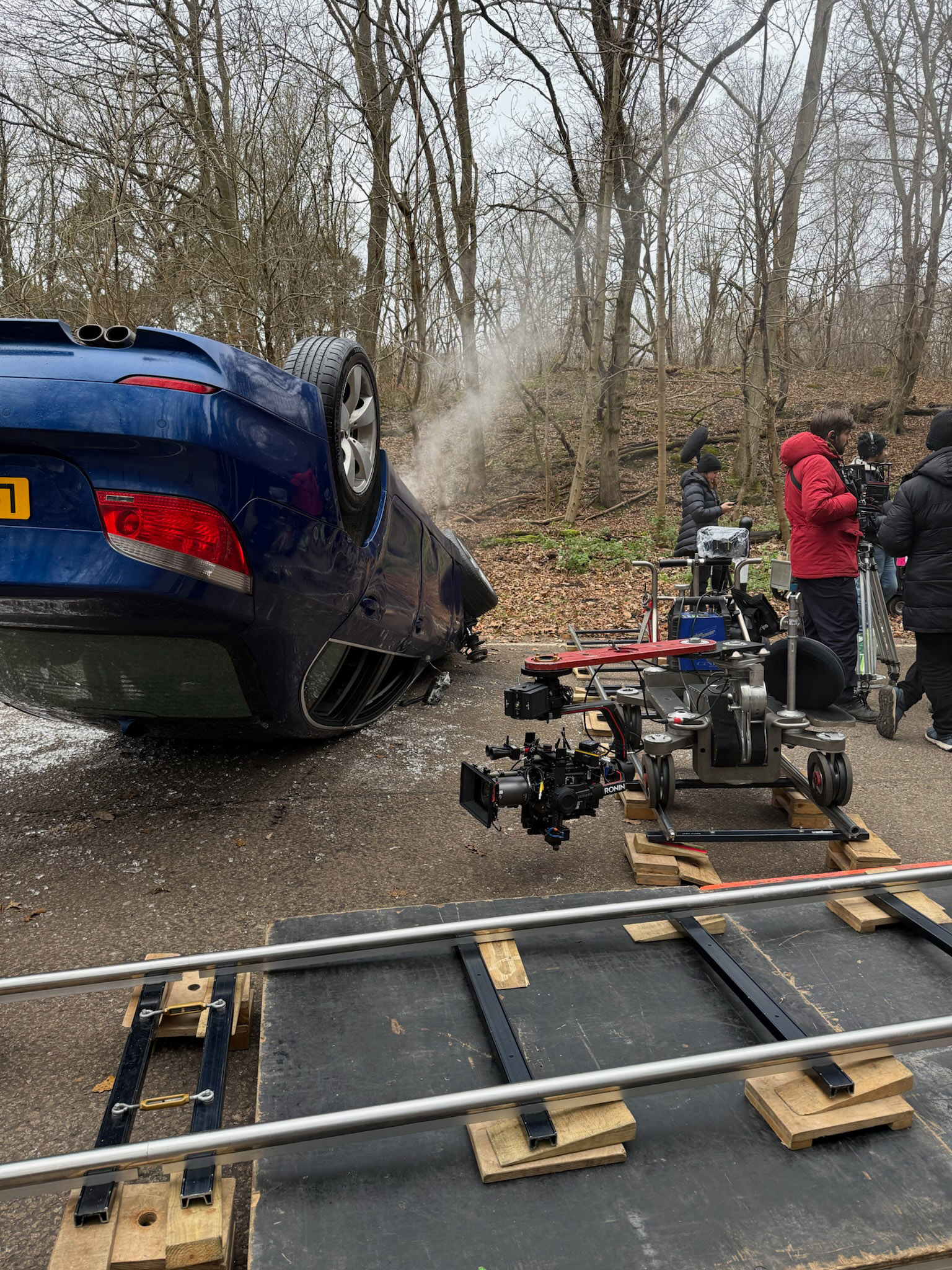
The camera moves in an effective way.
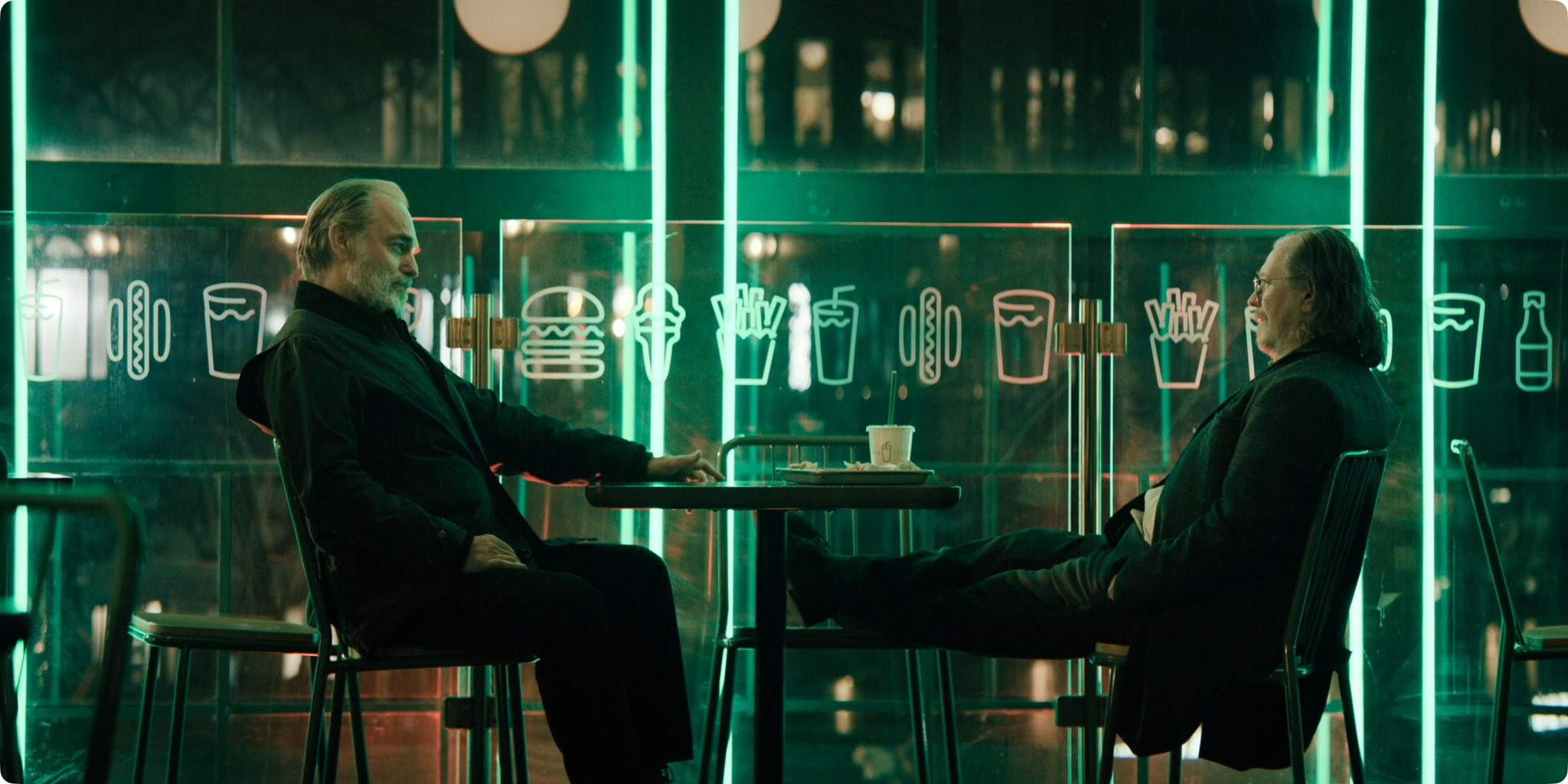
It’s all about story and character. We’re always asking, “What’s the perspective? What’s the tone? What are we trying to say here?” We try to keep it visually interesting. We try to take risks. We don’t worry about tight eye lines. We don’t worry about matching coverage unless it’s actually important. Adam really thinks in terms of the edit. There’s a real clarity of thought to what he’s doing. There’s usually two cameras. B-camera sees what it can do around A-camera or B is on a tighter lens, but we will stand itdown if we feel it can’t get a shot that adds genuine value. Occasionally we have three cameras covering a scene. I’m not afraid to cross-shoot if it helps create a better scene overall, like in the Shake Shack scene.
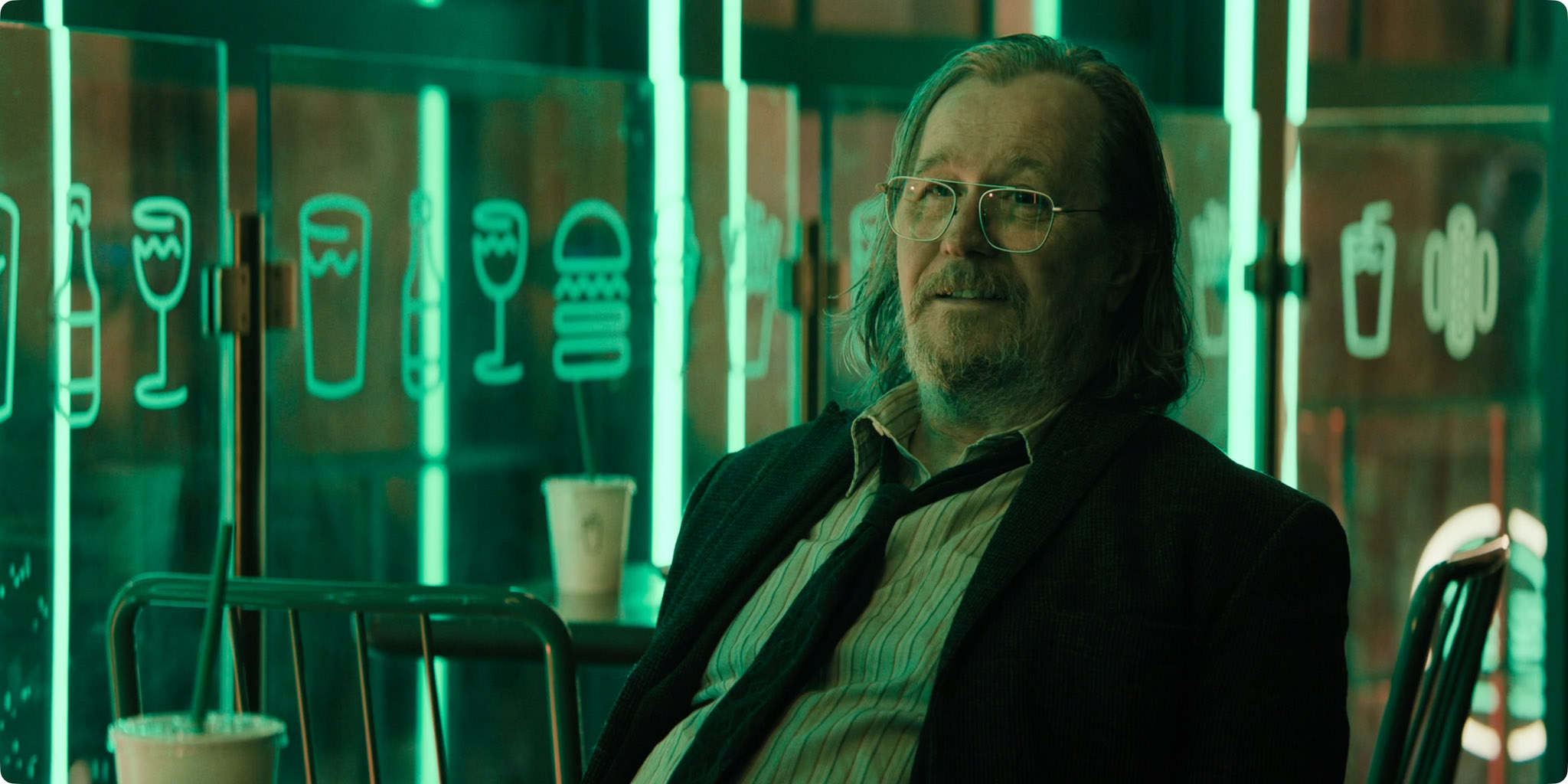
Gary Oldman in Shake Shack. Courtesy of Apple TV.
With all those cameras, I assume you don’t operate.
I used to absolutely love operating. I think operating the camera is essential for cinematographers to have done. You have to know all of that so when you’re talking to an operator, you’ve had firsthand experience and you know what’s helpful, what’s not, how accidents can happen, how hard certain things can be. Somebody standing up from a chair, sitting down in a chair, you need to have done that yourself to know that it’s difficult. I realized that operating is incredibly seductive because it’s fun and because you are there on the front line working with amazing actors when they’re crying and you’re in the scene and it’s such a thrill.
Best job on set.
It’s such a thrill. But I realized that you get caught up in operating instead of thinking about the performance and lighting and story. By not operating, I get all the benefits of being in the scene and also look at it objectively and fix all the things I should be fixing.
Does Adam work with you on the setups or more with the camera operators?
It’s more with me. Adam sits next to me at the DIT station so I know what he’s thinking, he knows what I’m doing, and we’re both on the same page. Every time he goes to talk to the actors, I go with him to hear what’s happening in case there’s anything that will change what we’re doing. The Operators are on Hollyland comms and I talk directly to them. I find that if a Director goes to Operators directly, it’s easy for something to be tweaked that could hurt the lighting in a way I could have fixed had it come from me. Or I could have said to the Director, “We can do that, but we’re going to need 10 minutes to change the lighting. Or we can do this, which maybe gives you the same effect, but now it’s backlit?” At least I can be in the middle and think about it from all perspectives, not just the operating.
Now that ARRI is owned by Thomas Riedel, might you switch to Riedel Bolero comms?
Maybe. The ARRI connection for me interesting. ARRI makes the best sensors, in my opinion, and wonderful equipment, but my history has been mostly with the ARRI Rental group. Simon Surtees at ARRI Rental UK was the person who I think saw me early and said, “We want to support you because we believe in you.” Early on in my career, when I needed favors, he really helped me. They’ve now supplied every job I’ve done for the past eight or ten years. On something like CAPE FEAR, when I went to America, production wanted to work with another rental house, and I said, “I work with ARRI Rental. They’re my team. They support me on everything.” And they really do. They’ve never let me down. Now they’ve gone independent, I hope to continue with them as well.
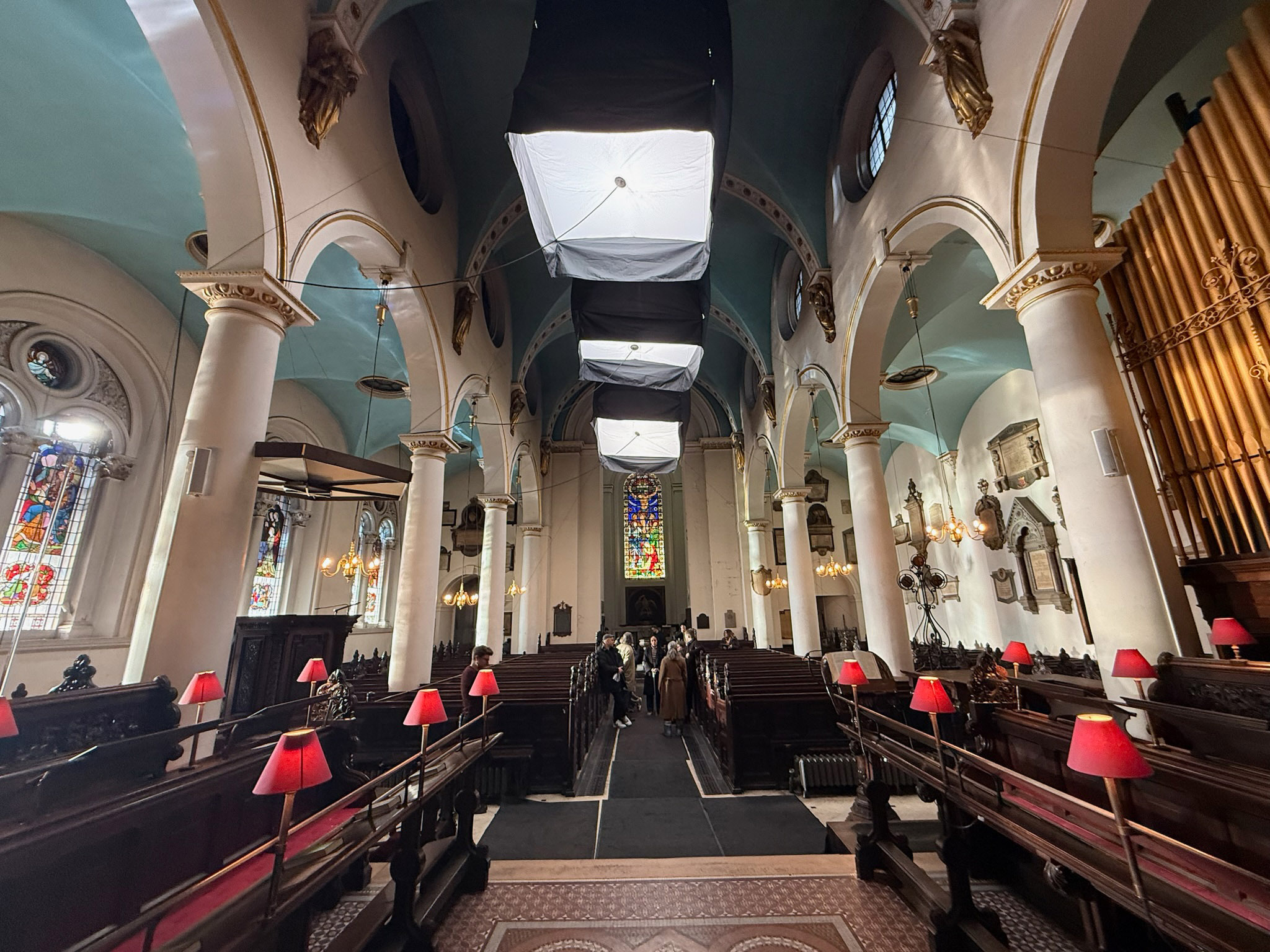
Let’s talk about your beautiful lighting.
I tend to use quite a lot of light. My approach is to light to a T8 and put an ND.6 in front of the lens to get a T4. I’m not a proponent of “let’s turn a couple lamps on, set the lens wide open and see what happens”. I’m trying to get a “thicker negative,” a bit more contrast, because I find it lets me make more choices. This is where the light’s coming from, this is dark, this is light. A Super35 sensor with a 1.5x anamorphic desqueezed lens at T4 generally gives us reasonable depth of the field without it being too mushy, and that was important to us. We didn’t want it to feel gimmicky or distractingly shallow focused.
How are you lighting the Slow Horses offices, for example?
Paul McGeekin has been the gaffer on every season of SLOW HORSES, and he’s wonderful. I can’t say enough nice things about Paul and his crew. He came in and said, “You are the new DP. I am your gaffer. I’m here to serve you. If you ever want to know what we did in the past, I’ll tell you, but if you want to delete all of that and start again, I would love to do that too. Let’s treat it afresh.” I was honest and said, “I’m not good at doing an impression of other people. I think that’s a very skillful, difficult thing to do, but I like to set the look and my favorite part of the job is working out the what, why and how. Let’s start fresh.” We talked about Lamb’s office: here are the fixtures, what are we going to change?
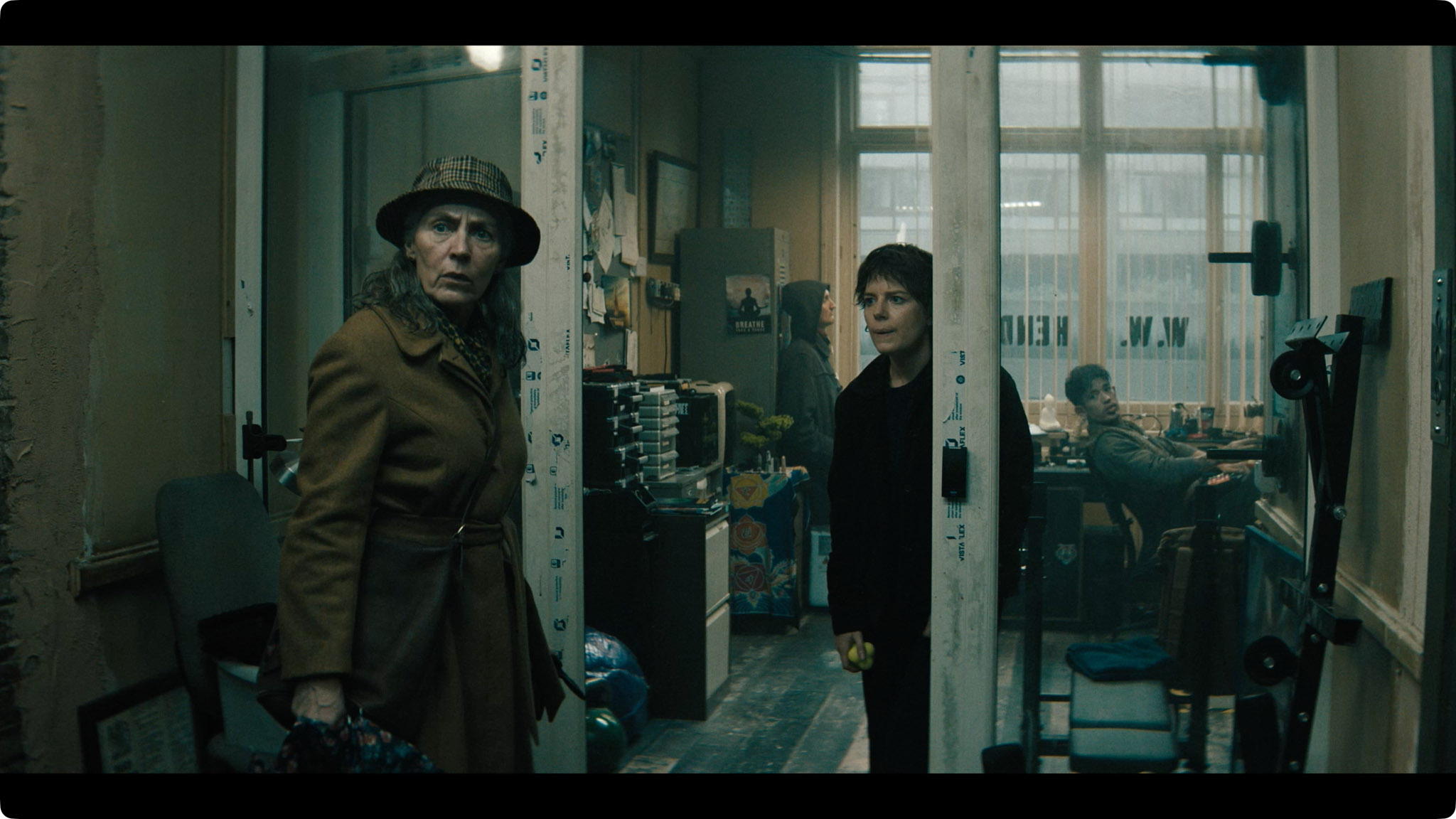
Frame courtesy of Apple TV
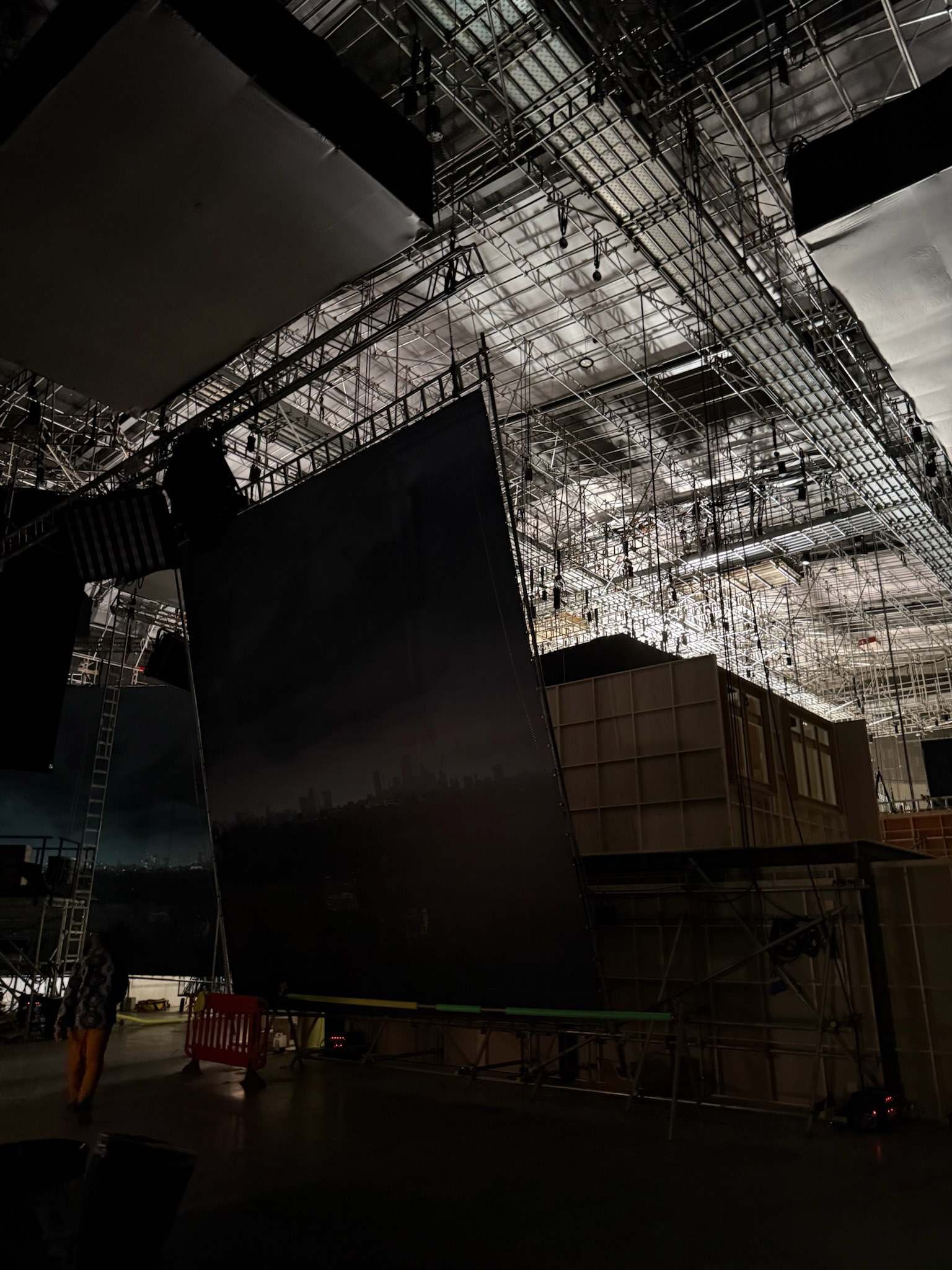
Basically, we kept all of the physical fixture housings and made everything LED so that we had the ability to play with color. It’s dark, dreary London, so we’re not going to push hard light through windows unless we want to catch rain. We’re pretty much going to embrace soft, flat daylight, but we still want darkness and contrast. It was a case of pushing soft light through the windows that felt old and naturalistic—believably the real world, not a film set, but somehow still cinematic. That was always the goal.
Is it a set in the studio?
Almost everything’s a set. It’s amazing what they built on this job. Almost every interior is a set. You’d be amazed. At the beginning of episode two, Frank goes into the house on the estate. All of those exterior shots are the real thing, but as soon as the door opens, the inside is a set. And on the reverse, the view outside is green screen from the set—actually not green screen, gray screen. This was an entirely gray screen shoot. I had a really extreme bleach bypass LUT, and I tried to be as in-camera as possible and present the final look in the dailies.
In the grade, we didn’t change much. It was a case of protecting it, with a little bit of balancing. But I’m always looking for ways to have mixed color. In Lamb’s office, again, he’s got a tungsten lamp on his desk, fluorescents overhead, some rubbish old bulbs on the walls, and then the daylight. You’ve got 6,000 or 7,000 Kelvin outside, the warmest it gets is maybe 4,000, and there are a couple of 4,500s and a couple of 5,000s. You’re pushing little variances of color onto faces, landing somewhere in the middle, which gives you a little bit of tonality so it’s never clean. Even at its most normal or pretty, there are always going to be two colors on somebody’s face that should feel diegetically motivated.
What fixtures were you using?
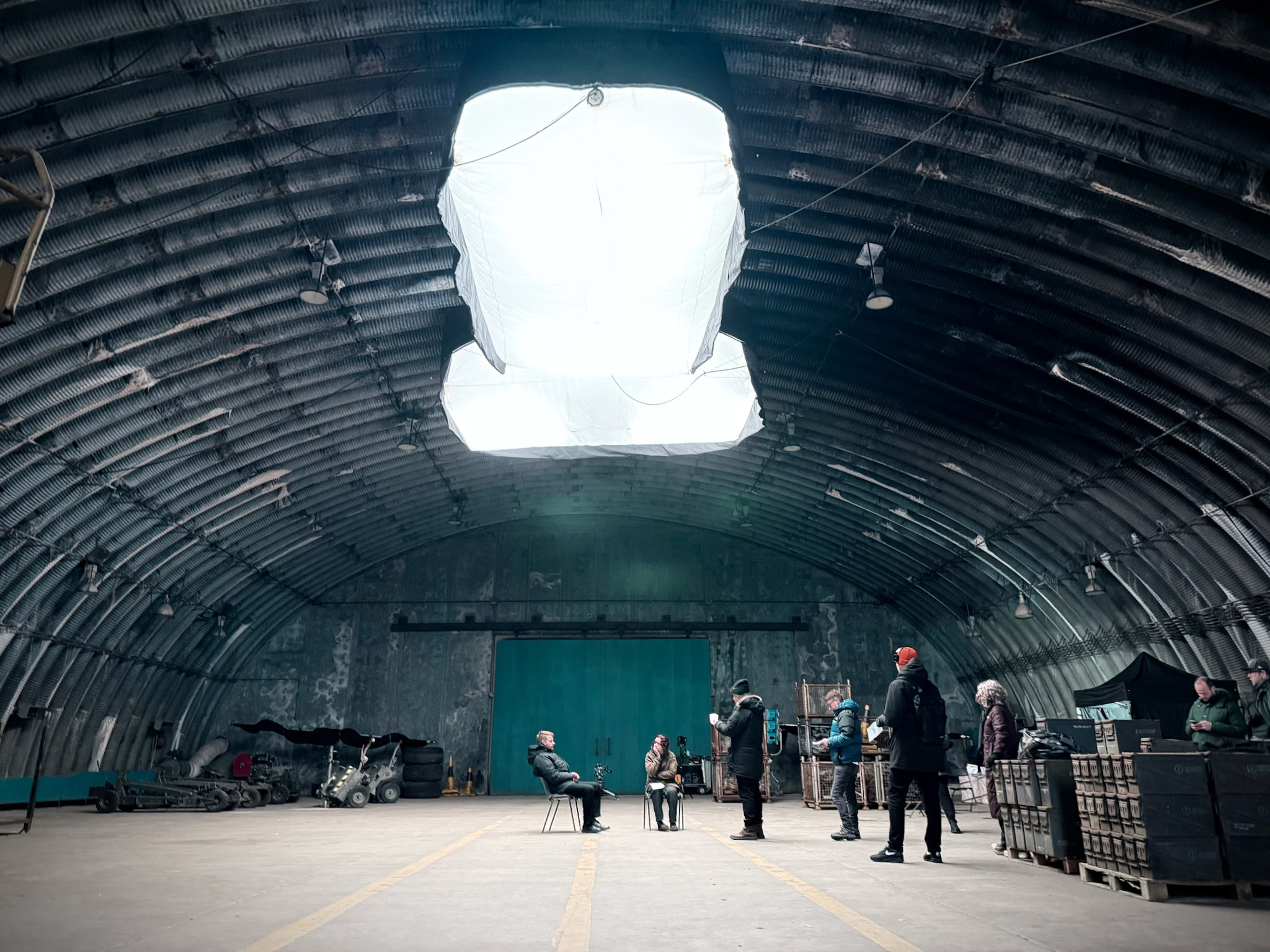
Massively LED: lots of Astera tubes, Titans, and RGBW tape everywhere. Our amazing lighting department make custom fixtures. They came up with big balloon lights filled with five-color LED tape.
You’re sitting with the lighting board operator as well as the DIT?
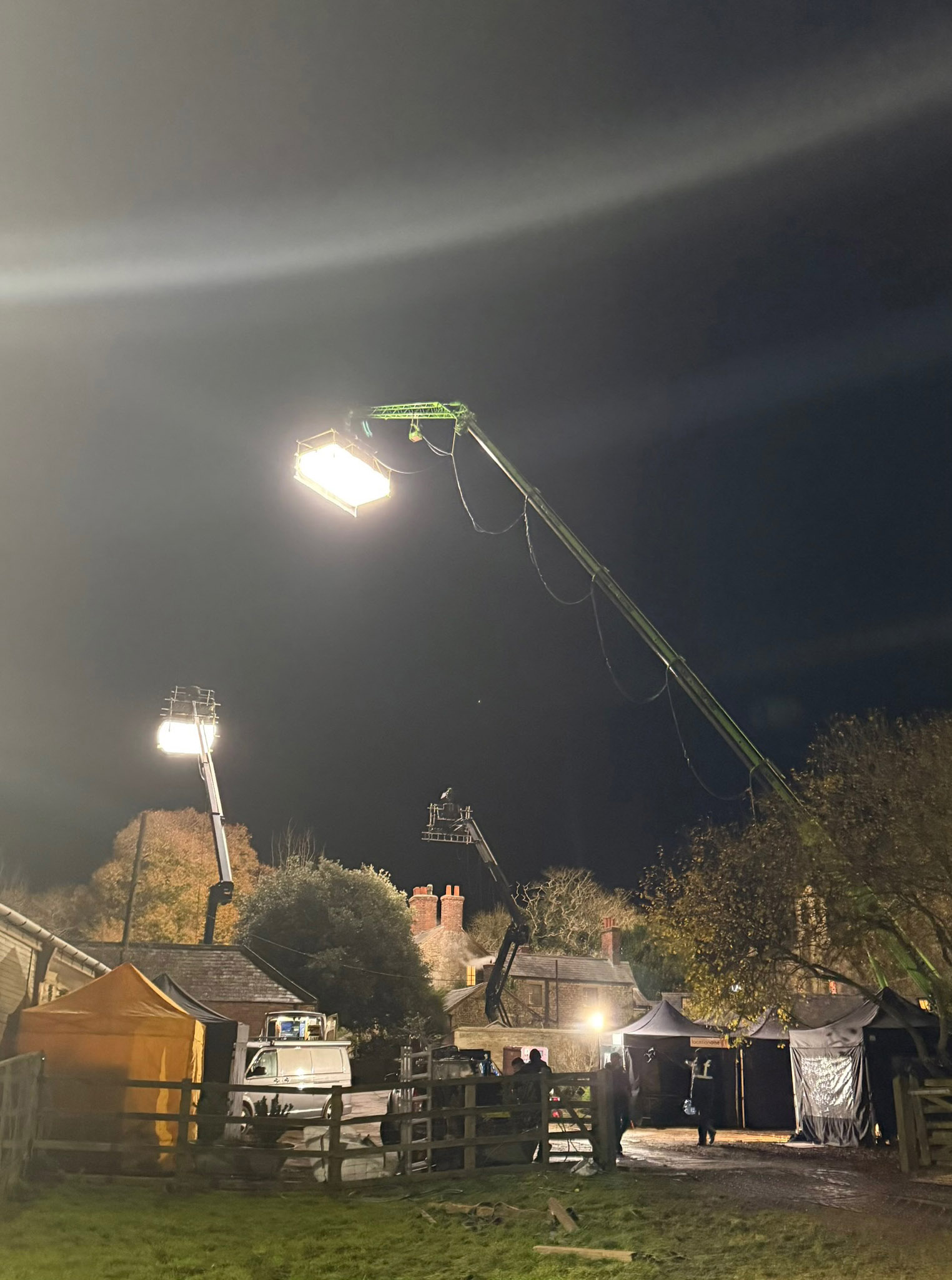
The Desk Op is very important. Usually they have an iPad and they’re close to the DIT, and we figure it out together. The only time we got into big fixtures was from episode three onwards where you’ve got three hours of chase at night. If we’re in the city, we’re looking at sodium vapor and LED fixtures. If we’re out in Oxfordshire at night, we’re dealing with moonlight. We had some massive exterior moonlight sequences to do, with really big lifts. We had tungsten light gelled with ½ CTB, or HMI light gelled with ½ CTO, and we were trying to play with hard, backlit, silvery moonlight.
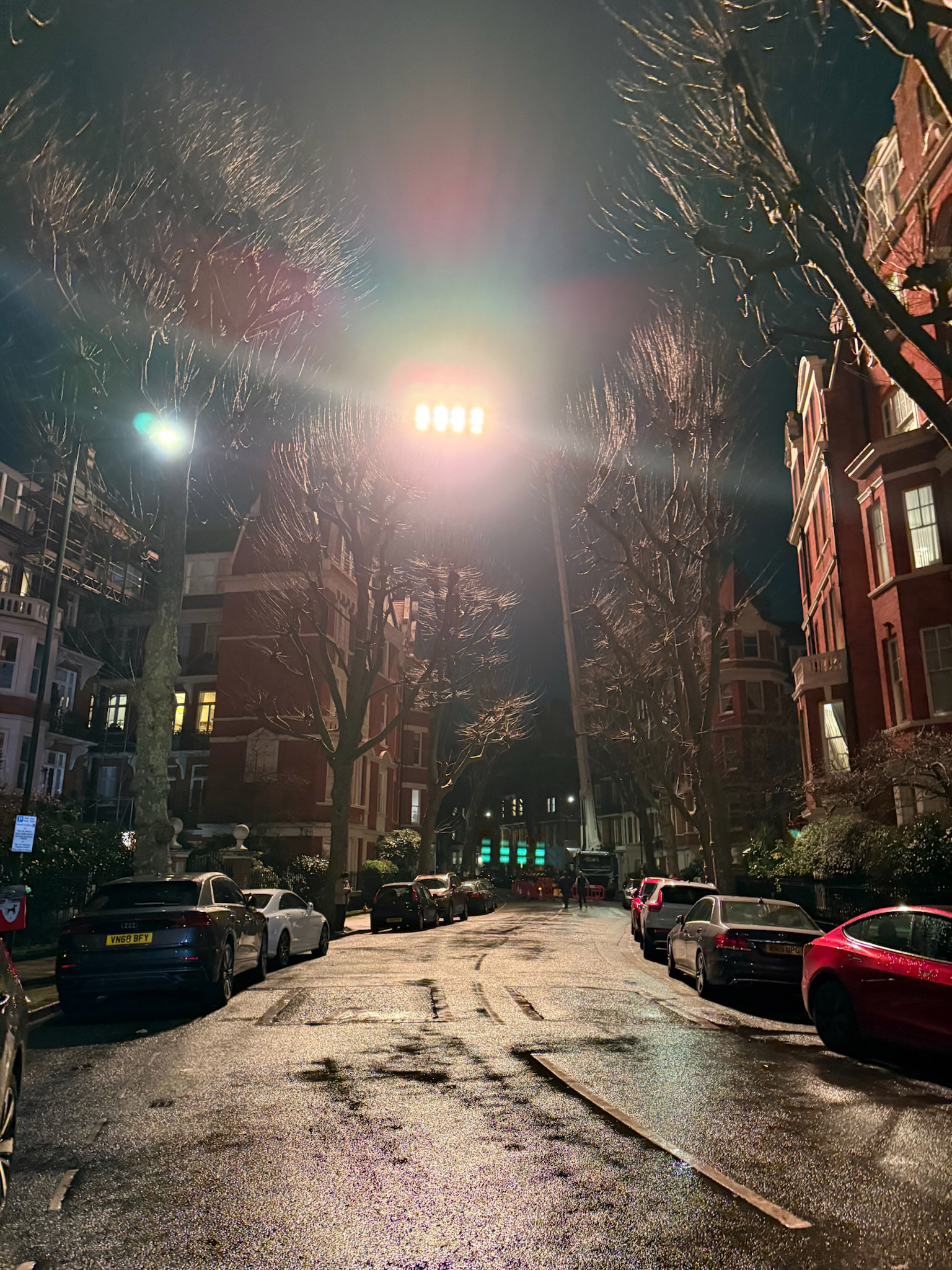
You had the city streets, the cemetery in season two, and also on the canal…
Because those are both in the city, I was still using the warm sodium streetlights, because I wanted the audience to feel, “Okay, this is the city at night.” Then, with River and Sid in the middle of nowhere, I really wanted that to feel different. So we saved most of the moonlight for away from the city.
For the bleach bypass LUT, was that from the ARRI Look Library, or did you make your own?
Adam Glasman was the colorist. He’s at Goldcrest in London, and he’s done every season of SLOW HORSES. We started with a Kodak 5219 emulation LUT, and then looked at applying a bleach bypass on top of that. Adam, like any good colorist, offered ideas and ways of doing it. He looked at more and less, and at different ways of handling contrast and color. The interesting thing about a digital bleach bypass is that as you increase contrast, the color is naturally perceived as more saturated. So we were constantly adding contrast and then taking color away again—and not uniformly, but in a way that emulates bleach bypass.
We experimented and ended up with three separate LUTs to test. We picked one that became the show LUT, and pretty much what you see is what we did.
Courtesy of Apple TV
You had colors from ALEXA 35 I hadn’t seen before.
I wanted it to be cold. I wanted it to be desaturated. It needed to tell the story of the time of year and the location. But we pushed and pulled it, and I tried not play it safe. The amazing thing about SLOW HORSES is that the look is Adam the Director and me the DP. We do every episode. We do the whole season. We come up with the look, we shoot it, we grade it, and then it’s on Apple TV. The studio is so supportive from a filmmaker’s perspective.
It’s nice that they’re keeping one DP and one Director for the whole season instead of leapfrogging.
It makes it feel like a movie. Two DPs on a series sometimes makes logistical sense, but it doesn’t make artistic sense. It’s difficult, because you’re two different people and two different artists.
How many shooting days did you have for the season?
110 days. By the way, we’re about halfway through shooting season eight right now. You get all the scripts and you treat it like one story, like a feature. You’re not really saying, “Okay, this is episode three, scene 40.” You’re saying, “At this point in the story, this is what’s happening.” I view it as one long film that is cut into six.
You said something interesting before: you’re lighting to a T8. Why are you doing that?
It’s just the way I’ve naturally worked. I started on DSLRs, and there was this large-format DSLR look where everyone was shooting wide open and using practical lamps. It was a beautiful moment in digital photography, but then we got a bit tired of it. I was always conscious that I was a DSLR cinematographer at the beginning, but I didn’t want to look like a DSLR cinematographer. So I was trying to shoot at T8 on my 5D to make it look less shallow. I was almost fighting against the fashion, to stand out. I found that when I do that, I have more intentionality with my lighting. I find brighter light more interactive and more exciting. If there’s a brighter lamp and somebody’s playing with paper on the table, that paper’s alive, and the way the light is bouncing feels that much more exciting when you have more light in the room than when you’re on the bleeding edge of exposure and everything is thin.
Gray screen for VFX?
I didn’t want to use green or blue screen, ever. I feel we’re at the point now where nobody should use green or blue screen. I knew I wanted to be really sensitive with color, and I’m living in a blue and green world. I don’t want extra spill from a blue or green screen where we’re asking, “Are we cleaning it up or not? Is that good spill or bad spill?” So I convinced VFX to let me go 100% gray screen, which meant that if I had a big window, I could use it as a big soft source in camera. All it really means is that I’m getting a big, beautiful soft source that I can look at, and VFX has an ever-so-slightly more difficult job of keying. But with the technology we have, it makes little difference at all. So all of the VFX work in season six was gray screen.
Do you have to be careful about grays in the wardrobe or the actors’ hair?
Yes, exactly. That’s the one thing you really have to look out for. But the crucial—or the good—thing about gray screen is that it can also be black screen, and it can also be white screen. You just dial it in. Okay, it’s a daylight scene: I can make the gray screen white, get a little more light out of it, and recover the contrast against the gray by making the screen brighter. Or in a nighttime scene, I’ll underexpose the gray screen and make it a kind of milky black, so the gray in the foreground pops out as brighter. So yes, you do have to be a little careful, particularly because Lamb has gray hair—and so does Standish. You have to be sensitive to it, but we save lots of time in lighting and having the benefit of all that soft light.
You’re shooting tomorrow, I guess?
No. Because we’re in the London area from now on, we’re taking every Friday and Saturday off and working every Sunday so we can get access to special places. We’re shooting in the British Museum and the Bodleian Library—amazing places where Sundays can be easier.
I live just outside of Oxford, England—about an hour west of London. Luckily enough, we spent the past week shooting in Oxford and yesterday in the Bodlean Library (Established in 1602 by Sir Thomas Bodley, it is one of the oldest libraries in Europe.) It’s an incredible space.
Did they actually let you in with lights, cables and heavy rigging?
There were a lot of limitations, but we used five color LED strips up in areas where they had their own LED and we had 18Ks punching through windows. We had LED fixtures on the floor. We had to hand things off, turn things off, just be super respectful. Lots of tennis balls on stands and lots of being slow and careful, no water on set. We treated it with the respect it deserved and it was great.
No smoke, I assume?
No Smoke. I used Tiffen Smoque filters instead. Only ⅛ or ¼. I never go above that. I use those in locations where I cannot have natural atmosphere or haze. I use haze whenever I can. I like a lot of light level, and I like a bit of atmosphere in the room. I like slightly distorted lenses. I think all of these things add up to texture that feels cinematic. I’m striving for the opposite of shiny, clean and hyper-real looking. I don’t want that. I want it to feel earthy, like an old book—as if you’re opening an old book and consuming a story. You’re not consuming absolute reality and clarity. There’s a filter there that I’m always trying to create. I think it helps with suspension of disbelief. It’s like when someone starts to tell you a story around a campfire: you’re not picking holes in the story, you’re giving yourself over to it, because it’s an experiential thing. Texture in filmmaking does something similar. It tells your brain, “This isn’t real life I’m looking at. This is a story.”
Let’s flashback to the beginning. How did you get into film?
I grew up on Hayling Island, a small island next to Portsmouth on the south coast of England. We had no association to the film industry whatsoever. The idea of working in film never really was an even remote possibility.
I grew up there and fell in love with cinema at age 10 by watching VHS video tapes I wasn’t supposed to watch: Blade Runner, Alien and Terminator 2 and Jurassic Park. I grew up obsessed with films but I I did a university degree in business studies with marketing. I thought I would go work for a sales, distribution company, film festival or a cinema chain. All I really knew about jobs and the world was the business end.
I had a sort of existential quarter-life crisis where it didn’t quite feel like I was going in the right direction and I moved to Tokyo. I did that as a way to reset and try something completely different. I taught English and then ended up working in a company selling advertising in Japan. I got into still photography, something I had always done as a hobby but never taken seriously. I met a professional photographer and she gave me lessons on how to shoot not only stills but also video with my Canon 5D Mark II.
Recording video in Japan, I found a natural affinity for it because of my love of cinema. I thought, “Well, maybe there’s a world where I could be a cinematographer” and I went down a rabbit hole of reading books and learning about cinematography. I had no real idea if I could do it properly, but then moved back to London with a real incentive to try to become a Cinematographer.
I got a lot of short films and made a lot of mistakes along the way, but things started to come together and occasionally a good director, a good script would come my way. Because I started late, I felt that I needed to catch up. I really was driven.
What was that breakthrough film for you?
I couldn’t get a feature film because I’d never shot a feature film. It was a chicken and egg situation. My friend Michael Lavers and I decided to make our own zero micro budget feature film, which was called Red Heart. We called on favors from all the contacts we’d built up. We shot it over the summer of the Royal Wedding in 2011, and we set it in and around the Royal Wedding, enabling us to use the scale of the crowds and the dressing of London.
Probably with no permit?
We had no idea what we were doing. It was amazing. We came out of that with a very rough around the edges movie and no distribution idea, just tried to get it into festivals, but we did cut a pretty good trailer and that led to me getting my first proper feature film.
That’s a good origin story. And a wonderful discussion about SLOW HORSES. Thanks.