Young Sherlock is the episodic origin story developed by Peter Harness and Guy Ritchie, who also directed two episodes. Earlier, Mr. Ritchie directed Sherlock Holmes (2009) and Sherlock Holmes: A Game of Shadows (2011), both starring Robert Downey, Jr.
The game is afoot in this new series distributed by Amazon Prime Video. A larcenous 19-year-old Sherlock Holmes is whisked off to Oxford in an effort to keep him out of trouble. Trouble comes quickly when he befriends young James Moriarty. There’s enough action and intrigue to fill the entire season with chase scenes, a stolen Chinese scroll, fights, stunts, adventure, Paris, Istanbul…
Mark Patten, BSC (above) was the cinematographer on the Young Sherlock series. He worked as 2nd Unit DP on Ridley Scott’s Exodus: Gods and Kings (2014) and The Martian (2015). Recent credits include Pennyworth (2019), The Marksman (2021), Silo (S1 2022 Apple TV+), Andor (S2 2023 Disney+), Black Doves (2024 Netflix), Young Sherlock (2024 Amazon) and The Gentlemen 2 (2025 Netflix). markpatten.tv
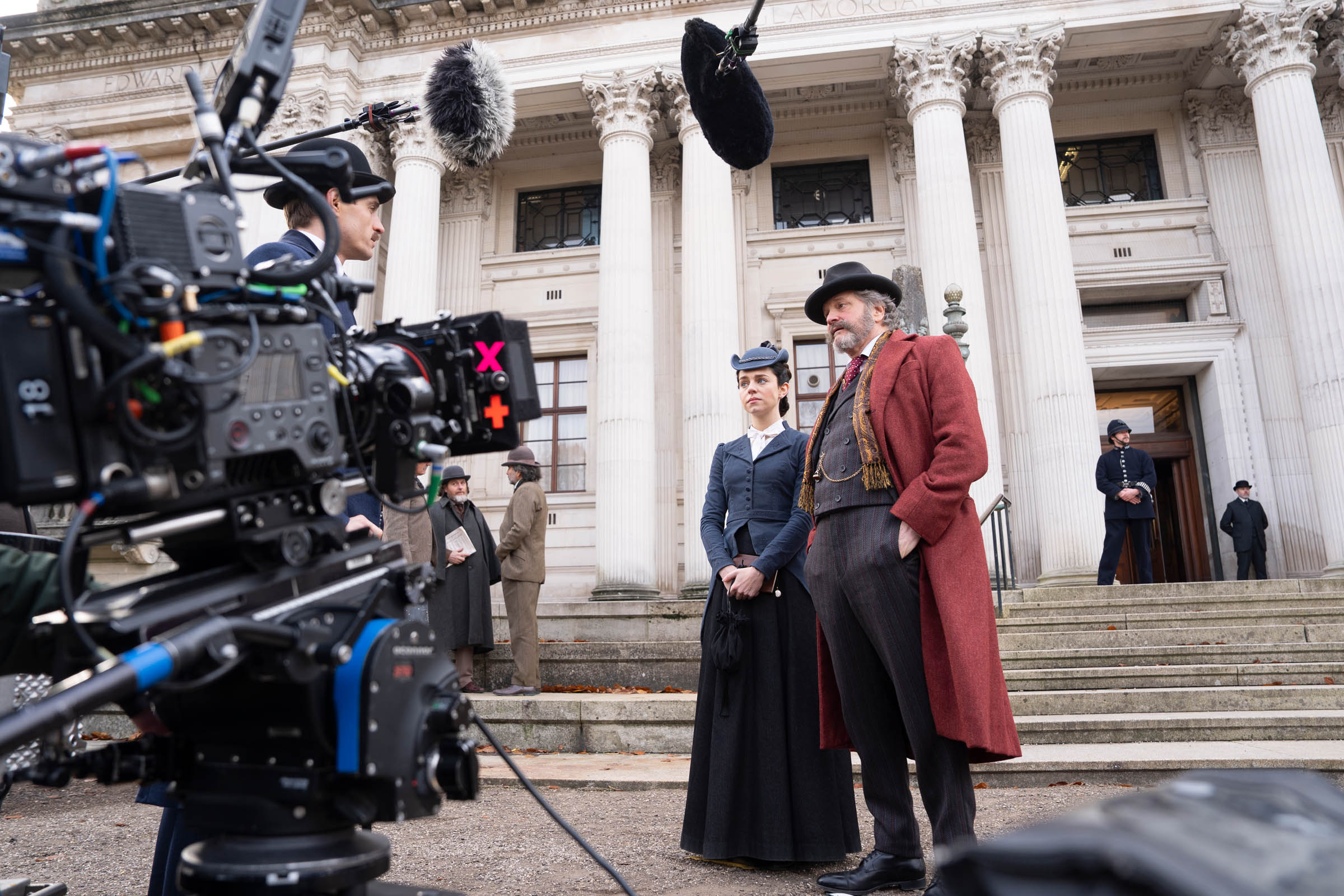
Courtesy of Amazon MGM Studios.
Jon: Let’s jump into Young Sherlock.
Mark Patten, BSC: It took a good nine months. We started Young Sherlock in the summer of 2024. It came about after the producers had seen my work. I then interviewed with Mr. Guy Ritchie. That worked out. The production was based in Cardiff, Wales, which would seem an odd place, but actually the locations in and around South Wales were wonderful. All of the countryside, Westminster and Baker Street were in and around Southwest England.
Our production designer, Tom Burton, who’s a genius, had an eye for extracting bigger London scenes and putting them in the Southwest. We got a tax incentive that gave the show something a bit different because those locations haven’t been shot out.
A lot of London locations that we all love and know, for example in The Crown and all the period dramas, are well known. The Holmes family home, “Appleton Manor,” was filmed at Llanvihangel Court near Abergavenny, Monmouthshire, which is a remote part of the country. It’s on the borders of England and Wales up in the Brecon Beacons. And those jewels of locations really helped the visual aspect of the series.

Hero Fiennes Tiffin and Dónal Finn. Photo: Dan Smith / Amazon MGM Studios.
Did you shoot Paris for Paris?
No. Without any spoiler alert, after a series of discoveries, they have to pursue Sherlock’s father, Silas. That takes them on a journey through Paris and eventually to Constantinople/Istanbul. We scouted Northern Europe for Paris, but we needed to distill and consolidate the international aspect of it. We knew that Southern Spain has a lot of Moorish architecture. Having inhabited the Iberian Peninsula for hundreds of years, the eastern caliphate was in Cordoba. We could then double that for Constantinople.
Then we ended up in Cadiz with its significant old town that Tom Burton dressed with tricolor French flags. Our story is 1847. We find our protagonists entering Paris during a rebellion, which we filmed in Cadiz and Jerez. Seville doubled for Constantinople except for the aerial unit to get the overheads of Istanbul.
How did you do the aerials?
Mr. Ritchie found the team, Skynamic, when he was doing The Covenant with a friend of mine, Ed Wild, BSC. Ed does many of Mr. Ritchie’s films and we flip-flopped on The Gentlemen. So I used Skynamic for the Inspire 3 drone shots in Istanbul. First and foremost, they are camera operators, which is key to any drone work. They’re based out of Barcelona, but shoot internationally.
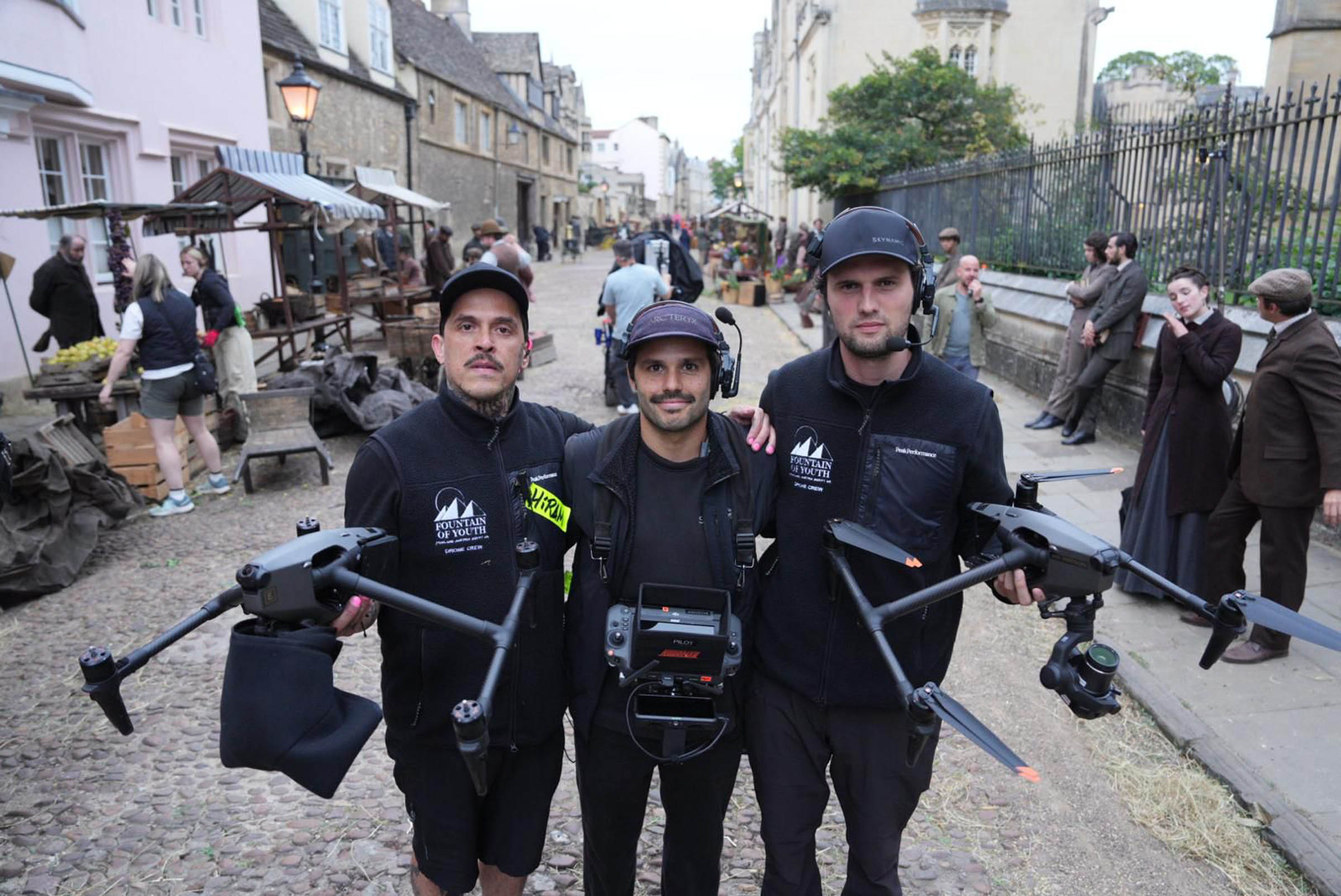
Skynamic crew with DJI Inspire 3. L-R: Hiram Rios (AC), Brandon Carrara (Pilot), Alejandro Maestra (Aerial Camera Operator). Photo: Dan Smith / Amazon MGM Studios.
I appreciate that the producers let me do all eight episodes, apart from Episode 6, which my dear colleague Oliver Loncraine shot when I was prepping and went to scout in Spain. He also did extra photography on Episodes 3, 7 and 8, and was integral to the show. So that combination of having one visual element and one narrative backbone throughout, I think, is not normal in these big tentpole series.
It is refreshing that the same DP is doing the entire series and you have this continuous look. It was great.
I hope that that comes through because that continuity of look really binds the show as a whole.
What cameras were you using on Young Sherlock?
The workhorses of the show were three Sony VENICE 2 cameras with detuned Panaspeed lenses.
For the drone shots, we had the DJI Inspire 3. Clearly DJI’s platform has become stronger and stronger as a tool in the DP’s package for heavy action stuff, the platform is super versatile. We also had the DJI Ronin 4D, which our camera crew affectionately calls the “chicken cam” because of the way that its 4th axis stabilizing arm moves up and down like a chicken when it’s going around.
Those DJI sensors don’t need a lot of tweaking to match the VENICE 2. That’s not taking anything away from Sony because the VENICE 2 is astonishing. But with a good bit of grading and careful lens choice, you can match the two different systems.
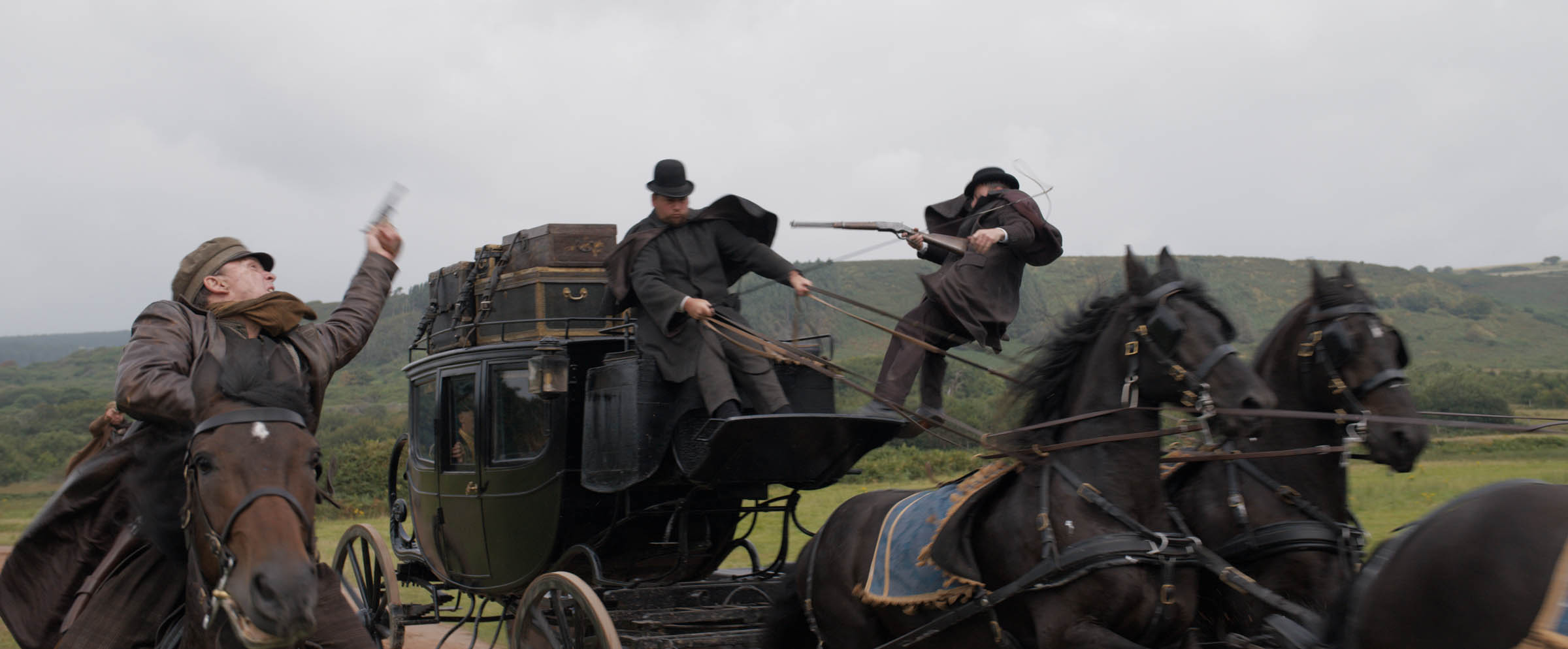
For example, the stagecoach big chase sequence was a mix of all three camera systems. We have the VENICE 2 for many of the setups, and aerial shots with the Inspire 3, and then we have the Ronin 4D in Flex Mode where it’s basically a gimbal stabilized lens tethered with an umbilical cord tethered to the camera body for the shots underneath the carriage to get all of those shots of the wheels and people falling off. It’s a very resourceful and useful tool. Going into future projects, I will make sure that all of those tools are available.
What lenses were you using on the Ronin 4D?
On the Ronin 4D, we were using the new lightweight Cooke SP3 primes. I see the lens companies really pulling out and giving us more and more lightweight choices. I ran some tests with the SP3s. The SP3s leaned more towards the Panaspeeds that I was using on the VENICE 2.
How does your focus puller deal with focus using SP3s?
You put a tiny little focus motor on the Ronin 4D and it all kind of syncs up. On the Inspire 3, we used longer lenses to get what we know and love as an old chopper feel. As Tony Scott taught us, you sit on a 200mm lens in the chopper, and you get those beautiful shots with all of the background moving in parallax.
Do you have crash cameras?
Oh yes, I always carry my Blackmagic Pocket Cinema Camera 6K that I’ve modified to take my set of ZEISS SuperSpeeds. It gets thrown around the set in a little crash housing if there are any explosions or whatever. I always have this PL mounted Blackmagic camera with me. If there’s something interesting, I’ll shoot it.
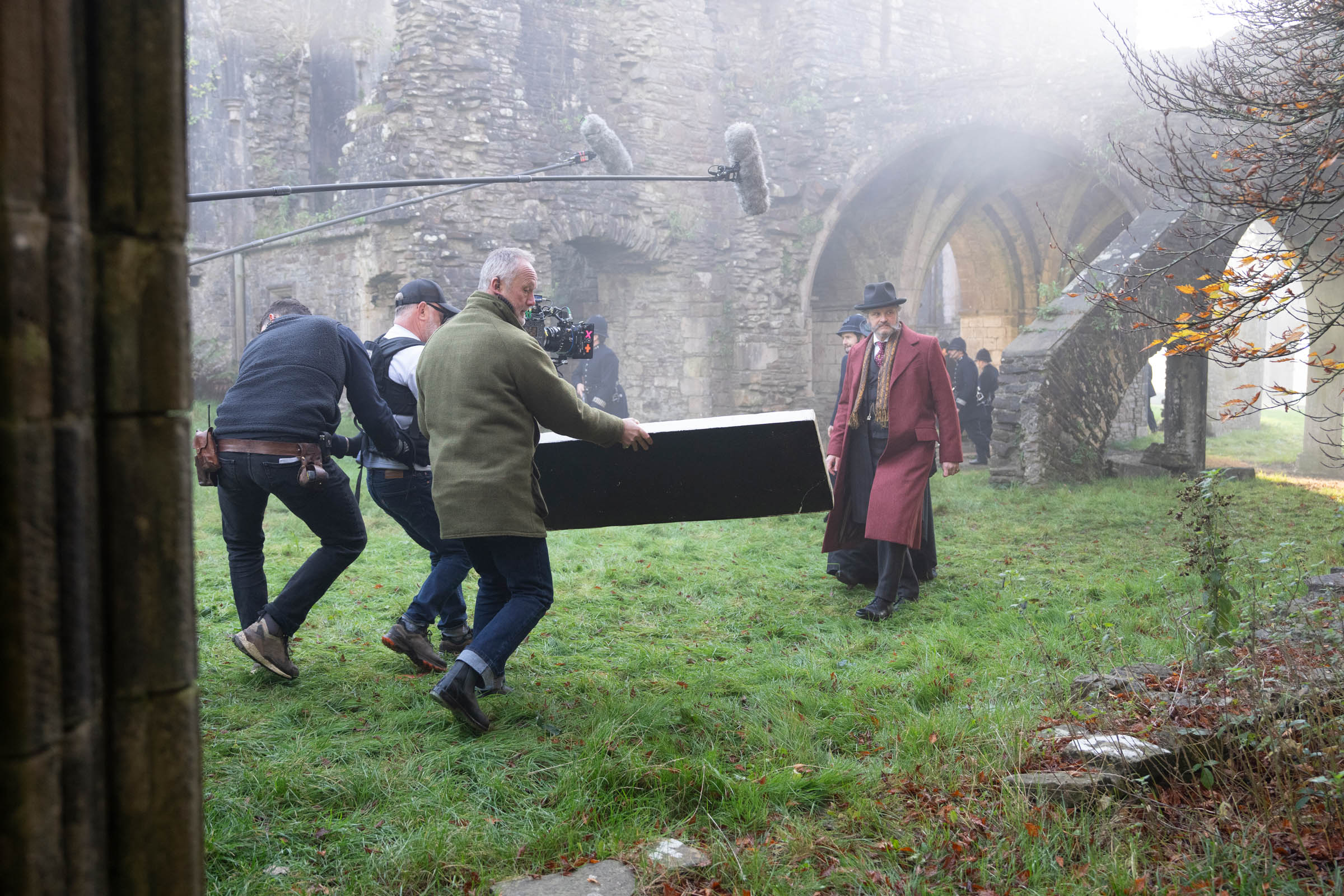
Courtesy of Amazon MGM Studios.
Did you shoot with three VENICE cameras simultaneously?
I had an A and a B camera covering many setups simultaneously and the C camera was built for any Steadicam or crane work. It makes the day more efficient. We can interchange quickly or leapfrog ahead. If we’re doing a scene in a stage coach, we can finish that and then the grips can be rigging the third body onto a crane so that we can make our day. The bigger days like that chase sequence took three or four days to complete and we had a full third camera team as well because there was so much to do.
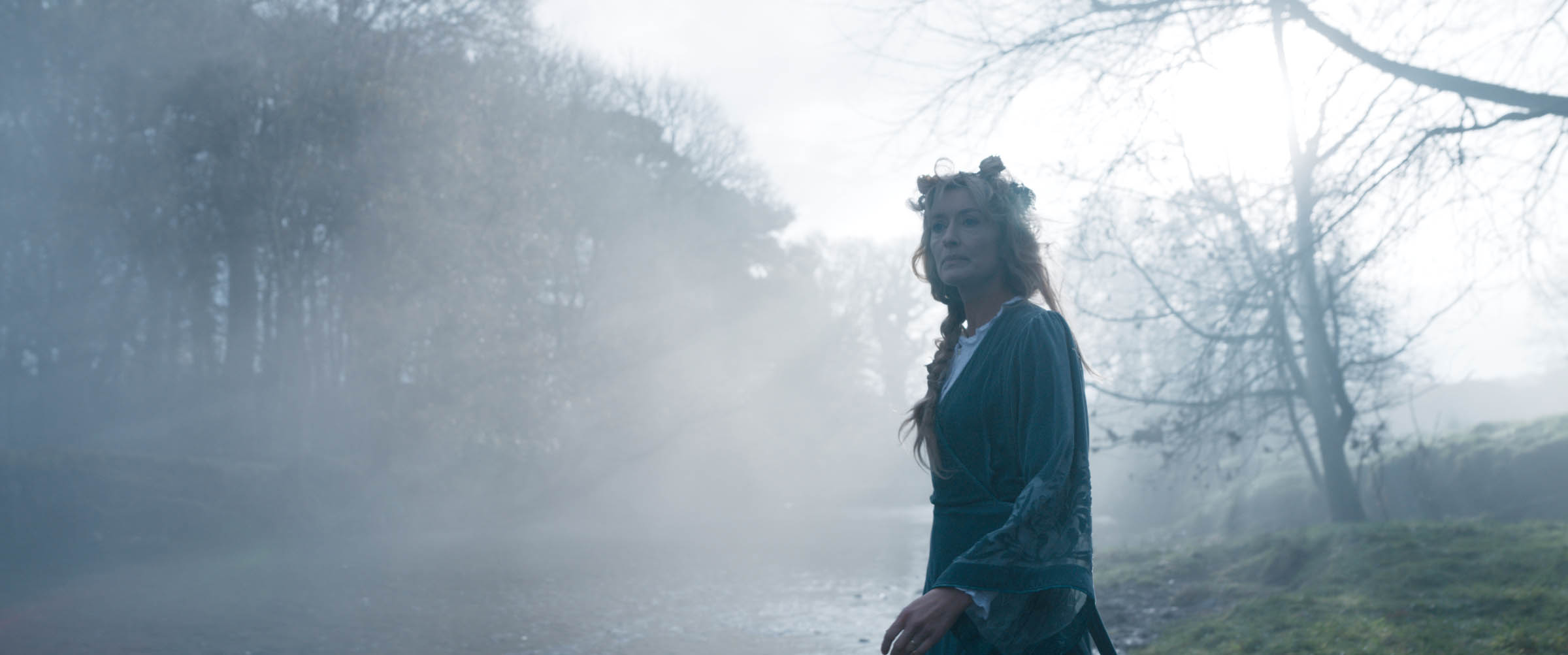
Getting back to the Inspire 3, how did you manage that amazing single shot early in Episode 1 where they’re fly fishing. That was a wider lens?
It was slightly wider because you come so close to action. We’d finished in the field the day before. Usually, Wales is synonymous with rain. I looked at the weather forecast and it showed sunshine early in next morning. I phoned the producers that night and said, “Look, I’ve got this idea for a shot, but we have to get it at the first light.” And they said, “Yeah, no problem.” So I went to the local pub, pulled myself a pint of Guinness and made some calls to the key team players because I didn’t need the whole unit out there. I just needed to get that shot. I needed the artists to be there and the drone team, Skynamic, to get ready to fly at the crack of dawn, and then we would be good to go.
It’s one of my favorite shots in the entire series—sun dappling off the river, flying by the fly fishing, up the hill, around the actors and through the trees.
Yes, mine too. I think on the second pint of Guinness, I got through to the drone team and said, “Look, do you think you’re able to do this? And they went, “Yeah, we’ll give it a go.” As I said previously, they are so in sync with framing and operating and the pilot is so good as well that it’s such a symbiosis between the both of them that you can get these extraordinary shots. We got there early in the morning and I didn’t think they would play the whole shot, but they did.
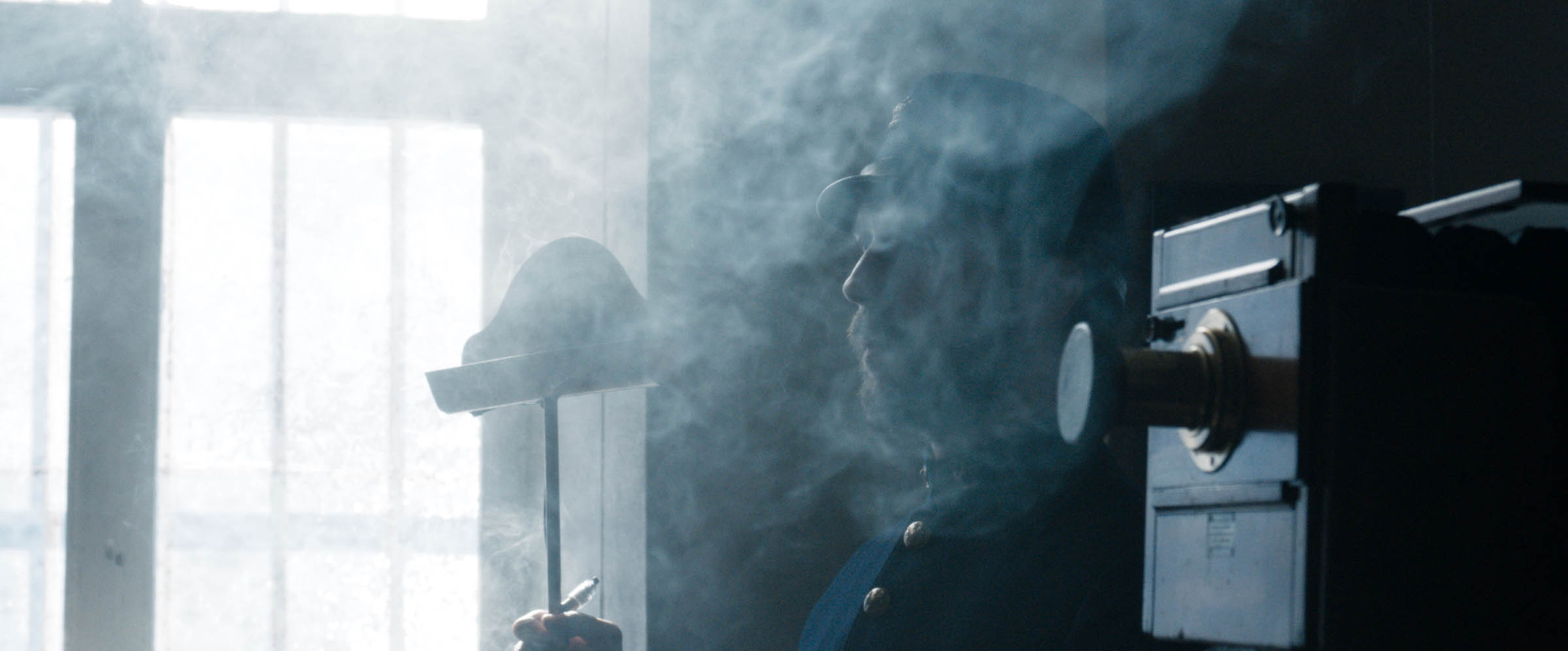
Shall we talk about lighting? When an art directors on commercials asked for Ridley Scott lighting, wise-guy gaffer would joke, “Oh, shaft of light coming through a big window, lots of smoke, a bare light bulb and red lipstick.” And here you are.
Well, it’s very funny because obviously I did a lot of work for Sir Ridley. I shot second unit on The Martian. There’s a couple of directors and cameramen who really mentored me and that kind of lighting is simple, but it’s really dramatic. I hope I didn’t overbake the smoke on this show.
No, it was great.
Conversations with Mr. Ritchie were interesting. The costumes are period, but they have a modernity to them. Jany Temime’s designs are extraordinary. The sets are period and correct in every way, but the camera movement and the way that Mr. Ritchie visualizes each scene has a certain stylization to it.
That’s why I leaned a bit into pushing those big sources through the windows with a bit of atmosphere in those rooms. I just thought I’d be brave and really, really so it. My gaffer, Brandon Evans, and I discussed what sources we wanted out those windows. I wanted those sharp edges you get with the big COB digital sources.
We had those big Nanlux Evoke 5000B 5K LED fixtures with modifiers to contain that beam. That’s what we pushed through the windows. And once you get those up in the rigging in a studio or in a lift on location, there’s pretty much nothing you can’t do with them quickly. On these shows, you have to be so quick all the time.
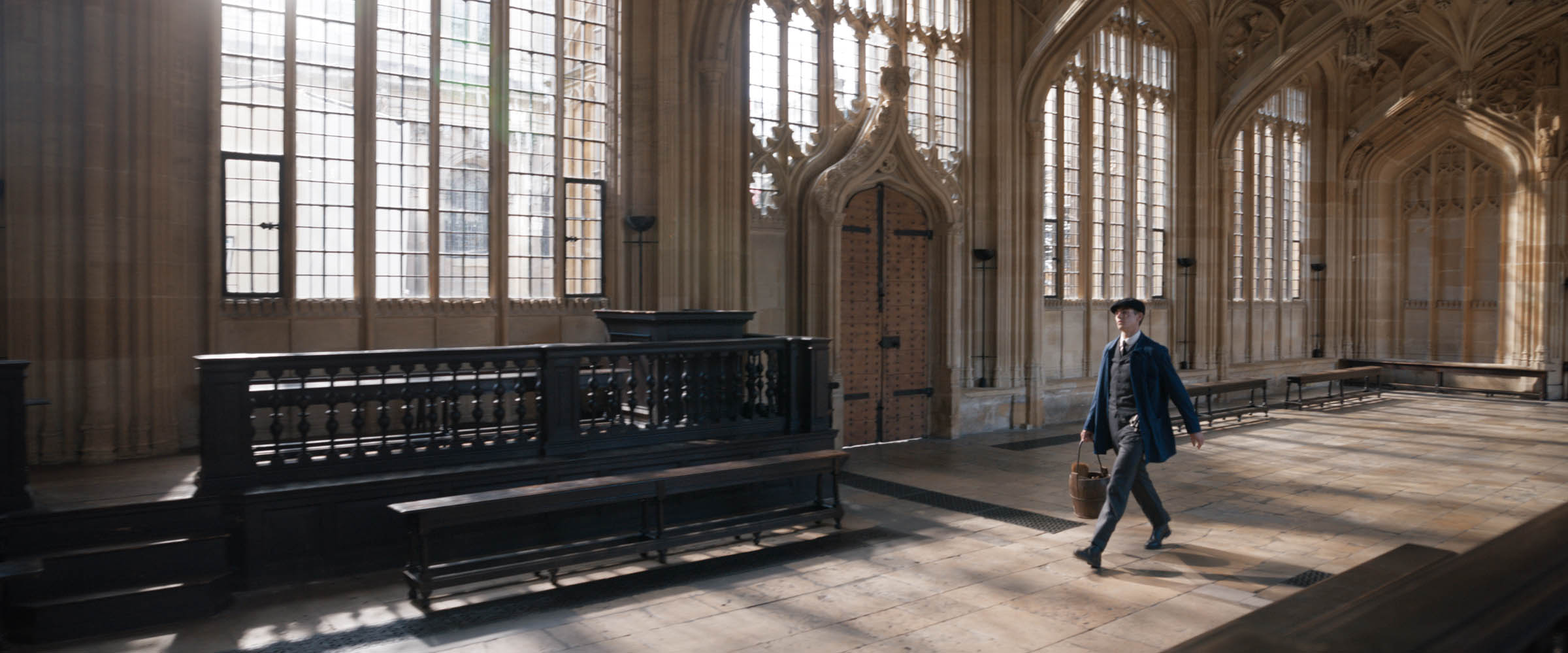
You filmed Oxford for Oxford?
We mainly use Oxford for Oxford exteriors and any work in the streets, but mainly the interiors of Magdalen College, where the first two episodes center, were sets built in Wales. It was a converted logistics center that we converted into a studio. The roofs were a little low for my liking, hence, again, why I couldn’t get the bigger sources far enough away. That was a consideration to going LED through the windows. We pretty much then rigged up all the rooms with various lighting fixtures that could do day, night, dawn with the Nanlux units, and then we had the Creamsource Vortexes to do a soft push as well.
So Nanlux was mostly for hard light?
It was a combo. I like to mix it up. Recently been using the Lightbridge CRLS System of reflectors. Because the roof of the studio was so low, the mechanics and physics of light meant that if you bounce light into a reflector, then you’re getting double the distance, so you’re getting that natural drop off. I’ve been embracing that a lot as well to get softness into those rooms. Although it looks hard, it feels natural. That’s my biggest flavor in the mixology table of light—to try and get the light looking as natural as possible.
You’re bouncing the Nanlux hard light into the CRLS reflector and then through the window?
Exactly. That covers the distance because the studios are so small.
Is the library scene a studio—where the Art of War scroll is stolen?
That was Oxford’s Bodleian Library, built in 1602, one of the oldest libraries in Britain. It was incredible. But you can imagine there’s no way you’d be allowed to climb anywhere. So the whole sequence is a combination of real and studio. Tom Burton did a Lidar scan of the Bodleisn and then replicated parts of that library in the studio. The biggest issue was that there’s no way to get light into that library. I couldn’t put any big lights outside the windows.
What did you do?
Fingers crossed. Look heavenward and hope for a sunny day. That’s pretty much natural coming through, obviously augmented from the floor, but I literally couldn’t control it. And they wouldn’t let you put ND on the windows because they are so old. Normally on any other show, you’d build it because it’s so difficult to control the lighting, but we loved the textures so much of the real deal. So that’s why we shot in there.
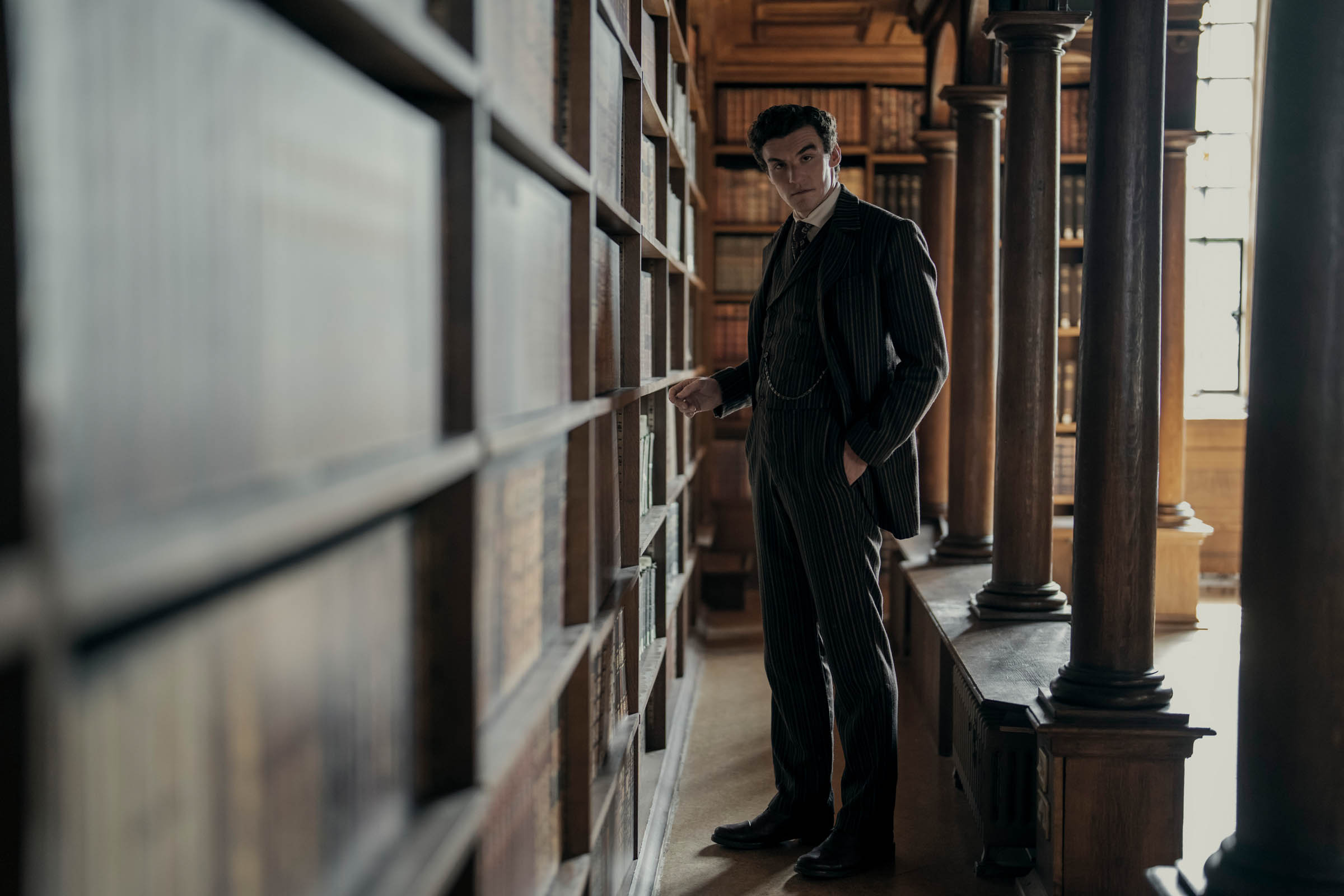
Dónal Finn as James Moriarty. Photo: Dan Smith / Amazon MGM Studios.
Wonderful. I guess they didn’t allow smoke in there?
Nothing. You’re just honored to be amongst those books. We had some Astera battery-powered tubes to light from the floor and some small Litegear LiteMats. Again, it’s just trying to be as natural as possible on the artists.
How did you and Mr. Ritchie discuss the look and style during prep?
In pre-production, I created a look book. I was very tuned into what Philippe Rousselot, AFC, ASC had done on his two Sherlock Holmes films (2009, 2011). I felt like I was touching hallowed ground because they’re so beautifully photographed. I was not trying to emulate what was done in those two movies. I particularly liked the way that Philippe lights. He was using his Chinese lanterns and minimal fixtures. I was trying to get into that style.
I said to Mr. Ritchie, “That’s probably what I’d be going for.” But he’s very confident in his cinematographers. I think unless it’s looking terrible, he’ll let you get on with it. Which you probably don’t want to hear as a DP on a Monday morning.
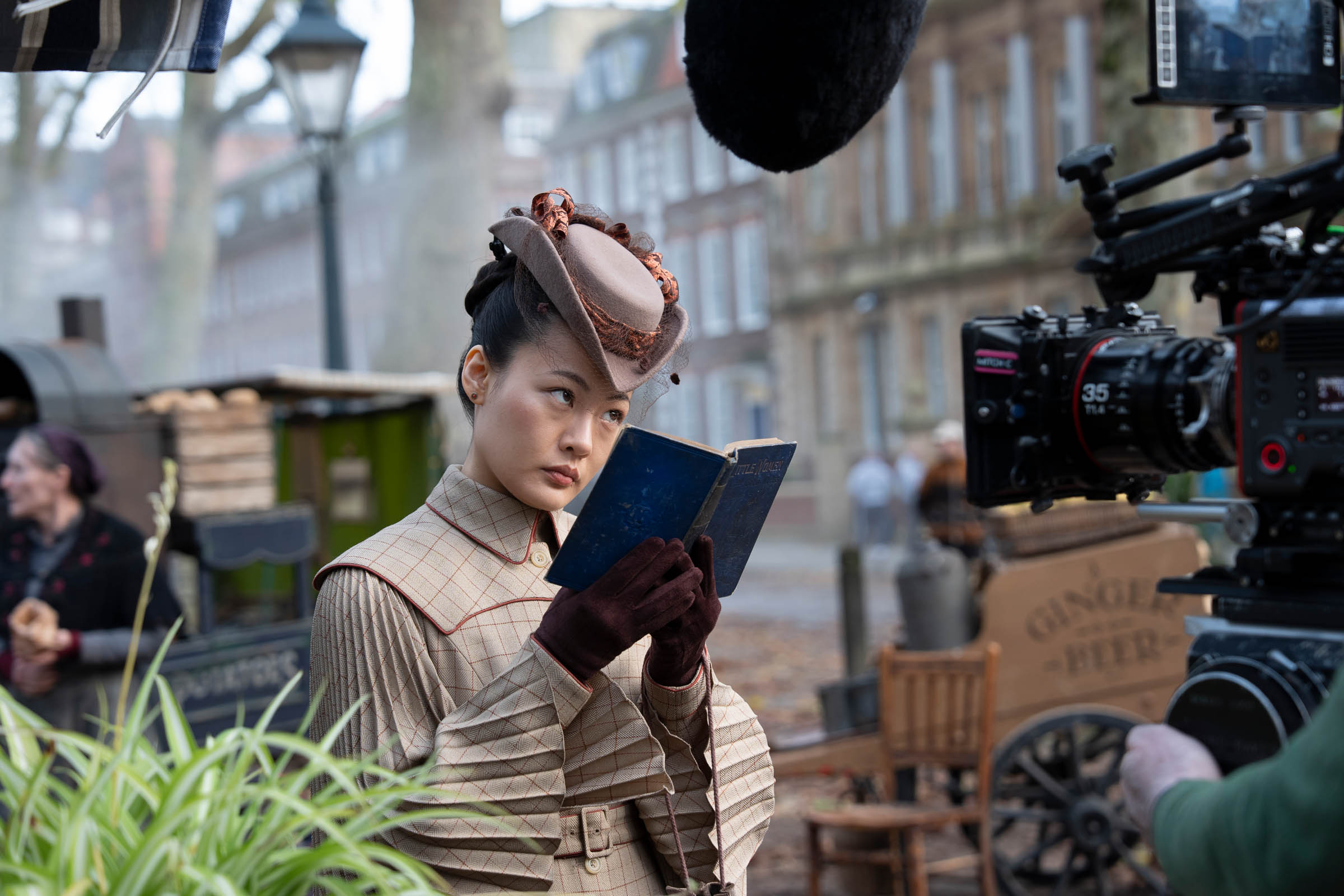
Courtesy of Amazon MGM Studios.
How did you get into film?
I started off as a bike courier around Soho, London—taking U-matic tapes and storyboards around the ad agencies. I was getting pretty tired of that. So I asked the receptionist at Ridley Scott Associates if there was a job going as a tea-boy/runner. She said, “No, not here, but across the road there’s a commercials production company and they are looking for a runner.”
I applied for that and got in and then worked my way through the commercial route. It was called MacLeod and Partners. Stuart MacLeod was the director. He had a beauty account for a big shampoo product called Timotei. He was shooting on 16mm at the time and was visiting various exotic locations, but he wanted to go a little bit wilder in terms of trying to get into the environment a bit more. I came up with the idea to compact down a 16SR3 with a couple of zoom lenses and a tripod, and then we were away and we could really get into really remote locations around the world filming the hair commercials.
That’s how I got into it and I was trained by the first ACs. the rest is history. I worked my way up from the floor as a clapper boy to focus puller, and then was given opportunities to start shooting second unit for various directors. It did take a few years to become a DP. It’s been 10, 15 years of working through the camera department. I learned so much from all the departments. It was an amazing way to enter and make headway in the industry.
In some ways that’s missing now.
That’s come about from the digitization and democratization of the whole industry. It’s giving those opportunities. The tools are not easier to use, but more accessible. That will accelerate certain individuals. At the BSC Expo, I was speaking to young assistants and cinematographers trying to move up through the system, and they’re all just there because they’ve got a camera. They can shoot, but they can’t always break through. Images are everywhere. So although technically it’s become democratized, I still think it would be valuable if everybody would just slow it a little bit and understand the frame and light and how to curate and craft it. But that horse has bolted. We’re in an accelerated world.
That is interesting because even if you can shoot, you may not be able to get real jobs. When you and I started, it was equally difficult. Becoming a DP was like becoming a member of parliament. There were not many opportunities.
None of my family were in the industry. It was literally just positioning myself in opportunistic moments and how do you then push through to try and get through to surface within the industry? There are so many individuals now who have a great eye, a beautiful way of shooting, framing, and yet the opportunities there are so competitive. How does the younger generation push to that point of getting to the top of a department?
Did you work as a camera operator?
I stayed in commercials, went to do features as first and second AC, but then I just went straight to work as as DP. Because I had the opportunity to be a camera operator on second units, that kind of crafted it. When I went back into commercials as a DP, I honed the operating skills. But now that I’ve gone through the other side, I miss it. The shows I’m on require the DP to be next to the director.