Gareth Ward, chef and co-owner of Ynyshir in Wales
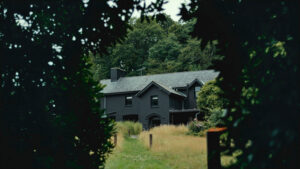
A Knife in the Valley is a 15-minute short film about Gareth Ward, head chef and co-owner of Ynyshir in Wales. Brendan Harvey was the cinematographer. The restaurant has been named best in the UK, has two Michelin stars and its 30 course dinner lasts 5 hours. The menu merges Japanese inspiration with wild ingredients from the Welsh countryside. When booking, you are advised that it is “not suitable for those with intolerances and dislikes. No substitutions or amendments to dishes are offered.”
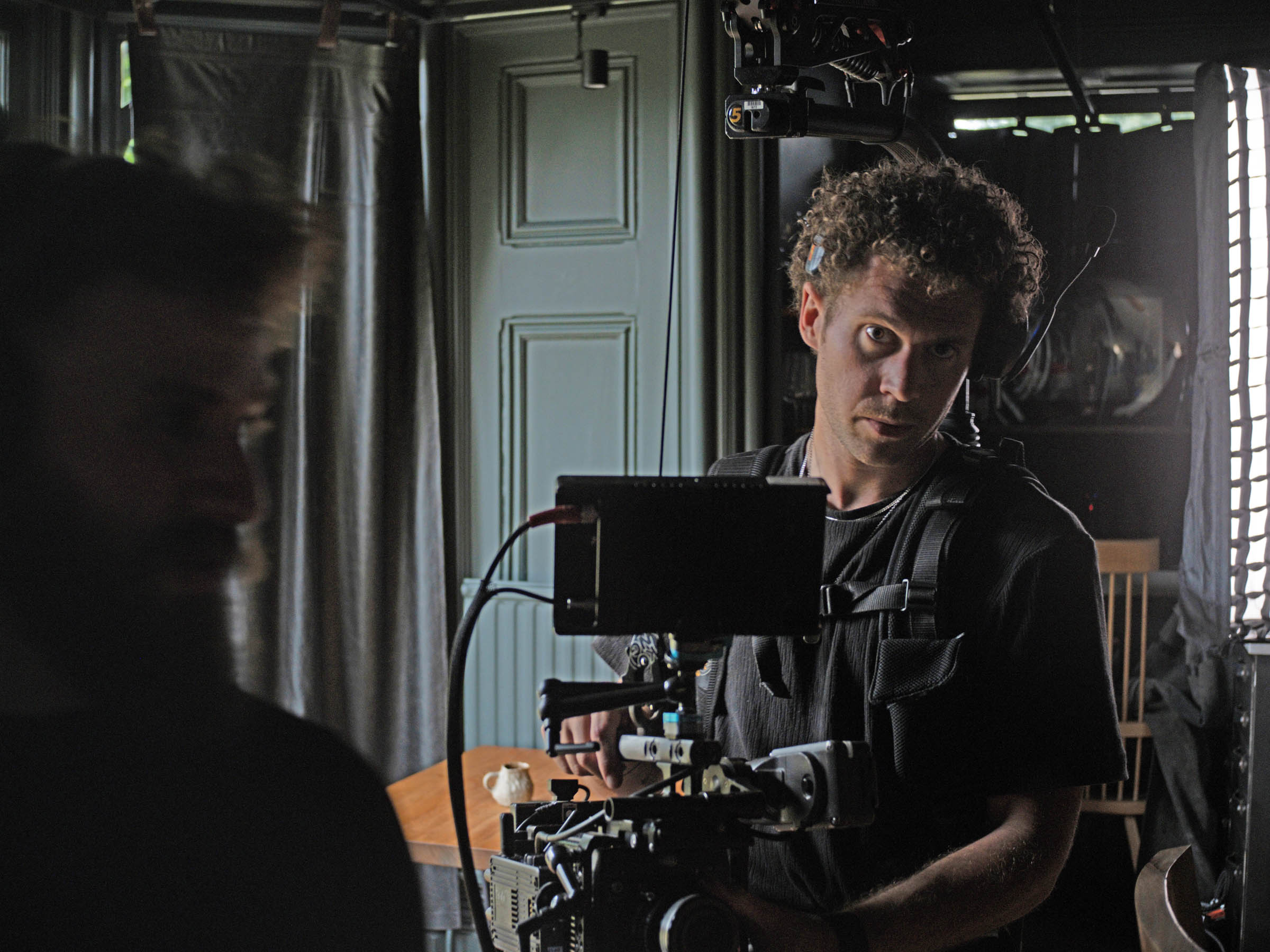
Brendan Harvey, cinematographer
Jon: How did A Knife in the Valley begin for you?
Brendan Harvey: I worked with Theo Gee, the director, on a fair number of narrative and commercial projects. Recently he pivoted towards documentary work. We both have a love of food. Theo was talking to Gareth for almost a year. He went there for a meal and was so impressed that he wanted to explore deeper. There’s a bit of mystique about the place. It went through many months of back and forth between Theo and Gareth who is a notoriously difficult person in terms of media appearances. Gareth is a perfectionist in almost every way.
Speaking of obsessions, tell us about cameras, lenses and lights on your film.
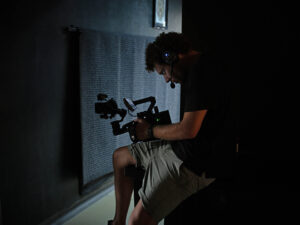
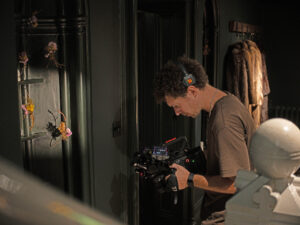
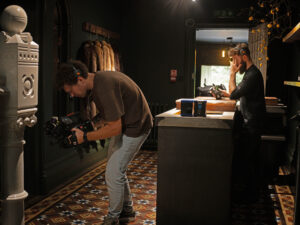
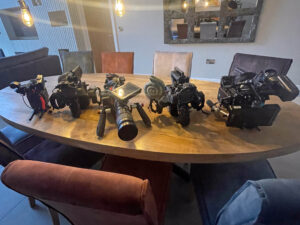
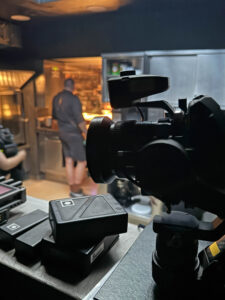
We settled on using my DJI Ronin 4D 6K cameras for about 90% of the film. My ALEXA Mini was on the other 10%. The reason for the Ronin 4D was a desire for the camera to always be moving — to signify the restlessness, the striving for perfection in the restaurant. I’ve worked with the Ronin 4D on previous features and documentaries and its operation has become second nature to me. Theo used my second 4D during some of the service sequences and moments where we needed two cameras.
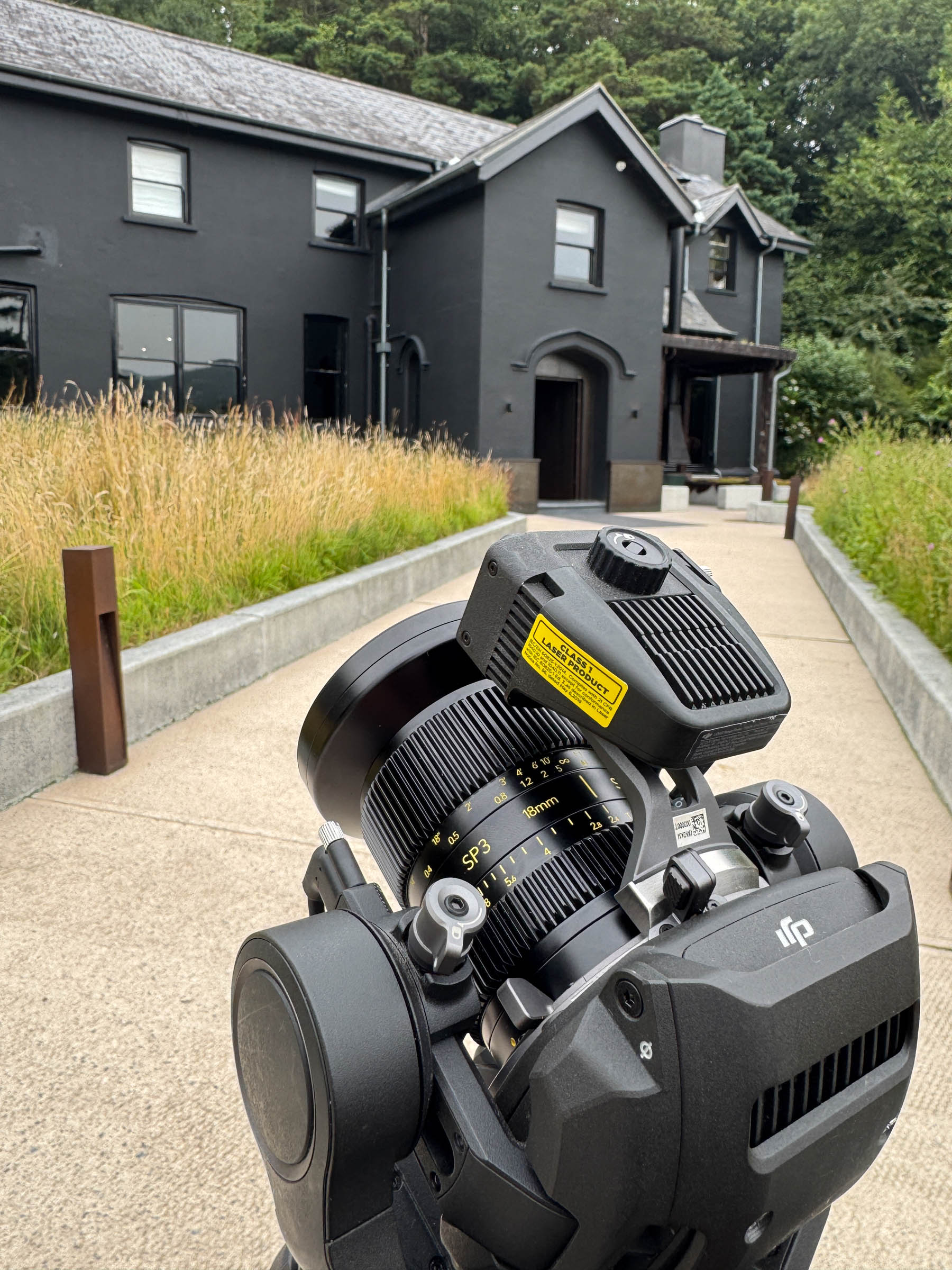
How did you operate the Ronin 4D? Handheld out front?
It was just in the hand, built normally. We had Cooke SP3 lenses. I own an SP3 set that I have been using for the past year or so. However, I didn’t have the new 18mm for some of our expansive wide shots inside, going through rooms and showing the space. Danny Haikin at Cooke Optics loaned us an 18mm. I liked it so much that I subsequently bought one to complete my set.
What mounts do your SP3 lenses have?
They are E-mount. The Ronin 4D has the DJI DX to E-mount adapter. The SP3 lenses also have interchangeable Leica M-Mounts so I can put them on the ALEXA Mini as well.
Where did you get your Ronin 4Ds and SP3s?
From CVP in London. They also do service and repairs, although so far I haven’t need any of that.
Please talk about your style of shooting on Knife in the Valley.
There are two types of camera styles in the film. Most of it’s Ronin, which is all very clean and crisp and without grain. And then there are grainy, textural elements which were shot on an ALEXA Mini in 16mm mode with an old B4 zoom lens fitted with a PL mount adapter.
Did you have a focus puller on the Ronin 4D with Cooke SP3?
No. I pulled focus myself using the DJI handgrip with its focus knob. I didn’t use autofocus, peaking or focus assists because I used to be a focus puller. I just do it by eye off the monitor.
How did you and Theo decide on the look of the film and how did you settle on the Cooke SP3 lenses?
The Cooke SP3 are my favorite spherical lenses to use on the Ronin 4D. For me, there’s nothing out there that’s nicer or more versatile to use. They are small and light enough for the 4D. They have nice focus fall-off—softening towards the edges of frame, and not too much contrast. They tick all the boxes, unless I wanted to go anamorphic.
How did you light the restaurant interiors?
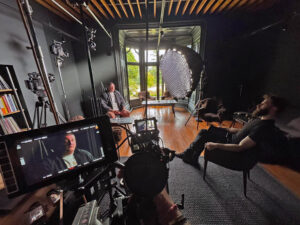
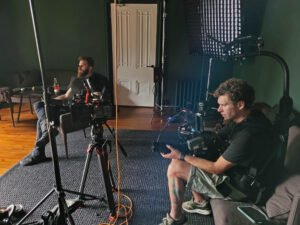
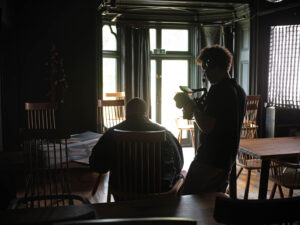
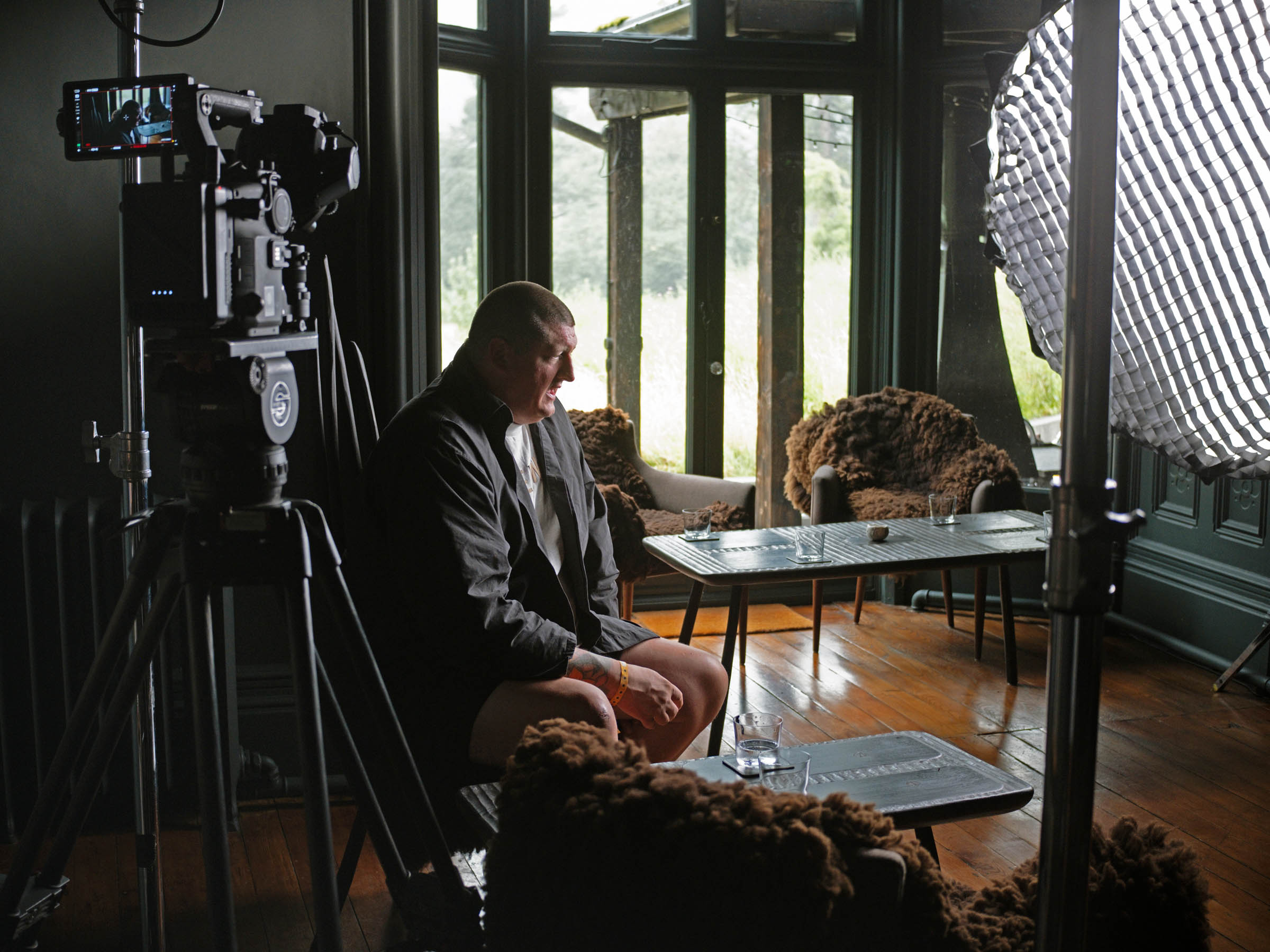
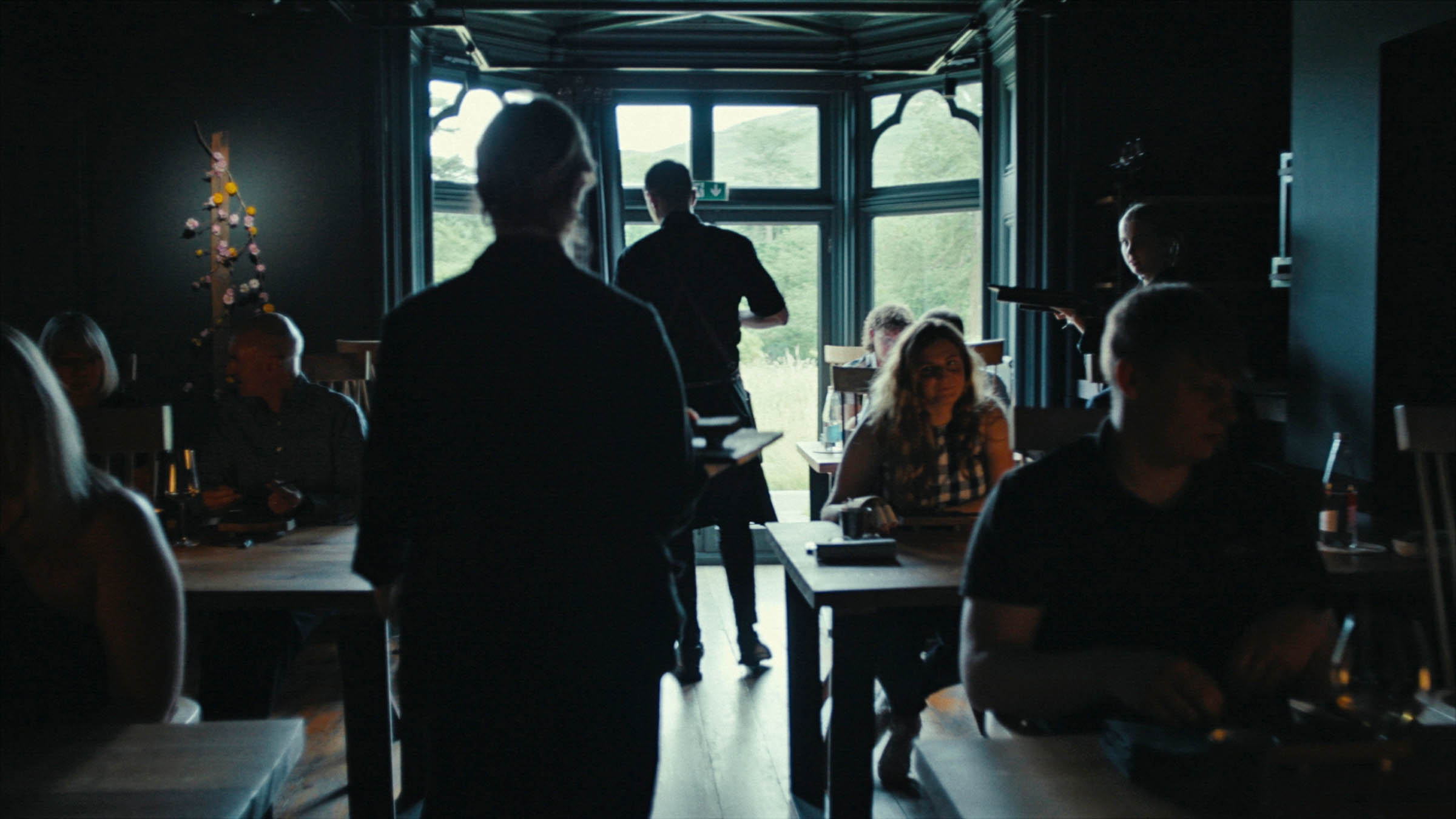
We had some small fixtures: Nova, Aputure MT Pros, MCs, and an Amaran panel that was used as a backlight for the interview. Our main big light was an Aputure 600 C with a 5-foot light dome on it, as the main source for the interview. When we were in the kitchen during service, we had to use natural, available light to avoid getting in the way. Incredibly, they allowed us to film the meal service with actual people there.
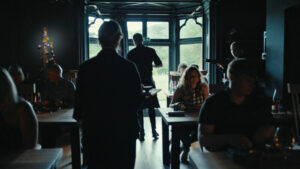
It’s quite an intimate space. But it’s very performative. People are sitting side by side looking towards the kitchen. The focus of the meal is the kitchen rather than the person you’re with. Techno music is playing at times, very loud. There’s a fire behind the counter. The walls are completely black. It’s quite something.
Thirty courses in five hours?
You start in another room to enjoy a few starters. Gareth stands at the entrance carving the sashimi. We see him with a big slab of blue fin tuna that he is making into a crudo dish. People are sitting around at various tables. Then they go into the main dining and there are 15 courses or however many. After that, you go to a fire pit outside where they serve some of the desserts. It’s a destination event, so people do stay the night in Gareth’s hotel.
The place was originally just a hotel with a restaurant, and then it became a restaurant with rooms. That pivoted once because Gareth took over from the previous chef.
How big a crew did you have?
There were just three of us. Theo, the director, was doing sound and operating one of our three cameras at times. Callum Lindsay was operating the second camera. The ALEXA Mini was standing by to do the textural elements along with some Prism Lens FX filters. There’s a complete forge on site where they make all the metal work: cutlery and plates and anything that Gareth comes up with. Often, we’d send Callum with an Easyrig to get cutaways around the place.
You own a lot of equipment.
Maybe too much. There’s a lot of admin involved. But, these days, it is handy to have for documentaries and music videos. On bigger jobs, I’d probably rent a Mini LF or ALEXA 35 package.
Talk about lighting the food.
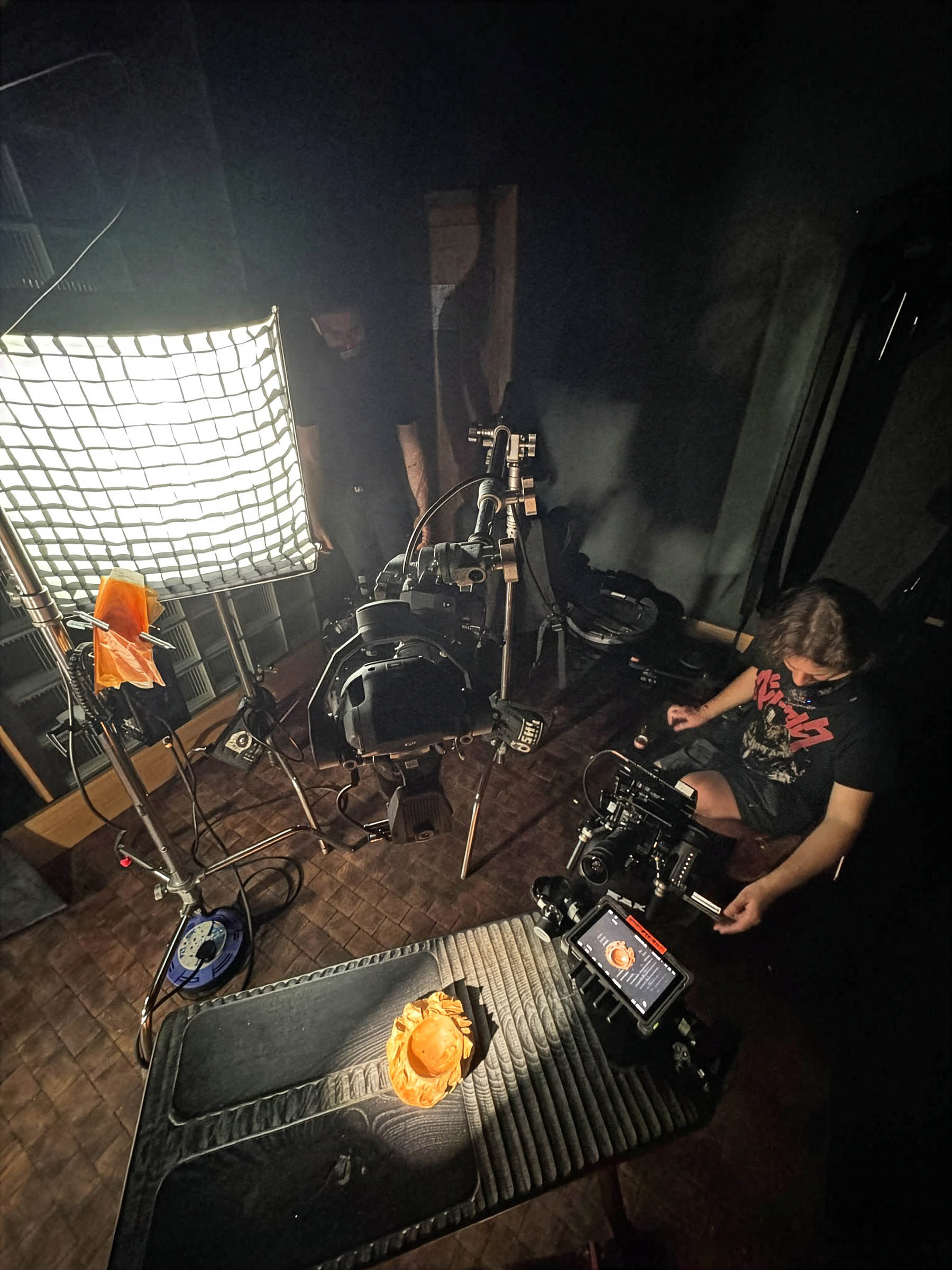
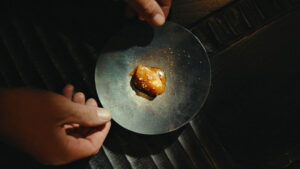
We didn’t want to be Chef’s Table. But sometimes it’s inevitable because they shoot food so beautifully. There was a lot of conversation about how to fit the style of filming with what this restaurant represents and how to present Gareth, the personality and everything else. We wanted to have hard slashes of light and use the hints of fire in the background, to make the lighting impactful with the chiaroscuro of darkness and the light.
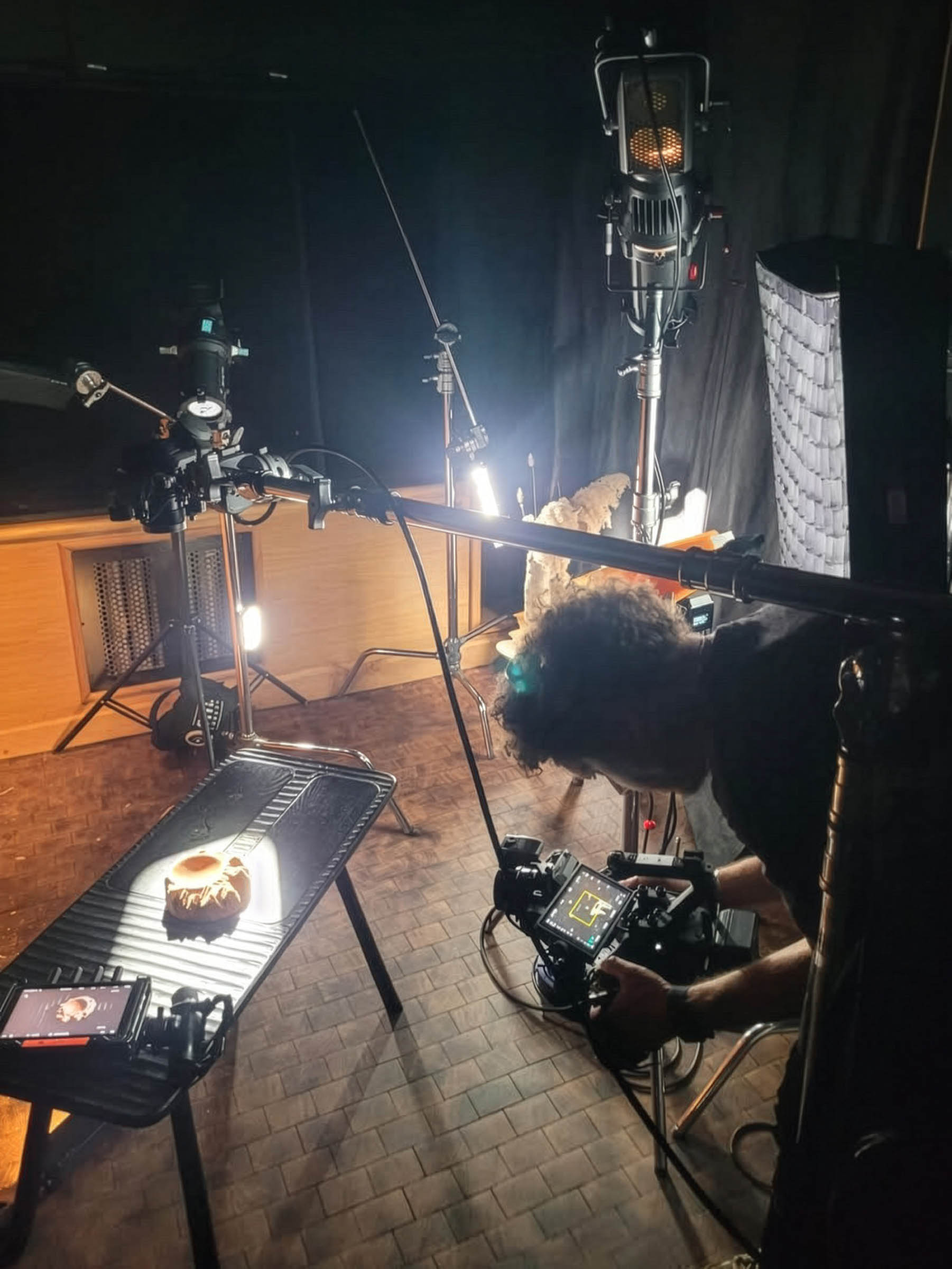
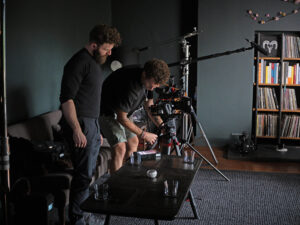
We made a mini studio in one tiny room of the hotel, the only room that was free. It was probably three meters by three meters. They kept bringing food up to us to film during the service. We had three setups that we pre-lit within that room. One of the Ronin 4Ds was set up in Flex mode on the end of a Manfrotto Junior lighting boom to be overhead and look straight down at the food.
The DJI Ronin 4D in Flex mode (sensor+lens head tethered to the body) works like a stabilized remote head. We move the boom like a jib arm, controlling the 4D as a remote-head with the joystick on the handgrip to do rotating overhead shots.
An added bonus was that we got to sample each dish after we filmed them.
How did you manage remote focus?
I used the dial on the hand grip.
You had some extreme close-ups of food.
We used screw-in diopters for the Cooke SP3 on those setups.
Did you use any effect filters?
No. I quite like the Cookes without filters. Sometimes I put an eighth Black Promist on the front, but generally I just shoot them clean. For this film, we wanted it to be quite clean, precise and to show how refined Gareth aspires to be. Even in post, we started with 35mm film grain, but then we just stripped it back a lot.
How did you get started in film?
I grew up with documentaries because my dad’s a documentary producer. His name’s Gareth Harvey. He worked in Australia for 60 Minutes, National Geographic, Discovery Channel, etc. We moved to Italy and I went to school there. After finishing year 12 of high school, I did a gap year on the road with my dad as an assistant, second camera, boom operator and whatever needed to be done. I went to film school in London the year after that. After film school, I started as a camera trainee and then camera assistant and worked my way up on features, commercials and series.
Brendan Harvey
Watch on YouTube: youtu.be/9pNoNu0V6LA
Credits:
- Director & Producer: Theo Gee @theogelernter
- Cinematography: Brendan Harvey @brendanharvey_
- Camera Operator: Callum Lindsay @callumlindsay01
- Drone Operator: James Edwards @james_ed_
- Editor: Theo Gee
- Sound Studio: Brother Music @brother___music
- Composition: Hugo Ellingham @hugoellingham
- Sound Design: Patrick Lee @patricklee.sound
- Post House: Harbor @harborpictureco
- Colourist: Karol Cybulski @imkarol.colour
- Title & Poster Design: Callum Richards @callumrichards
- Feature Writer: Tom Crocker @tomcrockerwrites
- Social & Digital Lead: Icy Ungureanu @icy_captures
- PA to Gareth Ward: Abbie Morris @morris_19
- Ynyshir Creative Director: Amelia Eiriksso @ameliadora
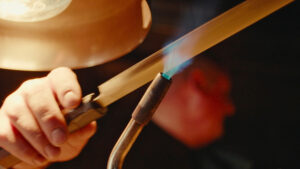
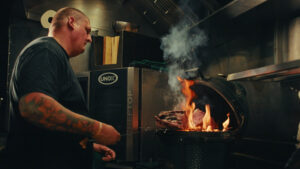
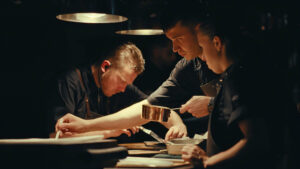
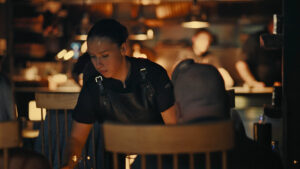
Framegrabs

BTS Production Stills