Elias Maria, BVK is based in Munich. He started in photography at a young age, became a camera assistant in action and sports photography and on ski movies. Next came work at an agency, then at a production company and as a freelancer making his own films. Lately, Elias has been doing commercials for major brands and fashion houses.
His NATURE OF SPEED short, filmed with ARRI’s new ALEXA 35 Xtreme cameras, caught the attention of this obsessed fast sailor who wanted to hear more from Elias and Henning Rädlein, ARRI Group VP Product Marketing.
Jon: How did this project begin?
Elias: It started with Henning Rädlein and Lukas Linner during a meeting at ARRI. I pitched an idea about a short sailing documentary. A few weeks later, they said that sailing might be interesting for the new ARRI ALEXA 35 Xtreme, an update to the current camera with new features and slow motion speeds up to 240 fps with 17 stops of dynamic range.
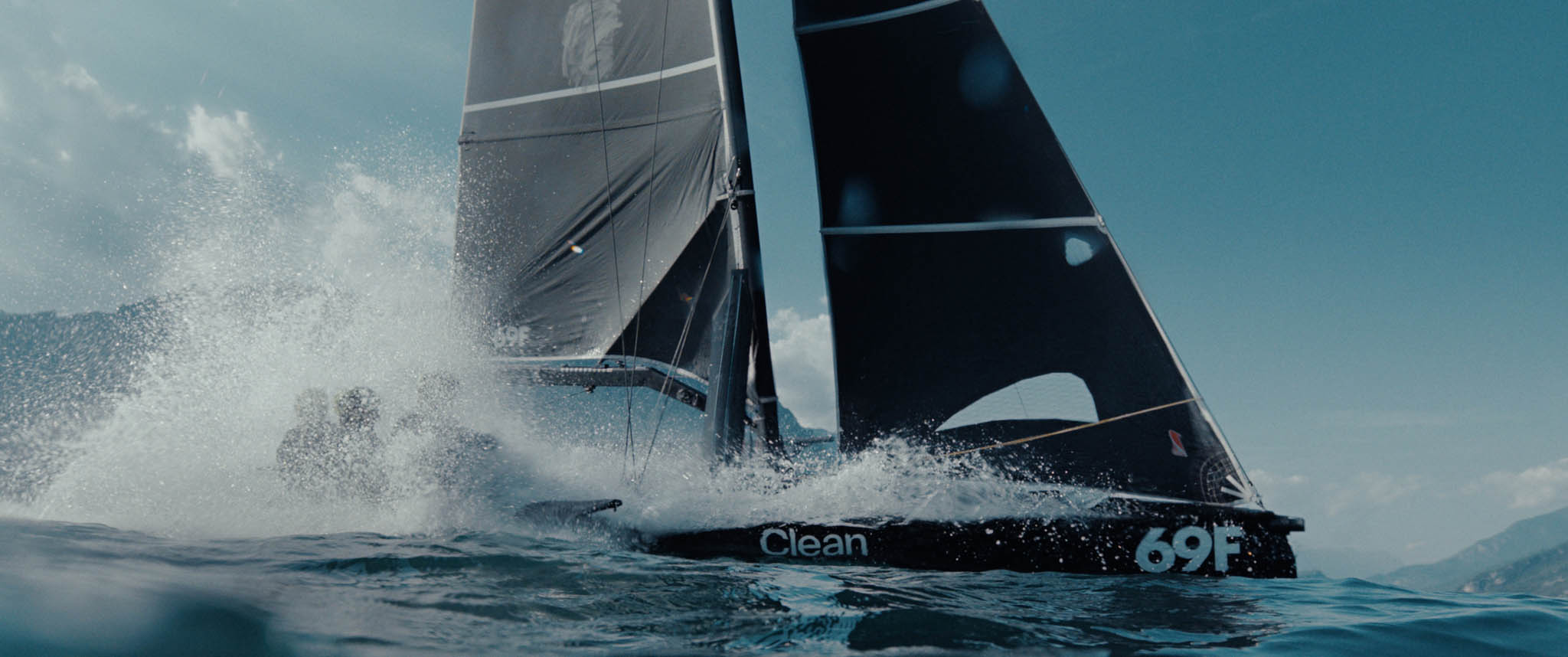
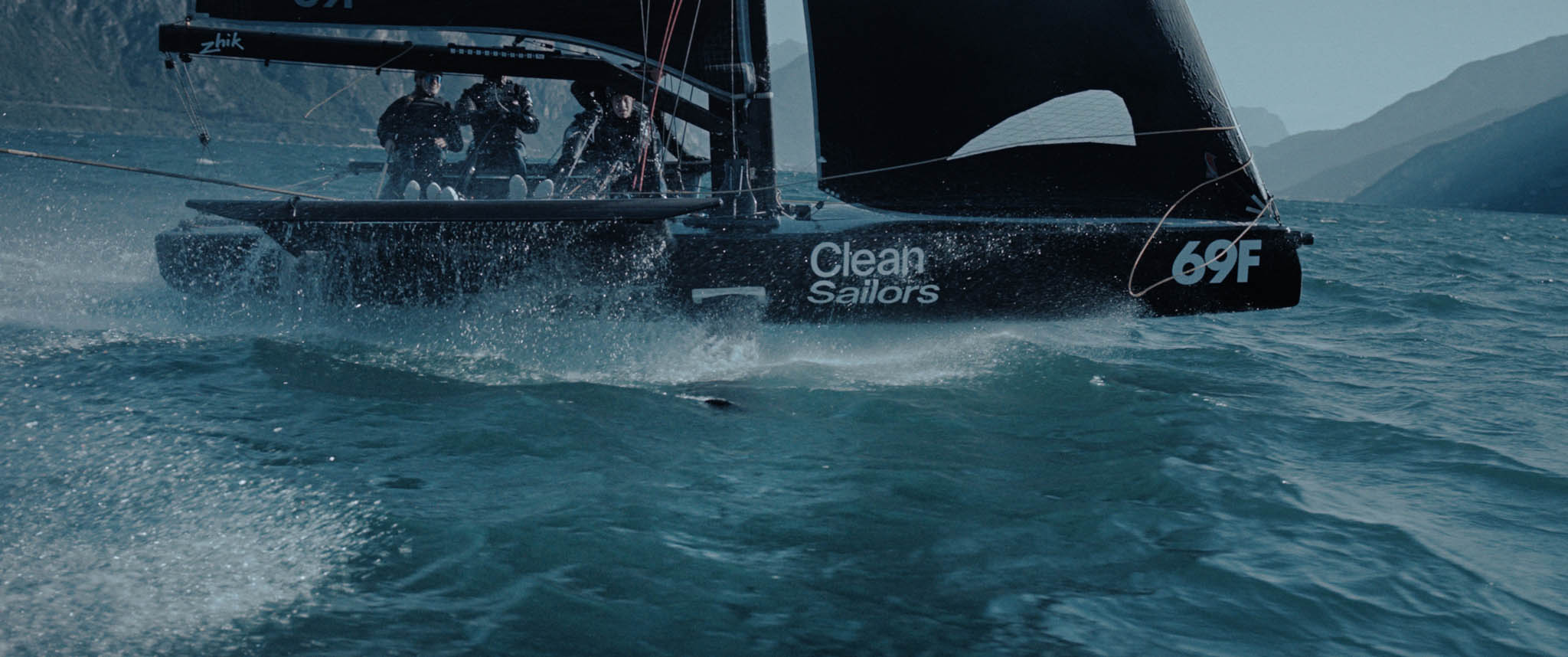
But then I remembered the challenges of getting good sailing shots. They need lots of equipment. Everything gets wet. And then I thought, why not? Let’s subject this new Xtreme camera to one of the most extreme sailing conditions on a 69F foiling sailboat at Lago di Garda.

I’m surprised that Henning entrusted you with a new prototype camera to get wet and possibly lost forever at the bottom of a lake.
Henning: Elias promised that this was not going to happen.
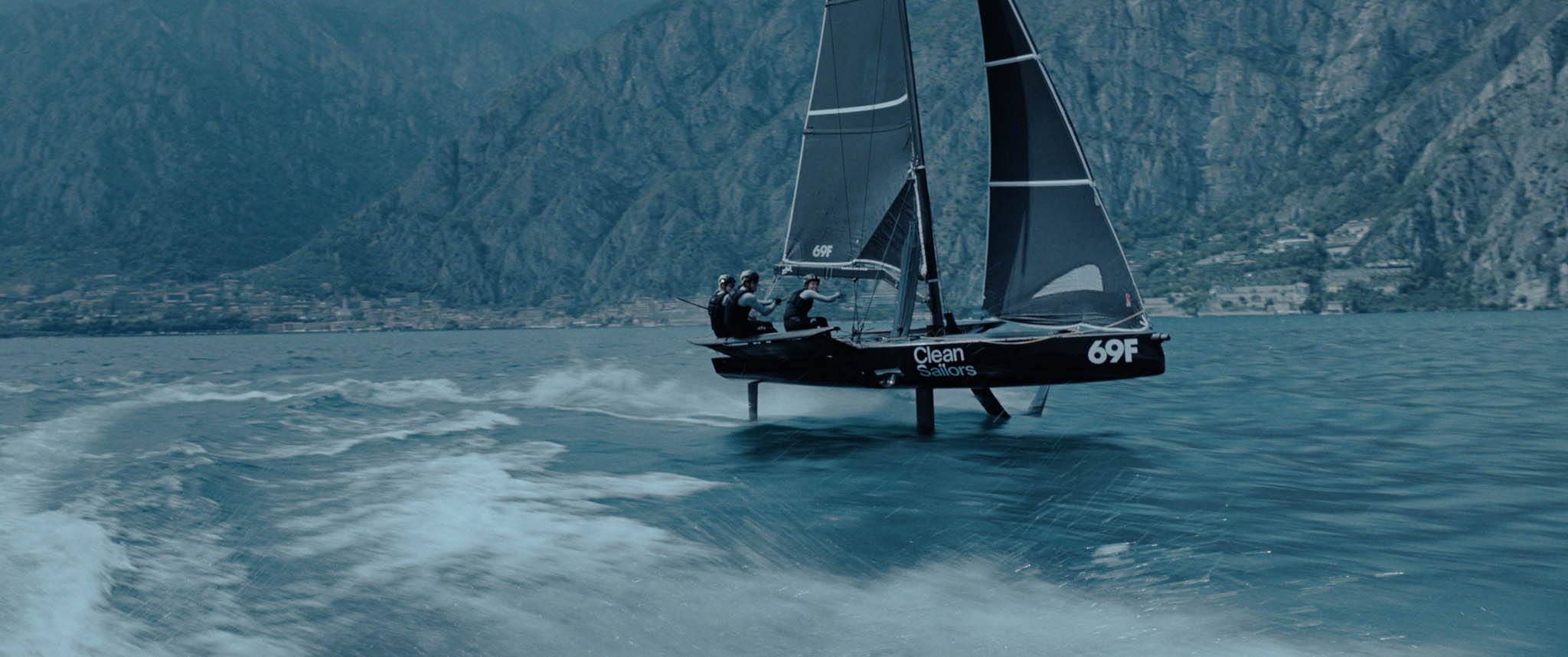
Jon: How did you rig the camera on a 69F sailboat? (It is a one design monohull with hydrofoils, 6.9 meters long, made of carbon fiber, that foils up to 35 knots / 40 mph / 65 km/h).
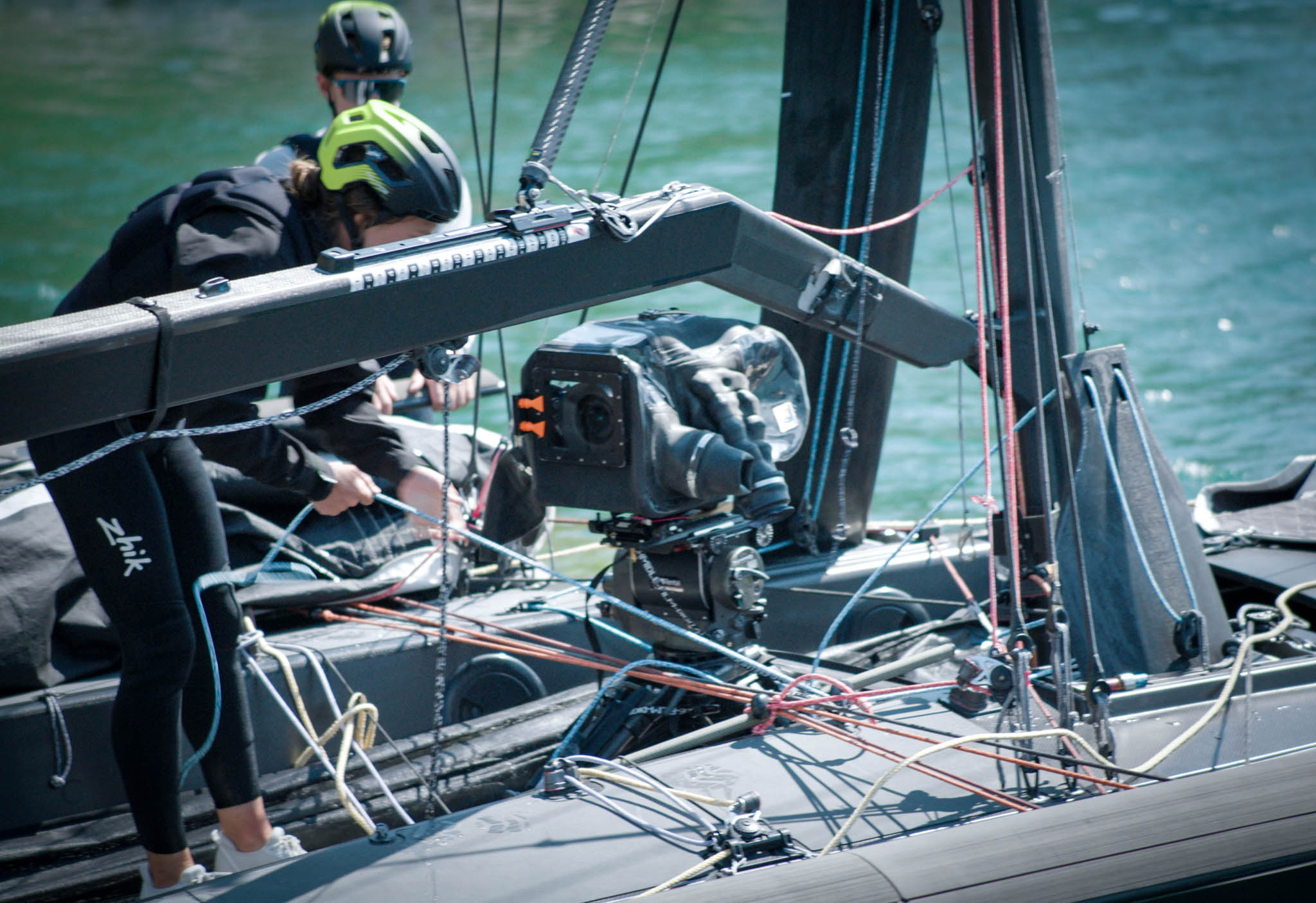
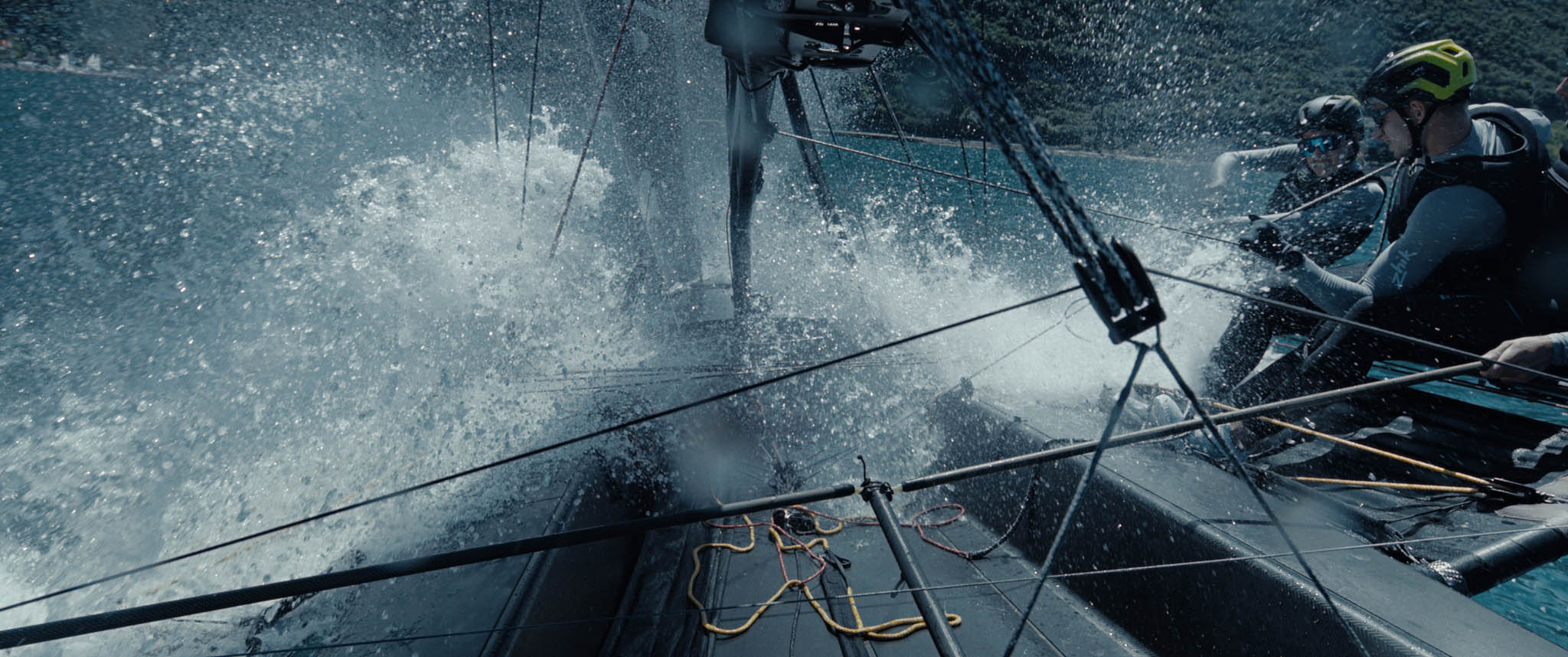
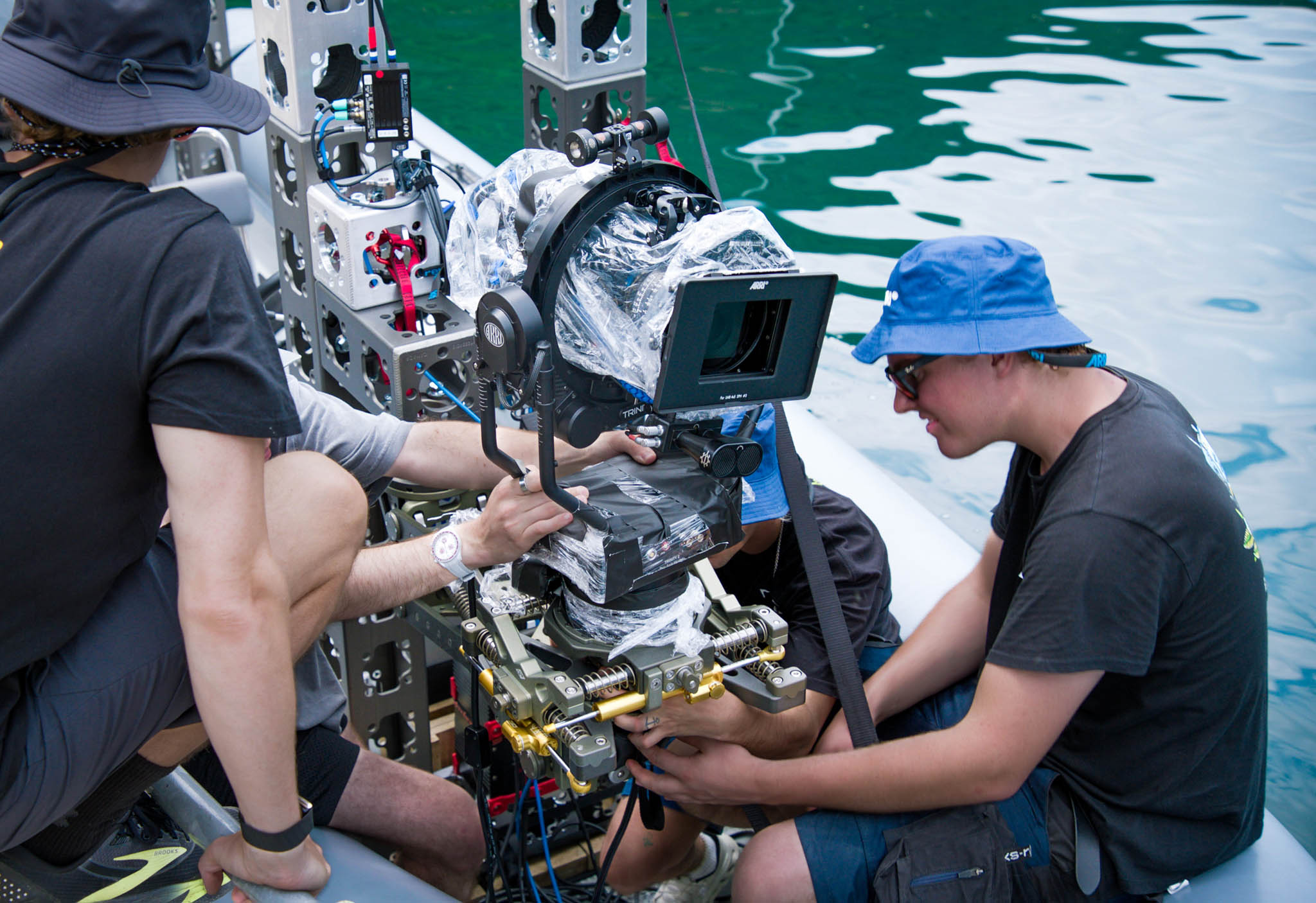
In sailing, you usually have a lot of shots from the outside, but you’re rarely inside of the action. It was important to show a lot of the action in the boat, with lots of movement in the frame, at different speeds and angles. We wanted to show the speed over the water and the crew handling the boat. We needed a safe rig on the boat because the forces are incredible. You are sailing at 35 knots. If you capsize, a camera flying around could seriously injure someone. So we rented a Modulus-X system (modulusx.ca) from GFM grip factory in Munich. The Modulus is a system of cubes and is much stiffer than typical pipe speed rails. This let us mount the camera to the 69F boom. We basically put the ALEXA 35 Xtreme into positions where you normally have a GoPro.
And you also rigged up a chase boat?
Yes, we got a Rigid Inflatable Boat (RIB) from Sophie Steinlein. We needed a chase boat that could go 35 knots. It had to be lightweight with a very powerful engine, but also stable enough to slice through the waves. We assembled all the camera and rigging equipment in Munich and then drove everything 5 hours south to Riva del Garda.
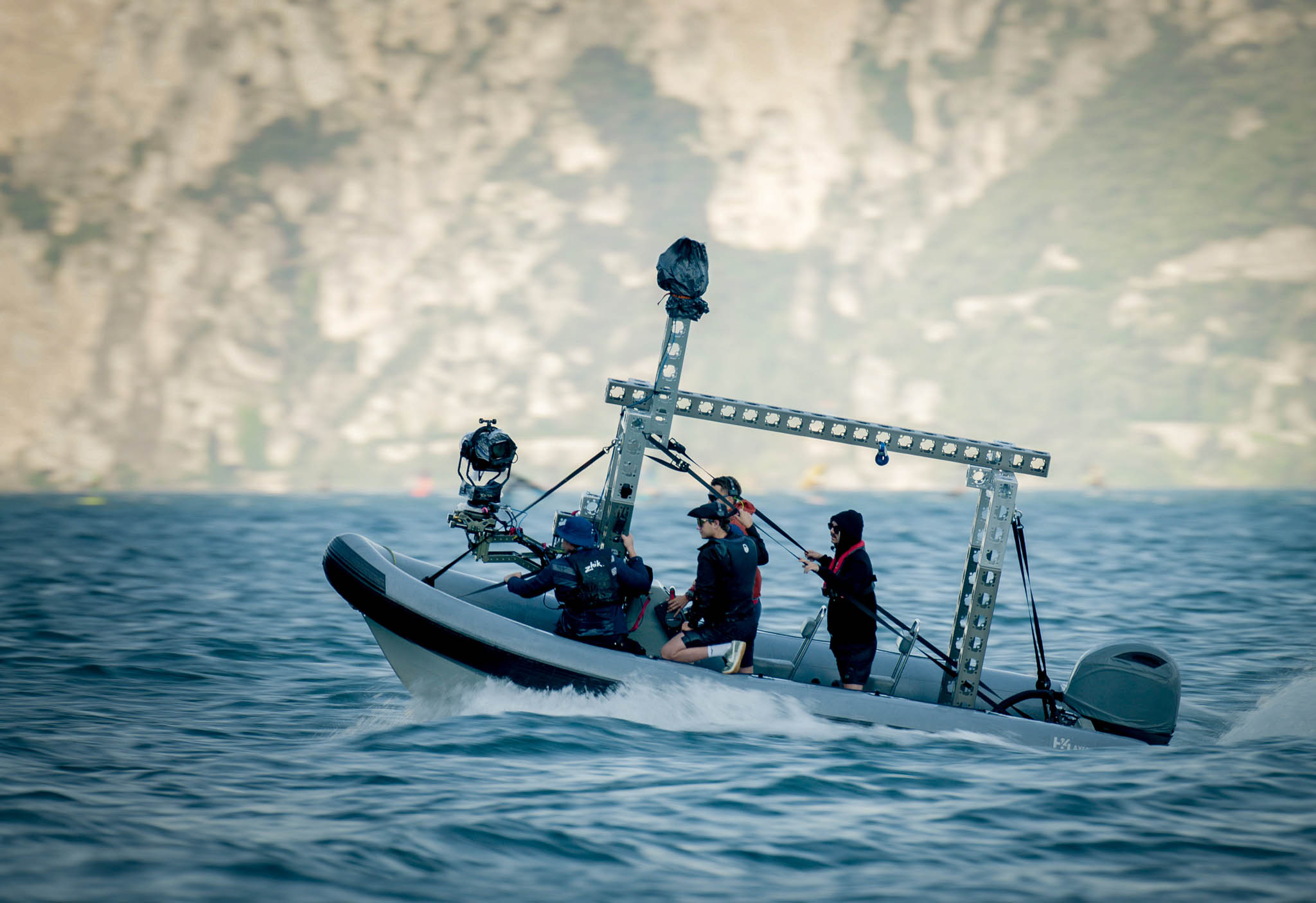
How did you stabilize the camera in the RIB?
We had an ARRI TRINITY 2 Head with the ARRI Pan Axis top-mounted to a GF-Vibration Isolator, controlled with ARRI Digital Remote Wheels. Christoph Werner was the camera operator, following the sailboat at 35 knots, jumping over the waves, keeping the shot rock-solid. I don’t know anyone else who could have done this kind of operating.
What frame rates were you shooting at?
We tested camera speeds earlier at ARRI Rental and decided on 12.5, 24, 48, 144 and 240 frames per second.
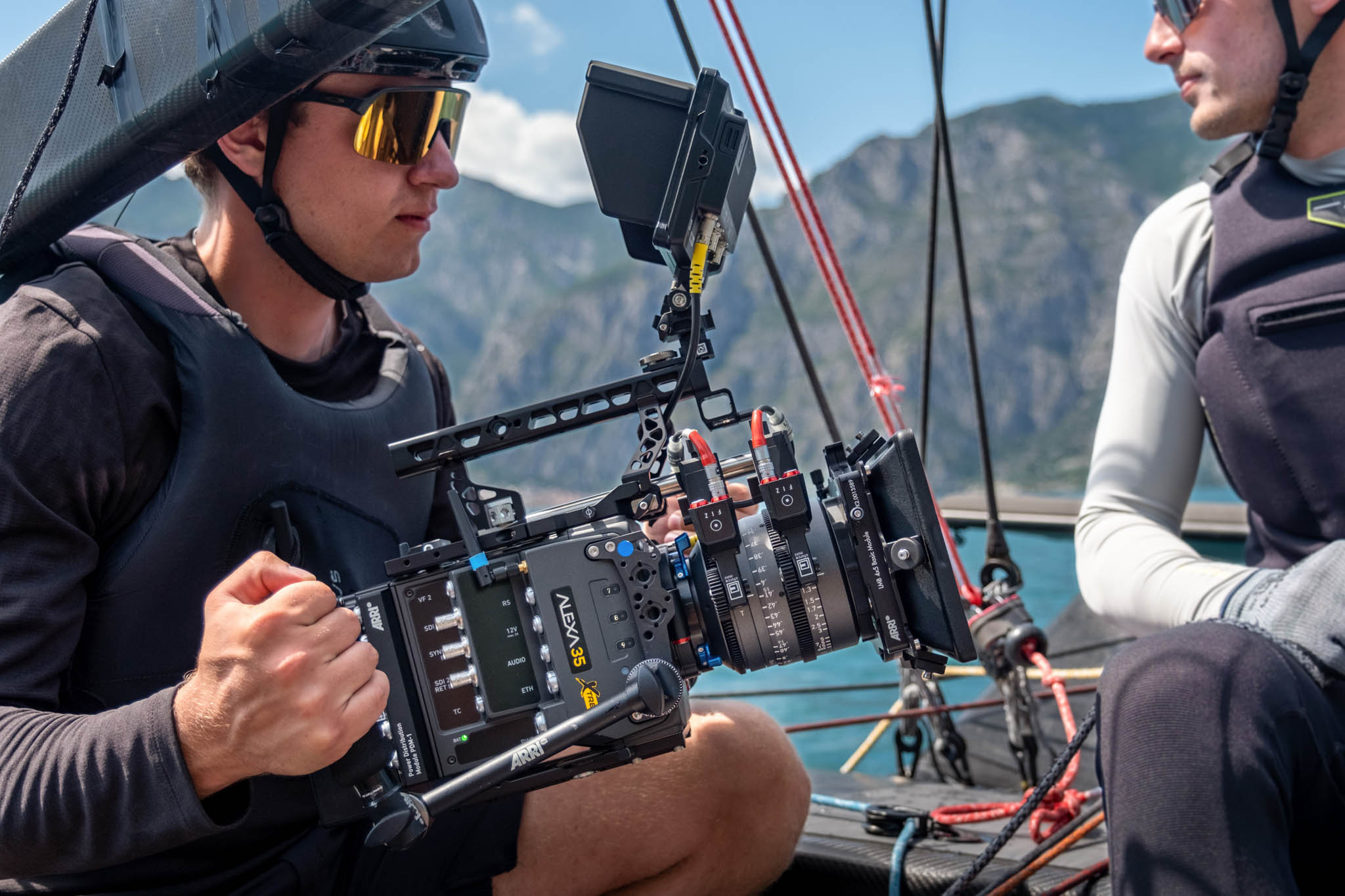
What lenses did you have?
We had a complete set of ARRI Ensō Primes. For this film, I was a big fan of the 14, 21, 32, 58, 105 and 150 mm. The 47mm was my absolute favorite. We used the 250mm on shore.
Did you work mostly in the afternoon for wind and light?
No, we only had four shooting days, so we decided to go whenever the wind was good. So we wound up with many different lighting conditions: from full sunshine to misty and cloudy.
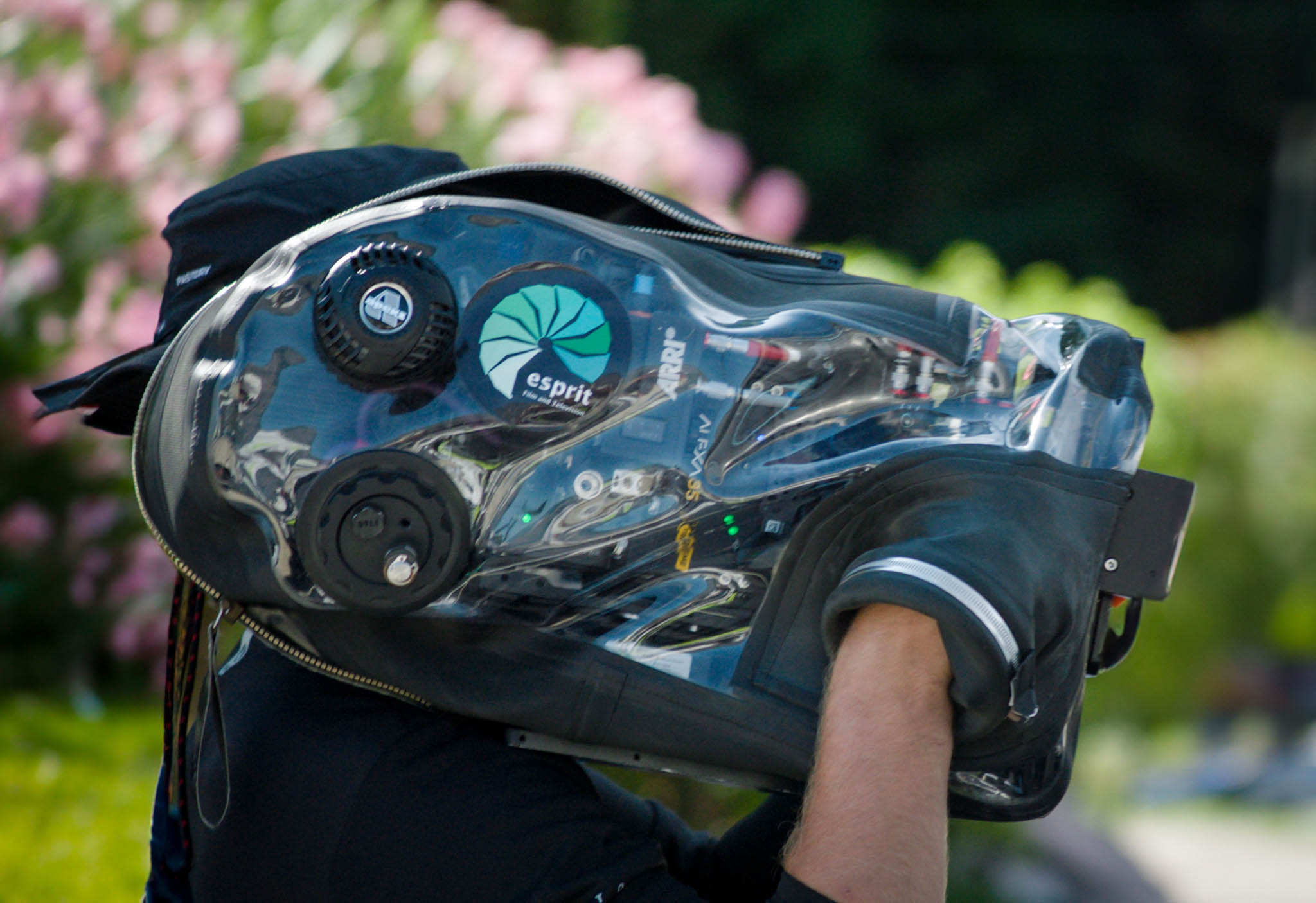
How did you keep everything dry?
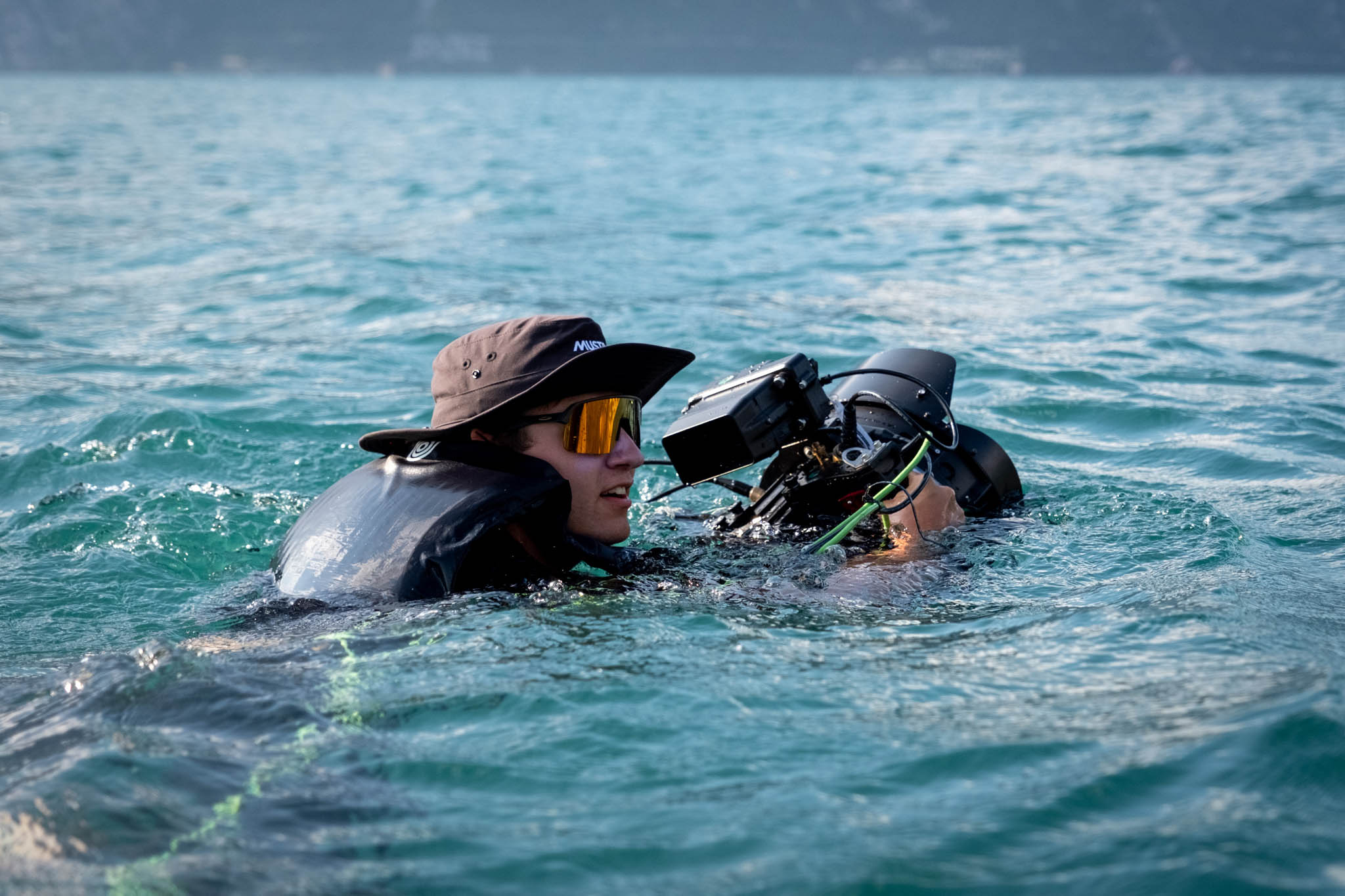
Gates Underwater provided great support with a splash bag and an underwater housing. We were able to keep everything dry. But overheating was the next issue because we were not diving underwater; we were topside on a black carbon fiber boat in a black splash bag with direct sun. The camera got quite hot.
Did the camera keep running, did you lose footage?
Henning: The camera ran as is should, no footage was lost. Heat was not a problem and the new cooling inside the camera did exactly what it was supposed to do.
How did you find this 69F sailboat in Garda?
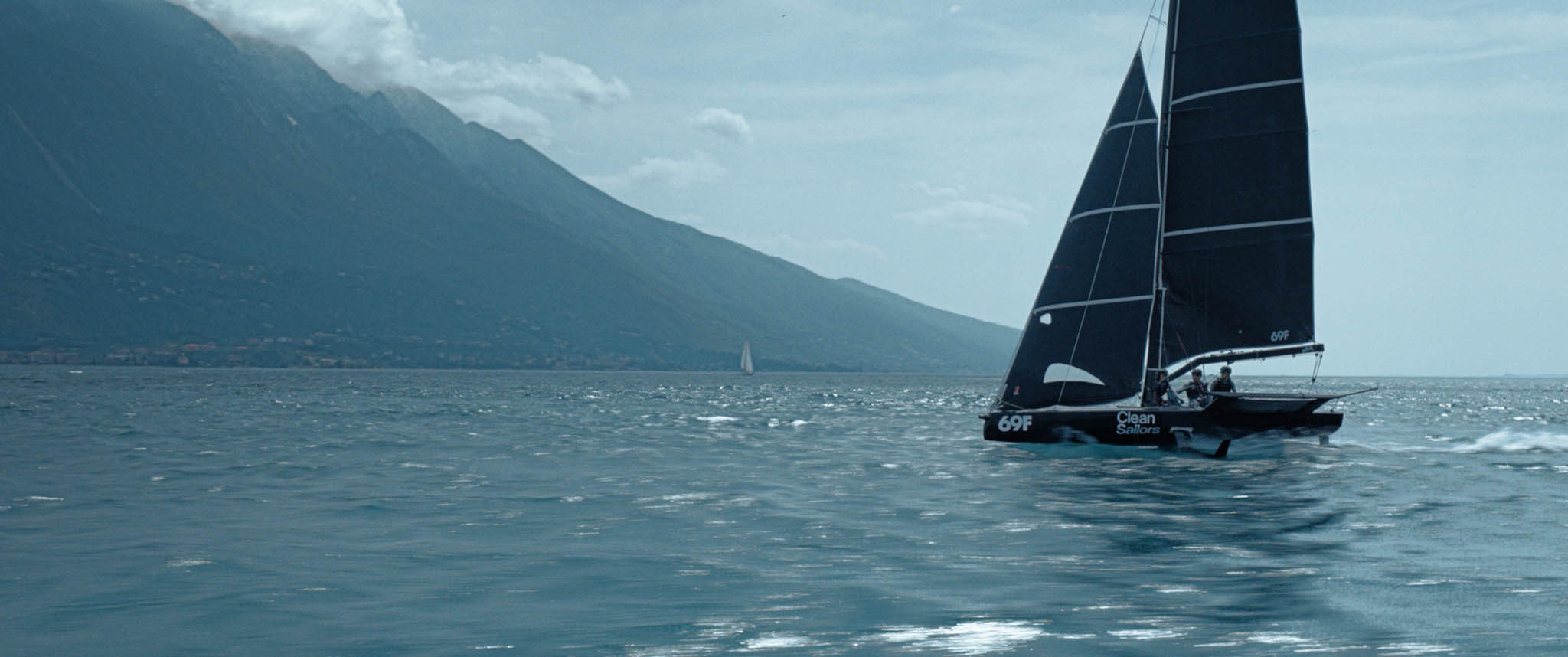
They have regattas around the world—it’s like SailGP, but on a smaller scale and you can rent the boats. They also train on 69F for the America’s Cup AC75 and the AC40 foiling boats.
How did you take care of focus?
We had two focus pullers, Andreas Thomas and Darius Pfeffer. It was a challenge for them to pull focus while watching the monitor, judging the framing while bumping around in a RIB at high speed. They had 7-inch monitors with Teradek 750 Bolt Rx-Tx. They were lying down in the most stable place on the floor at the back of the RIB next to the motor. No one got seasick, even with eyes on the monitor—maybe because it was so stressful. There was no time for motion sickness.
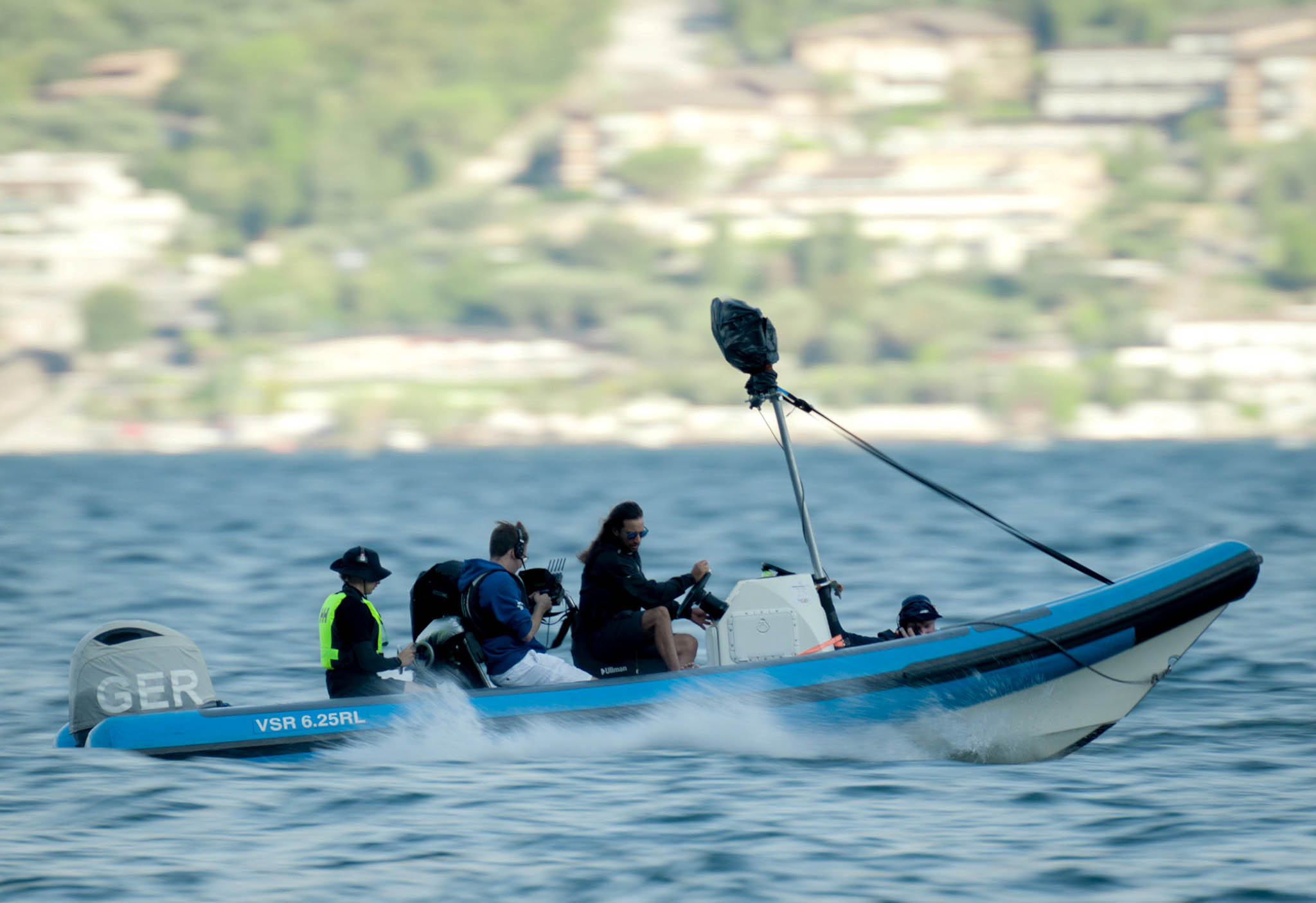
How did you adjust frame rate, focus and iris?
We worked with the ARRI Hi-5 and the RIA-1. The camera assistant / focus puller was in the RIB chasing us and I was talking to him with my headset.
How did you determine exposure?
Sometimes with a meter on shore, but on the water I set the stop by eye and false color. I just did a quick check if something was burning out in the highlights. Sometimes the light changed rapidly when the boat changed direction or when the sails got wet and created different reflections. After the first two days I could predict exposure most of the time.
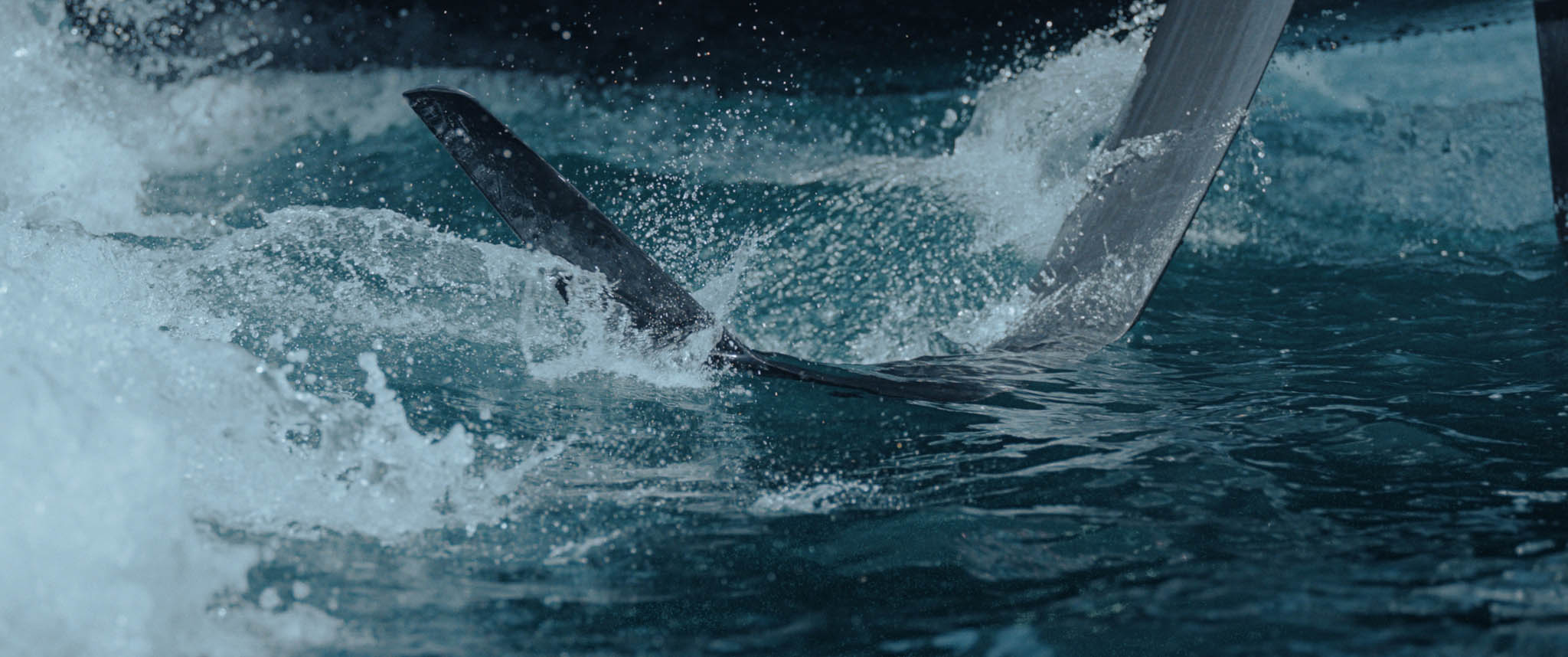
In prep, we tested with different shutter angles. At 240 fps, I liked how the 144 degree shutter created very crisp images of water droplets. We also have some shots with a 270 degree shutter to get a more natural feeling.
Did you have filters on the Ensō lenses?
No Ensō Vintage Elements, but I used an FSND 0.3 on the front to remove more infrared light pollution from the blacks, especially when the light was reflecting everywhere.
Do you own equipment?
I own a set of Ensō Primes. They are like a blank sheet of paper and you can bring them in any direction, shape, color and form that you want.
Over the years I collected a lot of equipment. I also have a Mini LF camera and lenses, some accessories and a monitor.
Of course you’re going to get an ALEXA 35 Xtreme next?
The ALEXA 35 Xtreme with slow motion and 17 stops of dynamic range is amazing. When you think about 17 stops, it just sounds like two and a half more stops than a Mini LF. What are 2.5 stops? But then you remember that it’s exponential. 2.5 stops are 5 times more dynamic range, which is an incredibly larger amount.
At what ISO were you rating the camera?
800 was the base and we never had to adjust the ISO.
Did you strap yourself in to prevent falling overboard?
I was always grabbing onto something so as not to fall off because the g-forces were incredible and we were sailing at speeds up to 65 km/h.
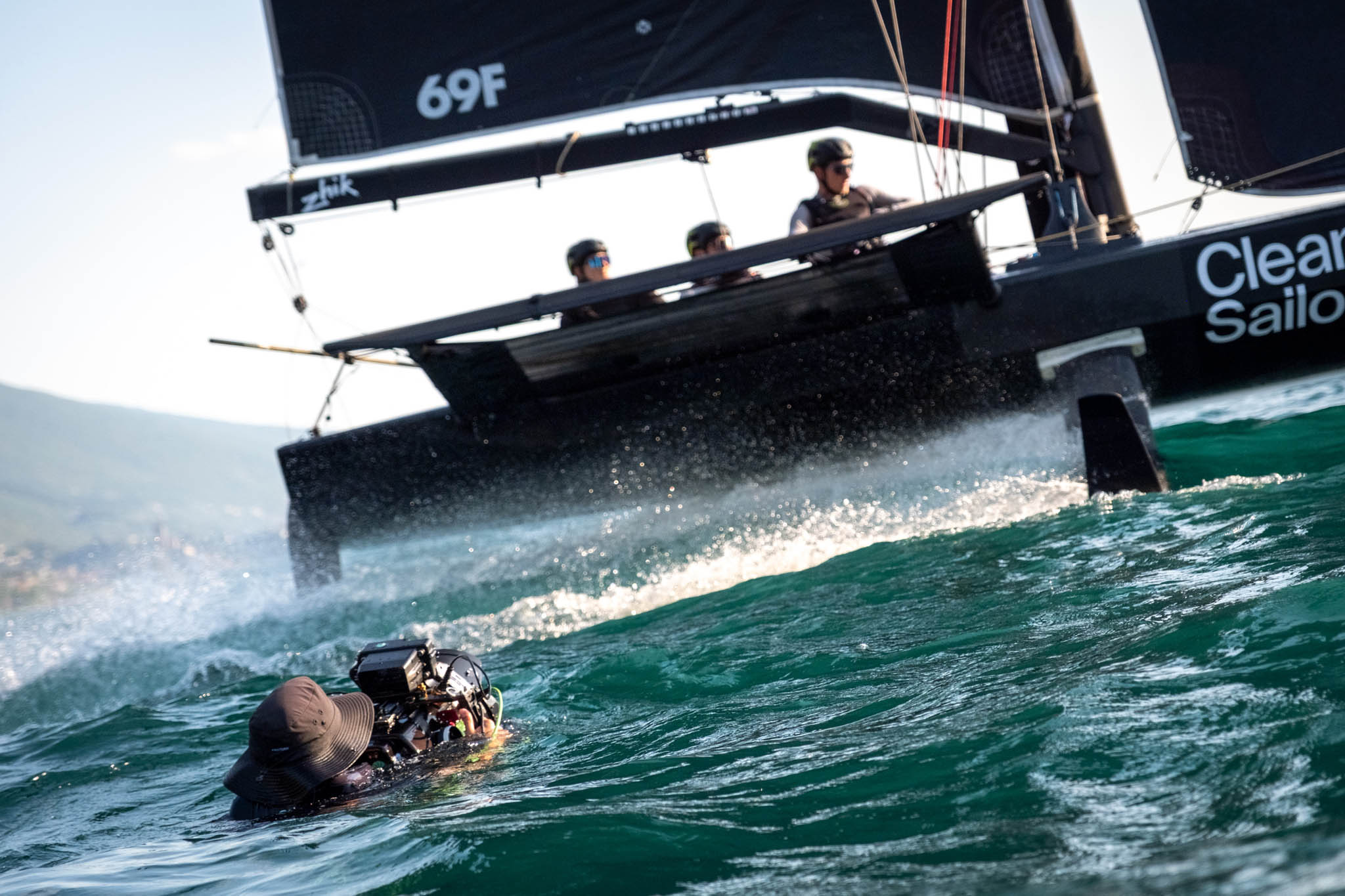
How did you do the end shot where the camera goes from above to below the waterline?
There are few situations more difficult for dynamic range than a scene like this. We had an underwater housing with a dome.
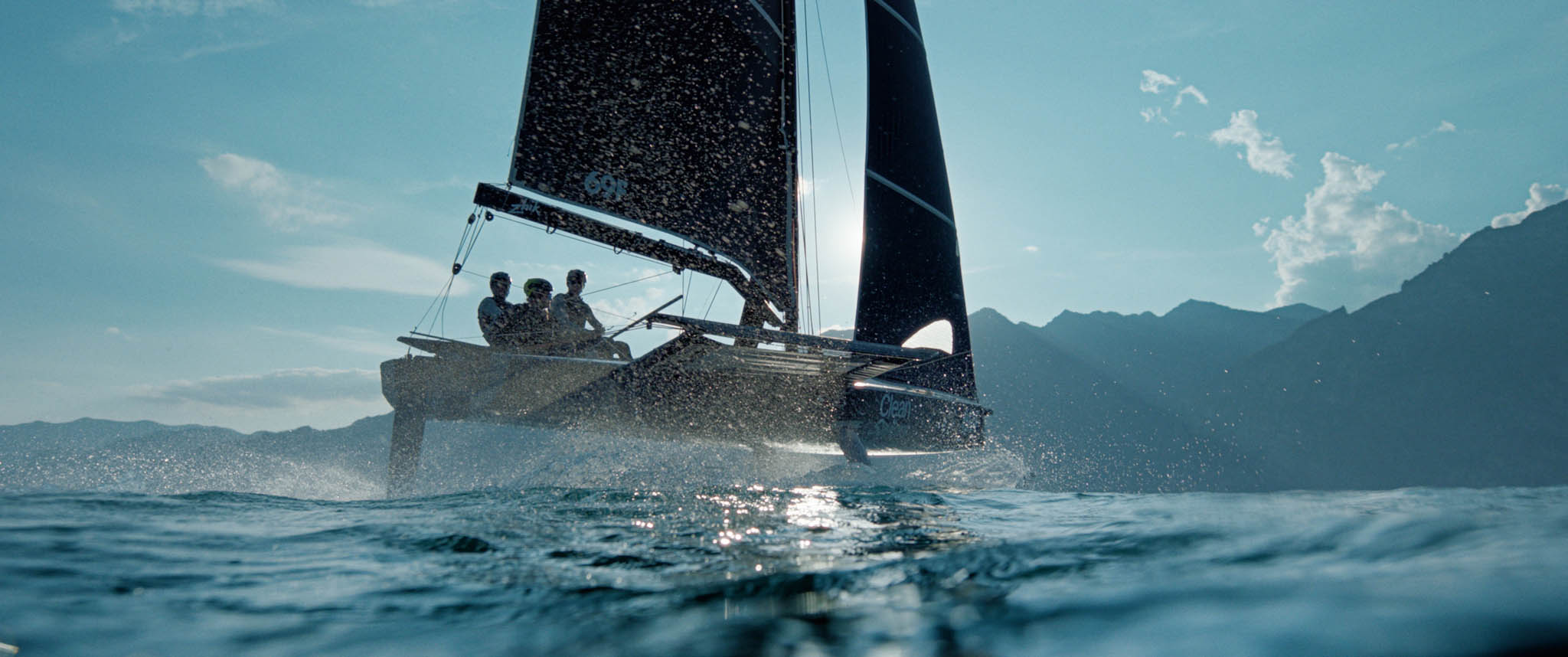
How big a crew did you have?
This film was only possible because of our great team of more than 10 people. We had four cameras. We were always setting up rigs simultaneously. For example, when I was out on the water with the A camera, the operator and the B camera got already ready for the splash bag action.
The handheld scenes on the 69F were done by me 90% of the time. All the ARRI Trinity work and some handheld tracking shots from the RIB were operated by Christoph. We worked really long and tough days, from around 8 in the morning to 8 or 9 in the evening. We had long lunch breaks when there was no wind or the sun was too hot.
Did you apply a Look?
We did not apply a Look in camera because the lighting and water conditions were changing all the time.
Please tell us about the grading.
Henning: Lukas Linner edited with DaVinci Resolve. Florian (Utsi) Martin did the grading with Resolve in our cinema at ARRI Munich, viewing on a 4K laser projector. Of course we do also SDR and HDR video releases.
Elias: It’s a showcase for a new camera and we wanted the grading to show a very new and fresh image. With all that slow motion water and dust, it was an interesting grade because of all bluish colors constantly changing, misty atmosphere mixed with high contrast sunny scenes and changing water and sky conditions. I’m really happy with the grading.
The look is very clean. That suits the story, the boat and the new camera. It’s a story about playing with time and that’s the feature of this camera and the images are crisp.
Henning: It was interesting that the shots with overcast light were actually much easier to grade with Elias´ vision in mind.
I enjoyed the crisp and clean images added to the appeal of the extreme slow motion—not only the water and the action, but also on the faces of the sailors. It looked almost three dimensional.
Elias: We can dream of new and interesting ways to play with time and speed and motion.
What’s interesting about the new ALEXA 35 Xtreme is how one camera can do basically everything. You don’t need a special operator or a technician and you don’t have to wait to view the footage. Directors and DPs will surely dream up innovative slow motion shots that integrate into the normal story. The opportunities are great.
The ARRI color science and the workflow are familiar. And the 17 stops of dynamic range. You don’t have to change anything to go to 240 frames. There are moments in almost every film where you need slow motion. In commercial world, you definitely need slow motion.
I hope this movie will show the strengths of the ALEXA 35 Xtreme.
And your skill shooting sailing.
Thanks. They usually show the boat from the side flying perfectly straight. That’s nice for a sailor. My heart goes, “Oh, that’s a perfect foiling. The distance to the water and the trimming of the wing is just right.” But does the audience want to see that? It is like with Formula 1 movies, you need to find the balance of showing the realness of the sport. You need to catch the attention of the viewer. That’s why we also built in a lot of normal speed 24 fps scenes in this movie—to show the speed compared to the slow motion. We also have a lot of water splashing. Of course, if you sail this 69F boat like that in a regatta, you will lose. But that’s the way it looks to be really exciting.
Henning: One more thing: Elias has managed to take several absolutely unseen shots, which really impresses me. Such a young team with such professionalism! Great!
Credits:
- Cinematographer: Elias Maria BVK
- Producer / Director: Lukas Linner
- 1st AD: Jannik Abelt
- TRINITY 2 / Camera Operator: Christoph Werner
- 1st AC A-Cam: Andreas Thomas
- 1st AC B-Cam: Darius Pfeffer
- 2nd AC: Simon Burger
- Key Grip: Lucas Bilang
- Grip: Mike Brunner
- BTS Filmmaker: Johan Munsberg
- Sailing Coordinator: Lukas Hesse
- Sailor 2: Victoria Schultheis
- Sailor 3: Lou Mourniac
- Sailor 4: Tom Heinrich
- Camera Boat Driver: Anthony Brandstetter
- Editor: Lukas Linner
- Colorist: Florian “Utsi” Martin
- Sound Designer & Composer: Martin Linka
- Theatrical 5.1 Mix: Clemens Becker
Framegrabs
courtesy of ARRI and Elias Maria, BVK